
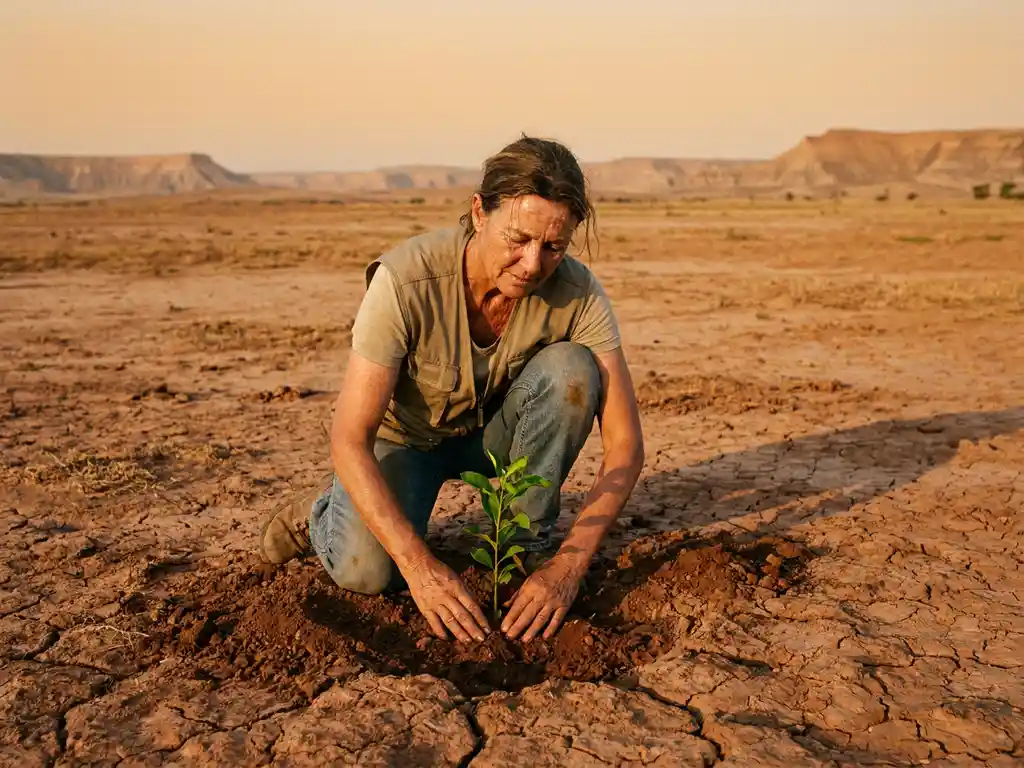
Climate innovation can genuinely reverse certain types of environmental damage, and the evidence is growing. Technologies like carbon capture, ecosystem restoration tools, and precision rewilding are already demonstrating measurable results in degraded landscapes and polluted atmospheres. The scale of success depends on how quickly these solutions move from research labs into real-world deployment, and who has access to them. This article unpacks the most important questions surrounding climate innovation and what it will take to make environmental restoration a global reality.
What types of environmental damage can technology actually reverse?
Technology can meaningfully reverse several categories of environmental damage, including atmospheric carbon accumulation, soil degradation, deforestation, and coastal erosion. While some damage, such as species extinction, is permanent, a growing range of climate solutions are demonstrating that restoration is achievable when intervention happens at the right scale and speed.
The most tractable targets for reversal include:
- Atmospheric CO2 levels, through carbon capture and nature-based sequestration
- Degraded soils, through biochar application, regenerative agriculture, and microbial restoration
- Deforested land, through assisted natural regeneration and precision reforestation
- Polluted waterways, through bioremediation using bacteria, fungi, and engineered wetlands
- Coastal and marine ecosystems, through coral reef restoration and mangrove replanting programs
What separates reversible from irreversible damage is largely a question of timing and systemic support. The longer degradation continues unchecked, the narrower the window for recovery. This is why climate technology alone is never sufficient without the policy frameworks and institutional capacity to deploy it rapidly and equitably.
Together, We Drive Innovation
Support global research, foster collaboration, and create a sustainable future.
How does carbon capture technology work to reduce atmospheric CO2?
Carbon capture technology works by removing CO2 directly from the atmosphere or from emission sources before it disperses, then storing or repurposing it. The two main approaches are point-source capture, which intercepts emissions at industrial facilities, and direct air capture (DAC), which pulls CO2 from ambient air using chemical processes or solid sorbents.
In point-source capture, CO2 is separated from flue gases at power plants or factories and compressed for underground geological storage. Direct air capture is more energy-intensive but more flexible, as it can operate anywhere and does not require proximity to an emission source. Once captured, carbon can be stored permanently in deep rock formations or converted into useful materials such as building aggregates, fuels, or chemical feedstocks.
Nature-based carbon capture, including afforestation, wetland restoration, and ocean seaweed farming, operates differently by leveraging biological processes to absorb and store carbon over time. These approaches tend to be lower-cost and deliver co-benefits for biodiversity, but they require long-term land stewardship to remain effective. The most robust climate strategies combine engineered and nature-based methods to maximize both the speed and permanence of carbon removal.
What are the most promising climate innovations for ecosystem restoration?
The most promising climate innovations for ecosystem restoration include assisted evolution technologies for coral reefs, AI-guided reforestation platforms, mycelium-based soil restoration, and drone-assisted seed dispersal at landscape scale. These innovations share a common trait: they accelerate natural recovery processes that would otherwise take decades or centuries.
Biological and nature-based innovations
Assisted evolution involves selectively breeding or genetically enhancing organisms, particularly corals, to survive warmer and more acidic ocean conditions. Mycelium networks, the underground fungal threads that connect plant root systems, are being cultivated deliberately to rebuild soil health in degraded agricultural and post-industrial land. Biochar, a form of charcoal produced from organic waste, locks carbon into soils while simultaneously improving water retention and microbial activity.
Technology-enabled restoration tools
AI-powered platforms can now analyze satellite imagery to identify optimal reforestation sites, predict seedling survival rates, and monitor canopy growth over time. Drone seeding programs are being deployed across large-scale degraded areas, capable of planting thousands of seeds per hour in terrain that is inaccessible to human crews. Remote sensing and environmental DNA (eDNA) analysis allow researchers to track biodiversity recovery without disturbing fragile ecosystems during their most vulnerable stages.
Why do climate innovations often fail to reach the communities that need them most?
Climate innovations frequently fail to reach the most vulnerable communities because of structural barriers including funding gaps, limited local technical capacity, inadequate infrastructure, and the concentration of research and development activity in high-income countries. The communities facing the greatest environmental damage are often the least equipped to access, adapt, or sustain the technologies designed to address it.
Several compounding factors drive this gap:
- Knowledge asymmetry: Most climate research is published in English and designed around conditions in wealthy economies, making it difficult to adapt to different local contexts
- Financing barriers: Pilot programs rarely scale because local governments and organizations lack access to the risk capital needed for early-stage deployment
- Weak institutional linkages: Researchers and communities often operate in separate silos, with no mechanism to translate findings into practical, locally owned solutions
- Technology transfer failures: Even when technologies are shared, they frequently arrive without the training, maintenance support, or supply chains needed to sustain them
Addressing this requires more than good intentions. It demands deliberate investment in local research capacity, South-South knowledge exchange, and governance frameworks that center affected communities in innovation design from the outset rather than treating them as passive recipients of solutions developed elsewhere.
How can research organizations and governments accelerate climate innovation together?
Research organizations and governments can accelerate climate innovation by aligning funding priorities, co-designing regulatory sandboxes for emerging technologies, and building shared infrastructure for data and knowledge exchange. The most effective partnerships move beyond grant relationships and create lasting institutional connections between public policy and scientific capability.
Concrete mechanisms that have demonstrated results include:
- Joint research agendas that tie public funding to nationally determined climate targets
- Technology demonstration zones where regulations are adapted to allow testing of novel climate solutions at scale
- National innovation intermediaries that translate research outputs into procurement-ready solutions for government programs
- Cross-border research consortia that pool expertise and infrastructure across countries facing similar environmental challenges
Governments bring legitimacy, long-term funding stability, and the regulatory authority to create enabling conditions for innovation. Research organizations bring technical depth, international networks, and the ability to identify solutions before they become mainstream. When both sides commit to genuine co-creation rather than transactional relationships, the pace of deployment accelerates substantially.
What does success look like for climate innovation by 2050?
Success in climate innovation by 2050 means achieving net-zero or net-negative emissions globally, measurable recovery of degraded ecosystems across multiple biomes, and universal access to green technologies regardless of a country’s income level. It is not defined by any single breakthrough but by the systemic integration of innovation into economic, governance, and social structures worldwide.
Tangible markers of success include:
- Atmospheric CO2 concentrations stabilizing and beginning to decline
- Restored forest cover and biodiversity indices showing net positive trends across major ecosystems
- Renewable energy and clean agriculture technologies deployed at scale in low- and middle-income countries
- A generation of locally trained researchers and technologists capable of developing and maintaining climate solutions independently
- Policy frameworks in which the UN Sustainable Development Goals serve as binding reference points for national innovation investment
The path to 2050 is not linear, and setbacks are inevitable. But the difference between a world that achieves these outcomes and one that falls short will be determined largely by the choices made in the next ten years: who gets funded, who gets trained, and which institutions are empowered to lead.
How WAITRO supports climate innovation and environmental restoration
We connect the research organizations, governments, and innovation ecosystems that climate solutions need to move from concept to impact. Through our global network of over 180 members across multiple regions, we create the institutional bridges that allow climate technology to cross borders, reach underserved communities, and achieve the scale that individual organizations cannot reach alone.
Specifically, we support climate innovation through:
- Institutional capacity building for research and technology organizations in emerging economies, equipping them to develop, adapt, and deploy climate solutions locally
- Cross-border partnership facilitation that connects researchers, government agencies, and industry partners around shared environmental challenges
- Knowledge exchange programs that transfer expertise and best practices between member organizations across regions
- Strategic alignment with the UN SDGs, ensuring that our programs contribute directly to measurable progress on climate action, life on land, and life below water
If you represent a government body, research organization, or NGO working on environmental restoration or green innovation, we invite you to explore membership and partnership opportunities with WAITRO. Together, we can accelerate the climate solutions the world urgently needs.
