
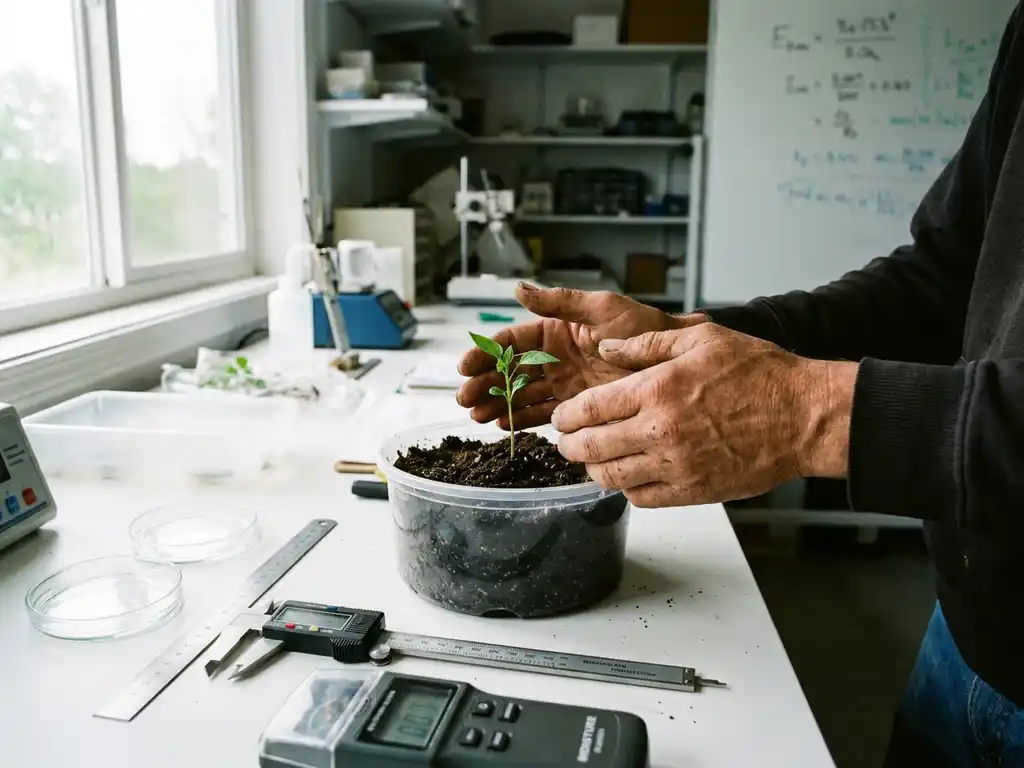
Climate innovation encompasses the development and deployment of technologies, processes, and solutions designed to reduce greenhouse gas emissions, enhance climate resilience, and address environmental challenges. It combines scientific research, technological advancement, and practical implementation to create sustainable alternatives across the energy, transportation, agriculture, and industrial sectors.
Outdated industrial processes are costing companies their competitive edge
Many organizations still rely on energy-intensive manufacturing methods and fossil fuel-dependent operations that drive up costs while increasing carbon footprints. These legacy systems create regulatory risks as environmental standards tighten, expose businesses to volatile energy prices, and limit access to sustainability-focused investors and customers. Companies can make the transition by conducting energy audits, investing in renewable energy sources, and adopting circular economy principles that turn waste into valuable inputs.
Slow climate adaptation signals deeper operational vulnerabilities
Organizations that delay climate innovation efforts face mounting physical risks from extreme weather events, supply chain disruptions, and resource scarcity that can halt operations and damage infrastructure. This reactive approach leaves businesses unprepared for climate impacts while competitors gain advantages through the early adoption of resilient technologies. Building climate resilience requires implementing early warning systems, diversifying supply chains, and developing adaptive capacity through scenario planning and stress testing.
What is climate innovation and how does it work?
Climate innovation is the systematic development of technologies and solutions that reduce environmental impact while creating economic value. It works by identifying climate challenges, applying scientific research to develop solutions, and scaling these innovations through collaboration among researchers, businesses, and governments.
The process typically begins with identifying specific environmental problems, such as carbon emissions from manufacturing or energy inefficiency in buildings. Researchers then develop technological solutions using methods such as renewable energy systems, carbon capture technologies, or sustainable materials. These innovations move from laboratory settings to pilot projects, where real-world testing validates their effectiveness and economic viability.
Successful climate innovation requires interdisciplinary collaboration. Engineers design the technical solutions, economists analyze market potential, and policy experts navigate regulatory frameworks. This collaborative approach ensures innovations are both technically sound and commercially viable, enabling widespread adoption across industries and regions.
Why is climate innovation critical for global sustainability?
Climate innovation is essential for achieving global sustainability because it provides the technological foundation needed to reduce greenhouse gas emissions while maintaining economic growth. Without breakthrough technologies, the world cannot meet climate targets or adapt to environmental changes effectively.
Current emissions-reduction commitments require unprecedented technological advancement. Existing technologies alone cannot deliver the 45% emissions cuts needed by 2030 to limit global warming to 1.5°C. Climate innovation fills this gap by developing solutions such as advanced battery storage, green hydrogen production, and carbon-negative materials that make deep decarbonization possible across all economic sectors.
Beyond emissions reduction, climate innovation builds resilience against unavoidable climate impacts. Smart agriculture systems help farmers adapt to changing rainfall patterns, while flood-resistant infrastructure protects coastal communities. These adaptive technologies ensure societies can thrive despite environmental challenges, making sustainability achievable rather than merely aspirational.
What are the main types of climate innovation technologies?
Climate innovation technologies fall into four main categories: clean energy systems, carbon management solutions, sustainable materials and processes, and climate adaptation tools. Each category addresses different aspects of environmental challenges while creating opportunities for economic development.
Clean energy technologies include solar panels, wind turbines, energy storage systems, and smart grids that enable renewable electricity generation and distribution. These innovations reduce dependence on fossil fuels while often providing cost advantages over traditional energy sources. Advanced battery technologies and green hydrogen production further support clean energy by solving storage and transportation challenges.
Carbon management encompasses both emissions-reduction and removal technologies. Carbon capture and storage systems prevent industrial emissions from reaching the atmosphere, while direct air capture technologies remove existing CO2. Sustainable materials such as bio-based plastics and low-carbon concrete replace high-emission alternatives in manufacturing and construction.
Climate adaptation technologies help communities respond to environmental changes. These include drought-resistant crop varieties, early warning systems for extreme weather, and nature-based solutions such as constructed wetlands that provide flood protection while supporting biodiversity.
How do research organizations drive climate innovation forward?
Research organizations accelerate climate innovation by conducting fundamental research, fostering collaboration between academia and industry, and providing the scientific foundation for breakthrough technologies. They bridge the gap between theoretical knowledge and practical applications through interdisciplinary projects and partnerships.
These organizations conduct long-term research that private companies often cannot justify financially. University laboratories and research institutes explore emerging technologies such as perovskite solar cells, advanced nuclear reactors, and synthetic biology applications that may take years to commercialize. This patient-capital approach enables discoveries that transform entire industries over time.
Research organizations also facilitate knowledge transfer by connecting scientists with entrepreneurs and established companies. Technology transfer offices help move innovations from laboratories to markets, while incubators and accelerators support startup companies developing climate solutions. This ecosystem approach ensures promising research reaches real-world applications where it can create environmental and economic impact.
What challenges does climate innovation face today?
Climate innovation faces three primary challenges: funding gaps between research and commercialization, regulatory barriers that slow deployment, and the need for rapid scaling to meet climate deadlines. These obstacles require coordinated responses from governments, investors, and international organizations.
The “valley of death” between laboratory research and commercial viability remains a significant barrier. Many promising climate technologies require substantial investment for pilot projects and manufacturing scale-up, but traditional venture capital often considers these investments too risky or too slow to mature. Government programs and patient capital from institutional investors help bridge this gap, though more funding mechanisms are needed.
Regulatory frameworks often lag behind technological development, creating uncertainty for innovators and investors. Permitting processes for renewable energy projects can take years, while safety regulations for new technologies such as carbon capture may not exist. Streamlined approval processes and adaptive regulatory frameworks can accelerate deployment while maintaining safety standards.
The urgency of climate action creates unprecedented scaling challenges. Technologies must move from prototype to global deployment within decades rather than the typical innovation timeline of 50-100 years. This acceleration requires international cooperation, standardized approaches, and massive, coordinated investment across multiple sectors simultaneously.
How WAITRO Helps with Climate Innovation
We connect research organizations worldwide to accelerate climate innovation through collaborative projects, knowledge sharing, and capacity-building programs. Our global network enables researchers to tackle climate challenges that require international coordination and diverse expertise.
- Facilitate partnerships between research institutions across different regions to share climate research and technologies
- Provide capacity development services that strengthen research organizations’ ability to conduct climate innovation projects
- Support technology transfer initiatives that move climate solutions from laboratories to real-world applications
- Connect researchers with industry partners through our consortium partnerships to accelerate commercialization
- Offer specialized programs focused on sustainable development and environmental research
Join us at the WAITRO Summit 2026 in Istanbul, Türkiye, from October 26-28, 2026. Under the theme “Leading the Path of Implementation: Strengthening Co-Creation for Our Common Future,” this summit brings together global innovators, researchers, and industry leaders working on climate solutions. Connect with the international research community, explore collaborative opportunities, and help shape sustainable innovation for our planet’s future. Become a member to access our full network and amplify your climate innovation impact through global collaboration.
