
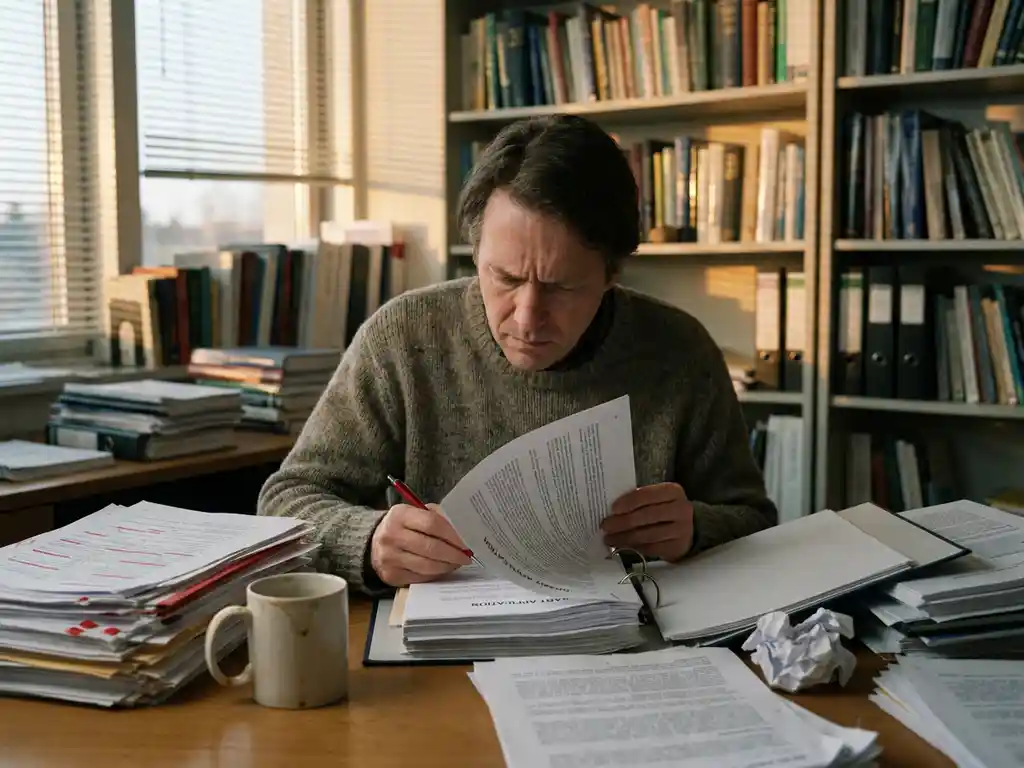
Research funding applications get rejected most often because of weak problem framing, unclear methodology, misaligned objectives, or a budget that raises more questions than it answers. These are not random outcomes. Reviewers follow structured evaluation criteria, and applications fail when they do not meet those criteria clearly and convincingly. Understanding the specific reasons behind rejection is the first step toward building stronger proposals and improving success rates over time.
How do funding reviewers actually evaluate research proposals?
Funding reviewers evaluate research proposals against a structured set of criteria that typically includes scientific merit, feasibility, team competence, budget justification, and alignment with the funder’s strategic priorities. Each criterion is scored independently, meaning a strong methodology cannot compensate for a weak team profile or a poorly justified budget.
Most funding bodies use a panel review process where multiple reviewers assess the same application and compare scores. This means your proposal must communicate clearly to readers with different levels of familiarity with your specific field. Reviewers are often generalists within a broad domain, not specialists in your exact topic. If your proposal requires deep prior knowledge to understand its value, it is already at a disadvantage.
Alignment with the funder’s stated priorities is a filter applied before scientific merit. A technically excellent proposal addressing a topic outside the funder’s current focus will rarely advance. Before investing significant effort in an application, confirm that your research objectives map directly onto the funding call’s stated goals.
Together, We Drive Innovation
Support global research, foster collaboration, and create a sustainable future.
What makes a research proposal scientifically weak?
A research proposal is scientifically weak when it fails to clearly define the problem it addresses, does not demonstrate awareness of existing literature, or proposes a methodology that cannot realistically produce the claimed outcomes. Reviewers look for logical coherence between the problem statement, the research questions, and the methods chosen to answer them.
Common scientific weaknesses include:
- Vague problem statements that describe a broad issue without specifying what gap the research actually fills
- Insufficient literature review that leaves reviewers uncertain whether the work is genuinely novel
- Methodology that does not match the research question, such as qualitative methods proposed for questions requiring quantitative evidence
- Unrealistic timelines that suggest the applicant has not fully thought through the complexity of the work
- Unmeasurable outcomes that make it impossible for reviewers to assess whether the project succeeded
The strongest proposals make the logical chain from problem to method to expected outcome so clear that a reviewer can follow it without effort. If a reviewer has to work hard to understand why your approach is appropriate, the proposal has already lost ground.
Why do well-researched applications still get rejected?
Well-researched applications get rejected when they fail to communicate their value clearly, misread the funder’s priorities, or are technically sound but strategically misaligned. Strong underlying research does not automatically translate into a strong funding application. Writing a proposal is a distinct skill from conducting research.
One of the most common reasons strong research fails to secure funding is poor framing. An applicant may have a genuinely important research agenda but present it in language that is too technical, too abstract, or too internally focused to resonate with a review panel. Proposals must translate research value into terms that matter to the funder’s mission.
Timing also plays a role. Funding bodies operate in cycles with shifting thematic priorities. A proposal that would have been highly competitive two years ago may now fall outside the current focus areas. Staying informed about how funding landscapes are evolving is as important as the quality of the research itself.
Finally, formatting and compliance errors, such as exceeding word limits, missing required sections, or submitting incomplete attachments, can result in automatic disqualification regardless of scientific quality. These are entirely preventable failures.
How does a weak team profile affect funding decisions?
A weak team profile significantly reduces the chances of a research funding application succeeding because funders need confidence that the applicant team can actually deliver what they are proposing. Even a well-designed project will be rejected if reviewers doubt the team’s capacity to execute it.
Reviewers assess team profiles for several key factors:
- Relevant expertise: Does the team have demonstrated experience in the specific methods and subject areas the project requires?
- Track record: Have team members successfully completed comparable projects before?
- Complementary skills: Does the team collectively cover the full range of competencies the project needs, or are there obvious gaps?
- Institutional support: Does the host organization have the infrastructure, governance, and resources to support the project?
Early-career researchers and organizations applying for larger grants for the first time often struggle with this dimension. One practical approach is to build partnerships with more established organizations to strengthen the team profile, even if the lead applicant is newer to large-scale funding. Demonstrating that your organization has invested in building its own institutional and project management capabilities also signals credibility to reviewers.
What budget mistakes cause research funding applications to fail?
Budget mistakes cause research funding applications to fail when costs are unexplained, inconsistent with the proposed activities, or misaligned with the funder’s eligible expenditure categories. A budget that does not reflect the actual scope of the work signals poor planning and undermines trust in the entire application.
The most damaging budget errors include:
- Unjustified line items where costs appear without explanation of what they cover or why they are necessary
- Inflated overhead that exceeds the funder’s permitted indirect cost rates
- Undercosted activities that suggest the applicant has not realistically assessed what the work will require
- Ineligible costs included without recognizing they fall outside the funder’s rules
- Mismatch between the budget and the work plan, where the activities described require resources not reflected in the budget
A strong budget tells a story. Every line should connect clearly to a specific activity in the work plan. Reviewers scrutinize budgets not just for accuracy but as a proxy for how well the applicant understands the project they are proposing to deliver.
How can organizations improve their chances before resubmitting?
Organizations can improve their chances before resubmitting by requesting reviewer feedback, conducting an honest internal review of the rejected application, addressing each identified weakness systematically, and strengthening the team or partnership profile if capacity gaps were flagged. Resubmission without meaningful revision rarely succeeds.
Start with the feedback. Many funding bodies provide written reviewer comments, and these are among the most valuable inputs available. Map each comment to a specific section of the proposal and decide how to address it directly. If feedback is not provided, seek it proactively.
Beyond addressing reviewer comments, consider whether the application’s fundamental framing needs to change. Sometimes the issue is not the quality of the research but how it is positioned relative to the funder’s priorities. Reframing the problem statement or impact narrative can significantly change how reviewers perceive the same underlying work.
Organizations should also invest in building the internal capabilities that underpin strong applications over time. Strategic planning, project coordination, communication skills, and institutional processes all contribute to the quality of funding proposals, not just the research itself.
How WAITRO supports stronger research funding applications
Many of the most common reasons research funding applications fail come down to gaps in institutional capacity rather than gaps in research quality. We address this directly through our work with research and technology organizations worldwide.
Through our Capacity Development Program, we help member organizations build the specific skills that translate into stronger grant applications and better project outcomes:
- Strategic planning support to help organizations align their research agendas with funder priorities and global challenges
- Project coordination training to strengthen the team profiles and delivery track records that reviewers look for
- Communication skills development to help researchers present their work clearly and compellingly to non-specialist audiences
- Access to a global network of 135 Full Members and 45 Associate Members, enabling organizations to build the cross-border partnerships that strengthen both proposals and delivery capacity
- Thematic expertise in areas such as AI, digital transformation, and sustainability, supporting members to develop proposals in high-priority funding domains
If your organization is working to improve its research funding success rate, we invite you to explore how WAITRO membership and our Capacity Development Program can support that goal. Become a member and connect with a global community committed to advancing science, technology, and innovation for sustainable development.
Related Articles
- How do you align digital transformation with your organization's innovation goals?
- Why do some critics argue the SDGs are too ambitious?
- What is the voluntary national review process for the SDGs?
- How Do Research Institutes Find Licensees for Their Technology?
- What Are Working Groups in Research Networks?
