
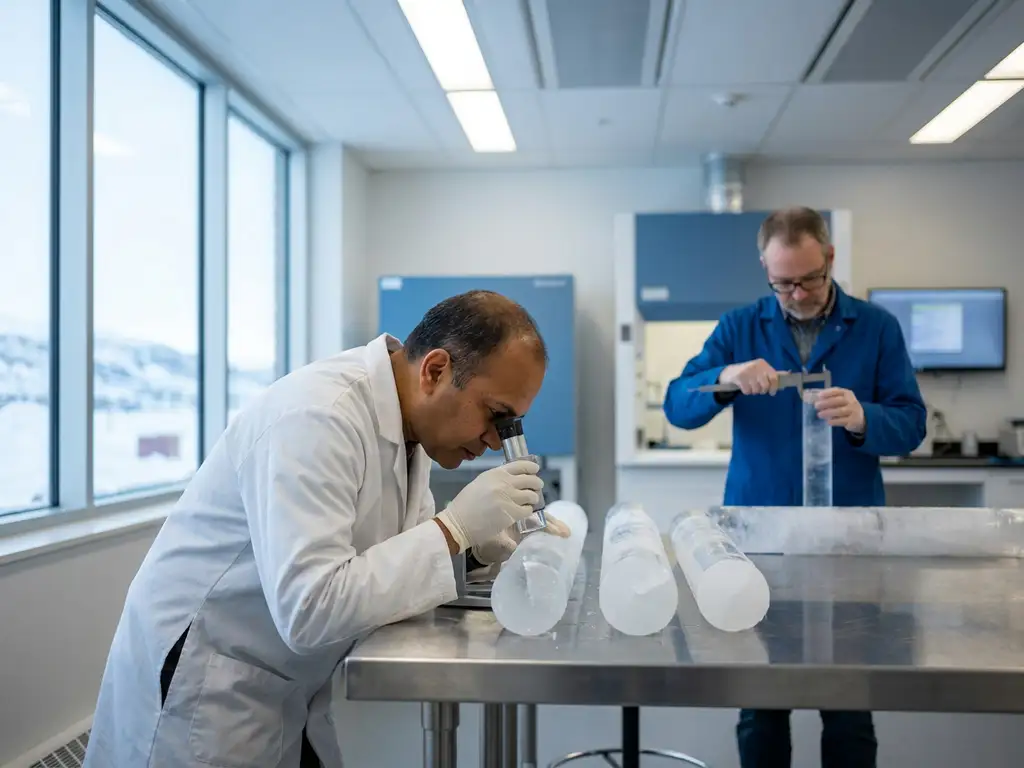
Research organizations contribute to climate action by developing innovative technologies, conducting critical environmental studies, and creating science-based solutions that governments and industries use to reduce emissions and adapt to climate change. They serve as a bridge between scientific discovery and practical implementation, transforming research insights into actionable strategies for a sustainable future.
Fragmented climate research is slowing global progress
When research organizations work in isolation, critical climate solutions get trapped in academic silos and never reach the scale needed for real-world impact. This fragmentation means breakthrough technologies stay in laboratories while urgent climate challenges demand immediate, coordinated action. The solution lies in fostering collaborative networks that connect researchers across borders and disciplines, enabling rapid knowledge sharing and accelerating the deployment of innovations.
Limited funding is blocking breakthrough climate innovations
Many promising climate research projects fail to advance beyond the initial stages because traditional funding models favor short-term, low-risk studies over transformative, long-term solutions. This conservative approach means potentially game-changing technologies for carbon capture, renewable energy, and climate adaptation remain underdeveloped. Research organizations need strategic partnerships and diversified funding sources that support ambitious, high-impact climate research initiatives.
What role do research organizations play in climate action?
Research organizations serve as innovation engines for climate action, developing cutting-edge technologies, providing scientific evidence for policy decisions, and training the next generation of climate scientists. They conduct fundamental research that informs climate models, create practical solutions for emissions reduction, and translate complex scientific findings into actionable recommendations for governments and businesses.
These institutions function as neutral ground where scientists from different disciplines collaborate on complex climate challenges. They host interdisciplinary teams that combine expertise in atmospheric science, engineering, economics, and the social sciences to develop comprehensive climate solutions. Their research outputs directly influence international climate agreements, national environmental policies, and corporate sustainability strategies.
Research organizations also play a crucial role in climate education and public engagement. They communicate scientific findings to policymakers, industry leaders, and the general public, helping bridge the gap between complex climate science and practical decision-making. Through publications, conferences, and advisory roles, they ensure that climate action is grounded in the best available scientific evidence.
How do research organizations develop climate solutions?
Research organizations develop climate solutions through systematic investigation, experimental testing, and iterative innovation processes that transform scientific concepts into practical technologies and strategies. They employ multidisciplinary teams to tackle complex climate challenges from multiple angles, ensuring solutions are both scientifically sound and practically implementable.
The development process typically begins with fundamental research to understand climate systems and identify intervention points. Scientists conduct laboratory experiments, field studies, and computer modeling to test hypotheses and validate concepts. This foundational work leads to applied research, in which teams design and prototype specific technologies or strategies for real-world application.
Collaboration with industry partners is essential during the development phase. Research organizations work closely with companies to ensure their innovations can be scaled and commercialized effectively. This partnership approach helps bridge the gap between laboratory discoveries and market-ready solutions, accelerating the deployment of climate technologies.
What types of climate research do organizations focus on?
Climate research organizations focus on renewable energy technologies, carbon capture and storage systems, climate modeling and prediction, sustainable materials development, and ecosystem restoration strategies. These research areas address both climate mitigation and adaptation needs, providing comprehensive solutions for reducing greenhouse gas emissions and managing climate impacts.
Renewable energy research encompasses solar panel efficiency improvements, wind turbine optimization, energy storage solutions, and grid integration technologies. Scientists work on advancing photovoltaic materials, developing more efficient wind capture systems, and creating better battery technologies to store renewable energy reliably.
Carbon management research includes direct air capture technologies, industrial carbon utilization, and natural carbon sequestration methods. Organizations study how to remove CO2 from the atmosphere efficiently and explore ways to convert captured carbon into useful products such as fuels or building materials.
Climate adaptation research focuses on helping communities and ecosystems cope with changing conditions. This includes developing drought-resistant crops, designing flood-resistant infrastructure, and creating early warning systems for extreme weather events.
How do research organizations collaborate on climate projects?
Research organizations collaborate on climate projects through international consortia, joint research initiatives, shared funding mechanisms, and coordinated data-sharing platforms. These partnerships enable resource pooling, expertise exchange, and accelerated innovation by combining the strengths of multiple institutions working toward common climate goals.
International research networks facilitate large-scale climate studies that no single organization could undertake alone. These collaborations often involve sharing expensive equipment, coordinating field studies across multiple locations, and combining datasets to create more comprehensive climate models. Joint research proposals allow organizations to access larger funding pools and tackle more ambitious projects.
Knowledge-sharing platforms and conferences enable researchers to exchange findings rapidly and avoid duplicating efforts. Many organizations participate in open-access publishing initiatives and maintain shared databases that accelerate scientific progress. Regular workshops and symposiums bring together experts from different institutions to identify research gaps and coordinate future studies.
Cross-border partnerships are particularly important for addressing global climate challenges that require coordinated responses. Organizations often establish formal agreements to share resources, exchange researchers, and jointly develop climate technologies that can be deployed internationally.
What impact have research organizations made on climate action?
Research organizations have made substantial contributions to climate action by developing renewable energy technologies that are now cost-competitive with fossil fuels, providing scientific evidence that has shaped international climate agreements, and creating monitoring systems that track global climate progress. Their innovations have enabled the rapid growth of the solar and wind power industries, while their research underpins climate policies worldwide.
Solar panel efficiency has improved dramatically due to breakthroughs in photovoltaic materials and manufacturing processes developed by research organizations. Wind energy technology has advanced through aerodynamic research and turbine design innovations developed at research institutions. These improvements have made renewable energy economically viable and accelerated global adoption.
Climate modeling research has provided the scientific foundation for international climate agreements, including the Paris Agreement. Research organizations contribute to Intergovernmental Panel on Climate Change reports that inform global climate policy. Their monitoring networks track greenhouse gas concentrations, temperature changes, and ecosystem impacts, providing essential data for climate action planning.
Research organizations have also developed practical climate adaptation technologies, including early warning systems for extreme weather, drought-resistant crop varieties, and sustainable building materials. These innovations help communities prepare for and respond to climate impacts while reducing their environmental footprint.
How WAITRO helps with climate action research
We connect research organizations worldwide to accelerate climate action through collaborative innovation and knowledge sharing. Our global network enables members to access diverse expertise, share resources, and coordinate large-scale climate research initiatives that address urgent environmental challenges.
- Our programs facilitate international research partnerships focused on sustainable development and climate solutions.
- Our services help research organizations build capacity for climate research and technology transfer.
- Our consortium partnerships enable coordinated climate research projects across multiple countries and institutions.
- Our funding opportunities connect climate researchers with resources to advance their innovative projects.
Join us at the WAITRO Summit 2026 in Istanbul, Türkiye, from October 26–28, 2026. Under the theme “Leading the Path of Implementation: Strengthening Co-Creation for Our Common Future,” this summit brings together global climate researchers, technology innovators, and sustainability leaders to accelerate collaborative climate action. Connect with fellow researchers, explore partnership opportunities, and contribute to shaping the future of climate research. Become a member today to access our full network and amplify your climate research impact.
