
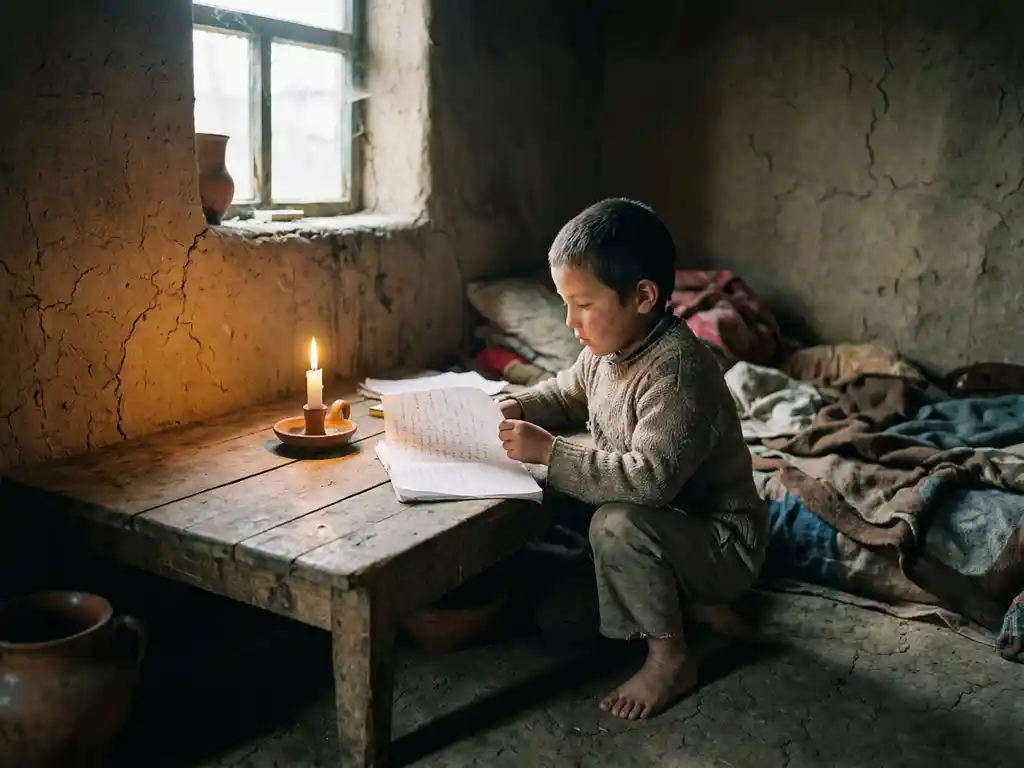
Poverty is directly connected to all 17 Sustainable Development Goals. Because poverty is both a cause and a consequence of failures across health, education, climate, governance, and inequality, it sits at the heart of the entire 2030 Agenda. The sections below unpack exactly how that connection works across each cluster of goals.
Which SDGs directly target poverty and inequality?
Several SDGs directly address poverty and inequality as their primary focus. SDG 1 (No Poverty) targets the eradication of extreme poverty in all its forms, while SDG 10 (Reduced Inequalities) tackles the income and opportunity gaps that keep people trapped in deprivation. SDG 8 (Decent Work and Economic Growth) completes this core cluster by linking poverty reduction to productive employment and fair wages.
Together, these three goals form the economic backbone of the SDG framework. SDG 1 sets the ambition: ending extreme poverty for all people everywhere, a target that remains urgent as global shocks continue to push vulnerable populations backward. SDG 10 recognizes that growth alone is not enough if its benefits concentrate at the top, making redistribution, social protection, and inclusive policy central concerns. SDG 8 connects the two by emphasizing that sustainable livelihoods, not just aid transfers, are the most durable route out of poverty.
Beyond this core cluster, SDG 2 (Zero Hunger) and SDG 11 (Sustainable Cities and Communities) also have strong direct links to poverty. Food insecurity is one of the most immediate expressions of extreme deprivation, and the informal settlements that characterize rapid urban growth in low-income countries concentrate poverty in ways that affect access to services, safety, and economic mobility. Understanding poverty and the SDGs therefore means looking beyond SDG 1 alone and recognizing how inequality threads through the entire framework.
How does poverty undermine progress on health and education goals?
Poverty directly undermines SDG 3 (Good Health and Well-Being) and SDG 4 (Quality Education) because it removes the material conditions those goals depend on. Families living in poverty cannot reliably afford healthcare, nutritious food, or school supplies, meaning that even when services exist, access remains unequal. The result is a reinforcing cycle where poor health reduces earning capacity and low education limits the ability to escape poverty.
On the health side, poverty correlates strongly with higher rates of preventable disease, malnutrition, and maternal and child mortality. People in low-income households are more likely to live in environments with poor sanitation and limited clean water, both of which are addressed by SDG 6 but remain out of reach for many. They are also less likely to seek care early, partly due to cost and partly due to distance from facilities, which means conditions that are easily treatable become serious or fatal.
Education follows a similar pattern. SDG 4 calls for inclusive, equitable quality education for all, but poverty creates practical barriers at every level. Children from poor households are more likely to drop out early to contribute to household income. Girls in particular face compounded disadvantages when families must choose who attends school. Even when attendance is consistent, poverty affects learning outcomes because hunger, stress, and inadequate learning materials at home all reduce a child’s ability to engage. Breaking this cycle requires addressing the economic conditions that make sustained education difficult, not just building more schools.
Why does poverty make climate and environmental goals harder to achieve?
Poverty makes climate and environmental goals harder to achieve because poor communities are simultaneously the most exposed to environmental risks and the least equipped to adapt to them. SDG 13 (Climate Action), SDG 14 (Life Below Water), and SDG 15 (Life on Land) all depend on the capacity of governments and communities to invest in protection, restoration, and sustainable practices, a capacity that poverty directly erodes.
The relationship runs in both directions. On one hand, people living in poverty often depend directly on natural resources for survival, whether through subsistence farming, fishing, or fuelwood collection. When those resources degrade, poverty deepens. On the other hand, the drive to meet immediate survival needs can accelerate environmental degradation, not because poor communities are indifferent to sustainability but because they lack the alternatives that would allow them to manage resources differently.
Climate change compounds this further. Extreme weather events, rising sea levels, and shifting rainfall patterns hit low-income populations hardest because they live in more exposed locations, have fewer assets to buffer losses, and have less access to insurance or government support. Each climate shock can push households back into poverty even after years of progress. This means that achieving SDG 13 without addressing SDG 1 is structurally incomplete: climate resilience requires economic resilience, and economic resilience requires tackling the root conditions of poverty.
What role do governance and institutions play in linking poverty to the SDGs?
Governance and institutions are the connective tissue between poverty and every other SDG. SDG 16 (Peace, Justice and Strong Institutions) and SDG 17 (Partnerships for the Goals) recognize that sustainable development cannot happen without accountable governments, effective public services, and the legal frameworks that protect rights. Where governance is weak or corrupt, poverty persists even when resources exist to address it.
Strong institutions matter for poverty reduction in concrete ways. Tax systems that function fairly generate the revenue needed for health, education, and infrastructure. Legal systems that protect property rights and enforce contracts allow small businesses and farmers to invest with confidence. Social protection systems that are well-administered reach the people who need them rather than leaking resources to those who do not. All of these institutional functions directly determine how effectively a country can translate economic growth into poverty reduction.
SDG 17 adds another layer by highlighting that no country can achieve the goals alone. International partnerships, technology transfer, and financing mechanisms are essential for lower-income countries that lack the domestic resources to fund the full SDG agenda. This is where global networks and cross-border collaboration become particularly important: the knowledge, tools, and capital needed to address poverty across the SDGs often exist somewhere in the world, but reaching the communities and institutions that need them requires trusted, well-functioning partnerships.
How can research and technology organizations help address poverty across the SDGs?
Research and technology organizations (RTOs) are uniquely positioned to address poverty across the Sustainable Development Goals because they sit at the intersection of scientific knowledge, practical application, and policy influence. RTOs can develop and adapt technologies that improve agricultural yields, expand access to clean energy, strengthen healthcare delivery, and build the digital infrastructure that connects underserved communities to economic opportunity.
The contribution of RTOs goes beyond invention. They translate research into solutions that work in specific local contexts, a function that is critical in low-income settings where off-the-shelf technologies from high-income countries often do not fit local conditions, supply chains, or skill levels. By partnering with governments, industries, and communities, RTOs help ensure that innovation actually reaches the people whose lives it could improve, rather than remaining in laboratories or benefiting only those who can already afford it.
Collaboration between RTOs across borders amplifies this impact further. When organizations share methodologies, co-develop solutions, and pool expertise, they can address complex, cross-cutting challenges like poverty and inequality far more effectively than any single institution could alone.
At WAITRO, we support RTOs in doing exactly this. Through our global network and dedicated programs, we help member organizations build the capacity and connections they need to tackle poverty-related challenges across the SDGs. Specifically, we offer:
- Cross-border partnership facilitation, connecting RTOs with complementary expertise across regions to co-develop solutions for shared development challenges
- Our Capacity Development Program, which strengthens institutional skills in areas like strategic planning, project coordination, and thematic expertise in sustainability and digital transformation
- Knowledge sharing platforms, enabling members to learn from one another’s experience addressing poverty-linked challenges in health, agriculture, energy, and governance
- Access to a global network of 135 Full Members and 45 Associate Members, opening doors to partnerships with leading research organizations worldwide
If your organization is working to advance the SDGs and wants to increase its reach and impact, we invite you to join WAITRO and become part of the world’s largest global network of research and technology organizations.
