Evaluating flood mitigation strategies to guide resilience-building policies in Cameroon.
Date:
-
Location:
Cameroon
Partners:
-
Research Area:
Climate-Responsive Societies & Just Transitions
Sustainable Development Goals:
01 - No Poverty, 03 - Good Health and Well-Being, 11 - Sustainable Cities an Communities, 13 - Climate Action, 17 - Partnerships for the Goals
Challenge: Increasing Flood Risks and Community Vulnerability
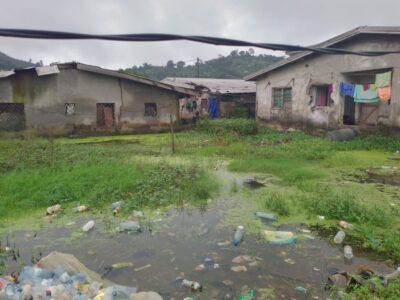
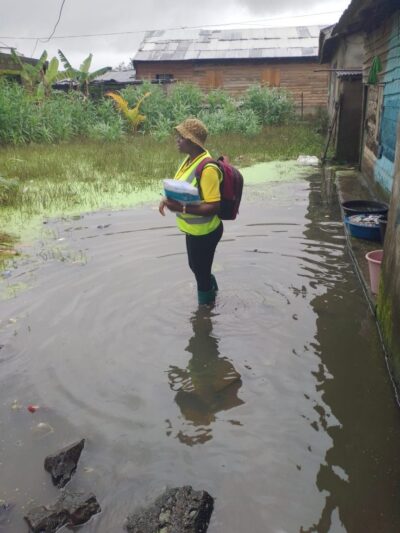
Recurrent flood disasters driven by climate change, rapid urbanisation, and altered natural drainage patterns pose severe risks to communities in the Buea and Limbe I municipalities of Cameroon. Limbe I has experienced major flood events in 2011, 2014, and 2018, while the devastating flash floods of July 2023 caused significant loss of life, displacement, and structural destruction. These impacts have been intensified by poor water circulation and unplanned construction, which increase the exposure of settlements and infrastructure to flooding. Buea faces similar challenges, with torrential rainfall creating flash-flood risks that can be further exacerbated by the remobilisation of pyroclastic materials from Mount Cameroon, as demonstrated by the disaster of 18 March 2023. Against this background, the project addresses the urgent need to understand how communities cope with recurrent flood hazards and where existing structural and institutional resilience measures remain insufficient.
Research Approach: Assessing Structural, Non-Structural and Community-Based Responses
The study conducts a comparative assessment of community resilience in Buea and Limbe I using a mixed-methods research design involving 385 respondents across twelve flood-affected localities. It examines three complementary dimensions of flood-risk management: structural measures, including drainage systems and flood walls; non-structural measures, such as community sensitisation, awareness and education; and grassroots coping and adaptation strategies developed by affected residents themselves. The research identifies substantial differences and gaps between the two municipalities. Buea demonstrates slightly stronger implementation of structural measures, with 31.6% reporting such interventions, while Limbe I faces a 45.8% lack of structural measures. Although awareness and sensitisation initiatives exist in both areas, they have not translated into sufficient levels of preparedness or satisfaction. Citizen dissatisfaction reaches 51.3% in Buea and 80.2% in Limbe I, highlighting the gap between existing interventions and the needs experienced by vulnerable communities.
Findings, Impact and Pathway to Scale
A key finding is that more than 80% of respondents in both municipalities remain inadequately prepared for flood emergencies, demonstrating a critical weakness in current disaster-risk management systems. In the absence of sufficient institutional and infrastructural protection, communities rely heavily on localised adaptation mechanisms, including measures such as elevating houses to reduce flood impacts. The project provides important empirical evidence for bridging the gap between these community-level coping efforts and formal disaster-risk management and resilience policies. Currently at the Pre-Pilot / Preparing for Field Testing stage, the diagnostic framework is designed to provide a replicable basis for assessing flood vulnerabilities and mitigation gaps in other flood-prone municipalities. Its approach has potential for wider application across Cameroon and Central Africa, particularly in regions experiencing rapid urbanisation and increasing climate-induced hazards. To move from research evidence to implementation, the project is seeking financial backing through grants, institutional policy support, and municipal partnerships to enable targeted, large-scale community-based flood mitigation, resilience and infrastructure initiatives.