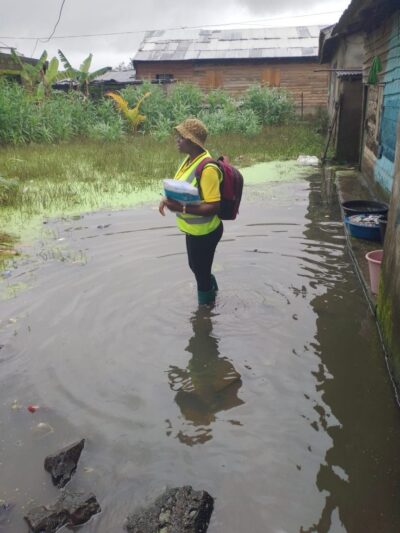
Recurrent flash floods in Buea and Limbe I endanger thousands annually. Inadequate structural drainage, ineffective public sensitization, and critically low community preparedness leave vulnerable households exposed to severe economic loss, displacement, and other flood-related impacts.
Date:
-
Location:
Cameroon
Partners:
Research Area:
Climate-Responsive Societies & Just Transitions
Sustainable Development Goals:
01 - No Poverty, 03 - Good Health and Well-Being, 11 - Sustainable Cities an Communities, 13 - Climate Action, 17 - Partnerships for the Goals
Challenge
Recurrent flooding poses severe threats to lives, infrastructure, and livelihoods in Cameroon’s Southwest Region. Limbe I and Buea experience frequent flash floods, while existing structural and institutional responses remain insufficient. Structural drainage measures are reported at only 31.6% in Buea, while 45.8% of respondents in Limbe I report a lack of such measures. More than 80% of residents across both municipalities report critically low disaster preparedness, and existing top-down sensitization initiatives fail to satisfy large proportions of local populations. These weaknesses leave communities heavily dependent on their own coping mechanisms and demonstrate the need to move from predominantly reactive disaster management towards locally coordinated and proactive resilience-building.
Solution and Innovation
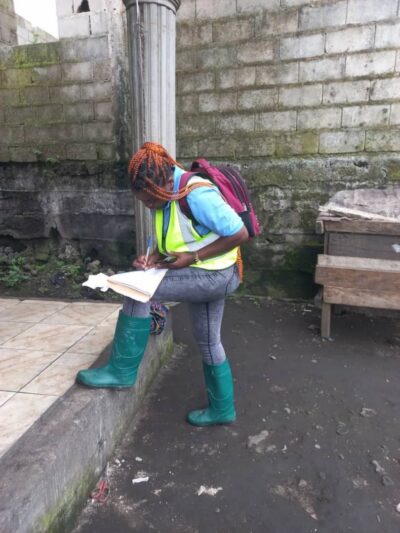
C-IFRF introduces a four-pillar operational model designed to bridge these institutional and community-level gaps. Participatory Hazard & Risk Mapping enables residents to identify localized runoff paths, blocked drainage networks, and vulnerable housing clusters, creating practical information for municipal planning and maintenance. A Standardized Community Early Warning and Education Protocol establishes neighborhood-level communication and real-time warning mechanisms alongside practical preparedness training tailored to local risk zones.
The framework also introduces Low-Cost Adaptive Structural Interventions, providing guidance for measures such as elevated floor platforms, protective flood barriers, and neighborhood drainage clearing. These approaches build on coping strategies already used by local residents and seek to make them safer and more systematic. Finally, Municipal-Community Policy Action Groups (MCPAGs) bring municipal councils, traditional authorities, and community representatives together to strengthen urban planning, discourage construction in natural waterways, and support the joint management of flood infrastructure. The framework is based on mixed-methods research involving 385 households across 12 flood-affected neighborhoods, including evidence that 66.7% of households in Limbe I use housing elevation as an adaptation strategy.
Expected Impact
The project aims to transform communities from passive recipients of disaster response into active resilience actors. Field testing is expected to increase community disaster preparedness by more than 50%, reduce flood damage to vulnerable homes through standardized adaptive measures, and provide municipal authorities with a practical and affordable model for localized flood-risk reduction. By translating empirical research and existing community coping practices into an integrated operational framework, C-IFRF seeks to strengthen the connection between grassroots resilience and formal municipal disaster management.
Development and Scale-Up
C-IFRF is currently at the Pre-Pilot / Preparing for Field Testing stage. The framework will initially be tested in selected high-risk neighborhoods in Limbe I and Buea, with implementation outcomes used to refine the methodology. Following pilot testing, the framework is intended to be published as an open-access Municipal Resilience Implementation Manual. Its adaptable and low-cost structure provides potential for replication by municipalities facing similar climate, urbanization, and flood-risk challenges across Central and West Africa and wider sub-Saharan Africa. The project is seeking seed funding, municipal policy support, and technical pilot partners to conduct field testing, evaluate outcomes, and prepare C-IFRF for regional deployment.