
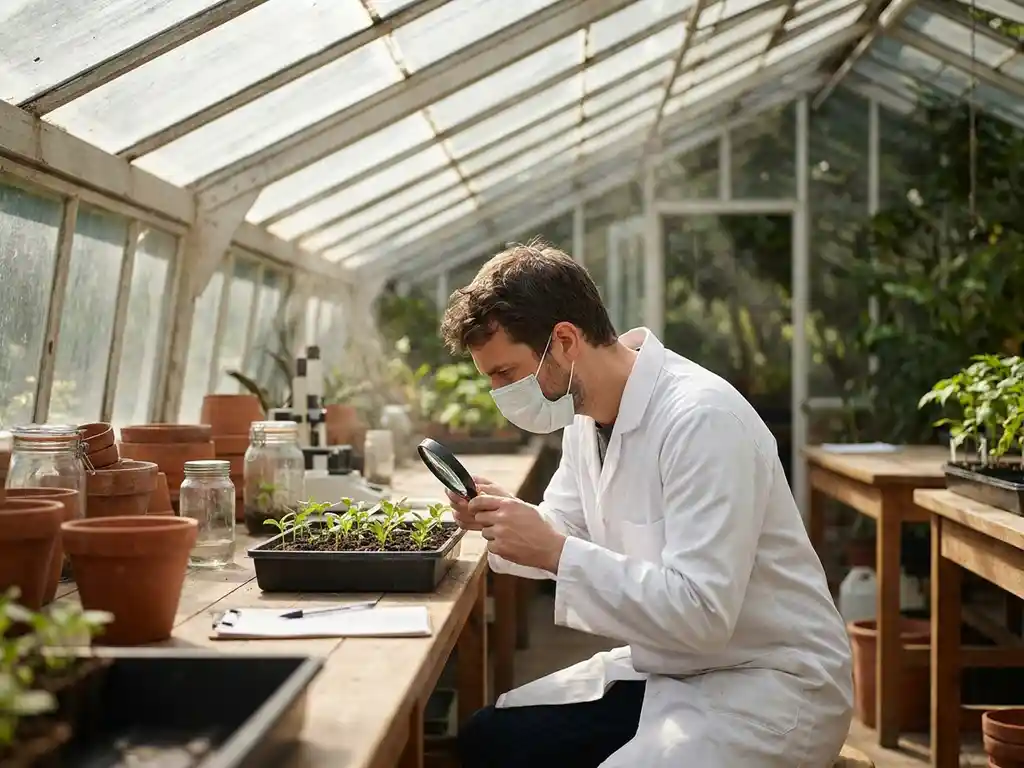
Research for Development (R4D) is an approach that applies scientific research directly to solving pressing social, economic, and environmental challenges in developing countries. It prioritizes generating knowledge that can be translated into practical solutions for poverty reduction, improved health, sustainable agriculture, and other development goals.
Traditional research methods are failing to address real-world development challenges
Academic research often remains trapped in journals and conferences, never reaching the communities that need solutions most. This disconnect means millions of people continue to face preventable diseases, food insecurity, and environmental degradation while relevant research sits unused on shelves. The solution requires shifting from publication-focused research to impact-driven approaches that engage local communities from the start, ensuring that research questions address actual needs and that findings can be implemented within existing social and economic systems.
Isolated research efforts are limiting breakthrough solutions for global problems
Working in silos prevents researchers from accessing complementary expertise, local knowledge, and diverse perspectives essential to tackling complex development challenges. This fragmentation leads to duplicated efforts, missed opportunities, and solutions that fail to scale across different contexts. Breaking down these barriers requires building collaborative networks that connect researchers with practitioners, policymakers, and communities, creating partnerships that combine scientific rigor with practical implementation knowledge.
What Is Research for Development and Why Does It Matter?
Research for Development is a collaborative approach that uses scientific methods to generate knowledge and solutions specifically aimed at improving lives in developing countries. It differs from traditional research by prioritizing practical impact, community engagement, and sustainable development outcomes over academic publication alone.
This approach matters because it addresses the gap between scientific knowledge and real-world application. While conventional research often focuses on advancing theoretical understanding, R4D explicitly aims to create tangible improvements in areas such as health, agriculture, education, and environmental sustainability. Research questions emerge from real development challenges rather than purely academic interests.
The significance of R4D extends beyond individual projects. It contributes to achieving the UN Sustainable Development Goals by providing evidence-based solutions that can be scaled and adapted across different contexts. This approach recognizes that effective development solutions require both rigorous scientific methods and a deep understanding of local conditions, cultural contexts, and implementation challenges.
How Does Research for Development Differ From Traditional Research?
Research for Development prioritizes practical impact and community engagement over academic publication, involves stakeholders throughout the research process, and focuses on problems identified by communities in developing countries rather than by researchers alone. Traditional research typically emphasizes theoretical advancement and publication in peer-reviewed journals.
The methodology differs significantly in several key areas. R4D projects typically begin with participatory problem identification, where researchers work directly with communities to understand their most pressing challenges. This contrasts with traditional research, which often starts with gaps in the academic literature. The research design in R4D must consider implementation feasibility, cost-effectiveness, and cultural appropriateness from the outset.
Another crucial difference lies in success metrics. While traditional research measures success through publications and citations, R4D evaluates impact through real-world outcomes such as improved health indicators, increased agricultural yields, or enhanced educational attainment. This requires longer-term follow-up and different evaluation methods that can capture social and economic changes rather than only scientific contributions.
What Are the Main Types of Research for Development Projects?
The main types of R4D projects include health research addressing diseases that affect developing countries, agricultural research for food security and sustainable farming, technology development for basic needs such as clean water and energy, and social research on governance, education, and economic development strategies.
Health-focused R4D encompasses everything from developing affordable diagnostic tools for tropical diseases to researching community health interventions that can be delivered without extensive medical infrastructure. These projects often involve adapting existing medical knowledge to resource-constrained settings or developing entirely new approaches for conditions that primarily affect low-income populations.
Agricultural R4D projects focus on developing drought-resistant crops, improving soil management techniques, and creating sustainable farming systems that can increase yields while protecting environmental resources. Technology-focused projects might develop low-cost water purification systems, renewable energy solutions for rural communities, or mobile applications that provide access to information and services.
Social research for development examines how institutions, policies, and social structures can be improved to support development goals. This includes research on education delivery methods, governance systems, microfinance approaches, and social protection programs that can effectively reduce poverty and inequality.
How Do Organizations Collaborate in Research for Development?
Organizations collaborate in R4D through multi-stakeholder partnerships that typically include research institutions from both developed and developing countries, local communities, government agencies, NGOs, and private-sector partners. These collaborations share resources, expertise, and implementation capacity to address complex development challenges.
Successful R4D collaboration often follows a hub-and-spoke model in which a lead research organization coordinates with multiple partners who contribute different types of expertise. Northern research institutions might provide advanced laboratory facilities and technical expertise, while Southern partners contribute local knowledge, community connections, and implementation experience. Government partners help ensure that research aligns with national development priorities and can inform policy decisions.
International research networks play a crucial role in facilitating these collaborations by providing platforms for partnership formation, funding opportunities, and knowledge sharing. These networks help match complementary capabilities and ensure that research efforts are coordinated rather than duplicated. They also provide mechanisms for sharing lessons learned and scaling successful interventions across different contexts.
What Challenges Does Research for Development Face?
Research for Development faces challenges including funding constraints that limit long-term projects, coordination difficulties among diverse stakeholders, capacity gaps in developing-country institutions, and the complexity of measuring real-world impact compared with traditional academic metrics.
Funding is perhaps the most significant challenge, as R4D projects typically require longer timeframes and more diverse resources than traditional research. Donors may prefer shorter-term projects with clear deliverables, while effective development research often needs sustained investment over multiple years to generate meaningful impact. Additionally, the interdisciplinary nature of R4D can make it difficult to fit into traditional funding categories.
Capacity building presents another ongoing challenge. Many developing-country research institutions lack the infrastructure, equipment, or human resources needed to participate fully in collaborative research projects. This can create dependencies rather than true partnerships, undermining the sustainability and local ownership that R4D aims to achieve. Addressing these capacity gaps requires dedicated investment in institutional development alongside specific research projects.
Political and social factors also complicate R4D implementation. Research findings may challenge existing power structures or require policy changes that face political resistance. Cultural differences between research partners can lead to misunderstandings about priorities, methods, or appropriate ways of engaging with communities. Successfully navigating these challenges requires patience, cultural sensitivity, and strong relationship-building skills.
How WAITRO Supports Research for Development
We facilitate R4D through our global network of 135 Full Members and 45 Associate Members, connecting research organizations worldwide to address development challenges collaboratively. Our approach strengthens research capacity, enables technology transfer, and supports innovation ecosystems that contribute directly to the UN Sustainable Development Goals.
Our support for research for development includes:
- Connecting research organizations with complementary expertise through our partnership facilitation services
- Providing capacity development programs that strengthen institutional capabilities in developing countries
- Offering funding and collaboration opportunities through our calls and opportunities platform
- Facilitating knowledge sharing and best practice exchange among our global membership
- Supporting technology transfer initiatives that bring research innovations to market in developing regions
The upcoming WAITRO Summit 2026 in Istanbul, Türkiye (26–28 October 2026) offers an exceptional opportunity to engage with the global R4D community. Under the theme “Leading the Path of Implementation: Strengthening Co-Creation for Our Common Future,” this gathering will connect researchers, policymakers, and practitioners working on sustainable development challenges. Join us to explore collaborative solutions, share insights, and become part of a movement shaping the future of research for development. Become a member to access our full range of R4D support services and connect with organizations driving positive change worldwide.
Related Articles
- How do you choose the right digital transformation technologies for research?
- Can climate innovation actually reverse environmental damage?
- How Do Research Institutes Address Global Health Challenges?
- What Is a Technology Transfer Office (TTO)?
- Benchmarking Your Research Institute: How Networks Enable Comparison
