
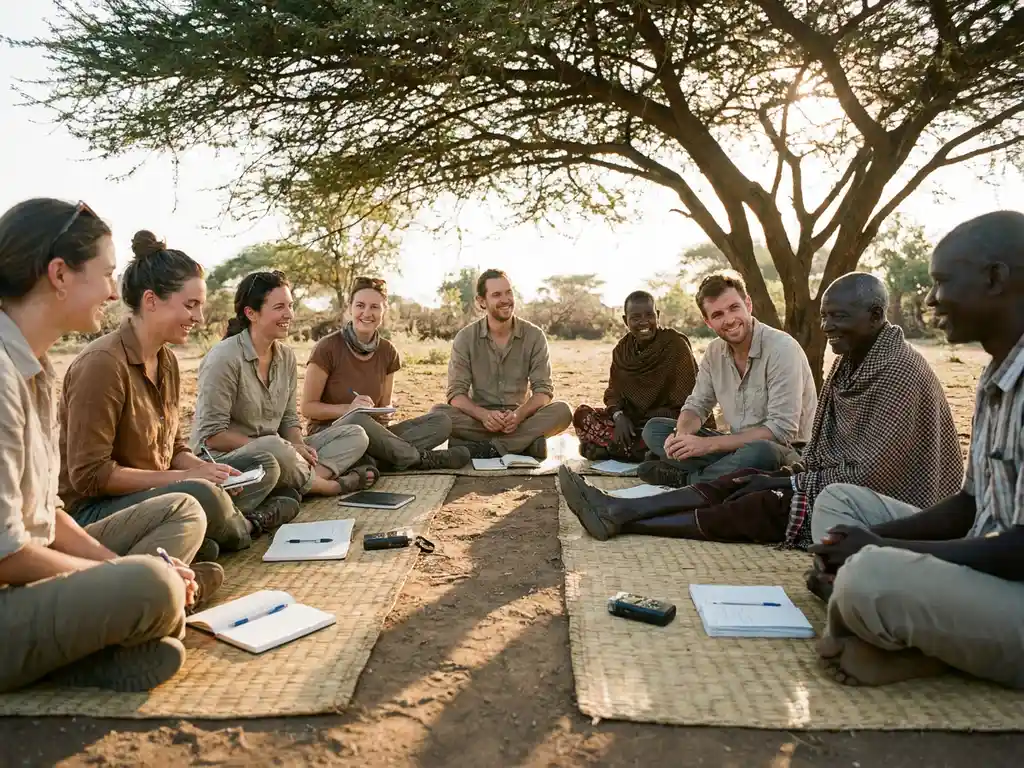
Participatory research with local communities is a collaborative approach that involves community members as active partners throughout the entire research process—from identifying problems to collecting data and implementing solutions. This methodology shifts power from external researchers to local stakeholders, ensuring that research addresses real community needs and builds local capacity for sustainable change.
Top-down research approaches are undermining community trust
When researchers parachute into communities with predetermined agendas, they often miss critical local knowledge and create solutions that don’t fit cultural contexts or practical realities. This extractive approach leaves communities feeling studied rather than empowered, with research findings that gather dust on academic shelves instead of driving meaningful change. The solution lies in flipping the dynamic: start by listening to community priorities, involve residents in designing research questions, and ensure that local voices guide every stage of the process.
Academic research silos are blocking real-world impact
Traditional research methods create artificial barriers between researchers and communities, limiting both the quality of findings and their practical application. When community members lack ownership of research processes, implementation becomes nearly impossible because solutions weren’t designed with local constraints and assets in mind. To bridge this gap, researchers must embrace collaborative methodologies that treat community knowledge as equally valuable as academic expertise, creating shared ownership of both problems and solutions.
What is participatory research with local communities?
Participatory research with local communities is a collaborative methodology in which community members become co-researchers, actively participating in identifying research questions, collecting data, analyzing findings, and implementing solutions. This approach recognizes local knowledge as valuable expertise and ensures that research directly serves community-defined priorities.
Unlike traditional research, in which communities are treated as subjects to be studied, participatory research treats residents as partners with unique insights into their own experiences and challenges. Community members receive training in research methods, while researchers learn about local contexts, cultural dynamics, and practical constraints that shape daily life.
This methodology encompasses various approaches, including community-based participatory research, participatory action research, and collaborative inquiry. Each variation maintains the core principle of shared power and decision-making between academic researchers and community stakeholders throughout the research lifecycle.
Why is participatory research important for community development?
Participatory research is essential for community development because it ensures that research addresses real local priorities, builds community capacity for ongoing problem-solving, and creates sustainable solutions that residents actually want and can implement. This approach generates more accurate data while strengthening social cohesion and local leadership.
Traditional research often fails to capture the complexity of community life because external researchers lack a deep understanding of local dynamics, informal networks, and cultural nuances. When community members guide research questions and data collection, studies uncover insights that outsiders typically miss, leading to more effective interventions.
The capacity-building aspect is equally valuable. As residents learn research skills, they become better equipped to identify problems, gather evidence, and advocate for resources long after academic partners leave. This creates lasting change beyond any single research project.
How does participatory research differ from traditional research methods?
Participatory research differs from traditional methods by sharing power and decision-making with community members, focusing on action rather than solely on knowledge generation, and prioritizing local capacity building over academic publication. Traditional research maintains clear researcher-subject boundaries, while participatory approaches blur these lines.
In traditional research, academics typically define research questions based on theoretical interests or funding priorities. Participatory research starts with community-identified problems and ensures that research questions serve local needs. Data collection also changes dramatically, with community members often leading interviews, surveys, and observations within their own networks.
The relationship to findings represents another key difference. Traditional research aims for objective analysis by maintaining distance from subjects. Participatory research embraces the subjective knowledge that comes from lived experience, viewing community perspectives as essential to understanding complex social issues.
Timelines and sustainability also diverge significantly. Academic research projects typically end when data collection concludes, but participatory research emphasizes ongoing community ownership of findings and continued action based on results.
What are the main types of participatory research approaches?
The main types of participatory research include Community-Based Participatory Research (CBPR), Participatory Action Research (PAR), Collaborative Inquiry, and Participatory Rural Appraisal. Each approach emphasizes different aspects of community engagement while maintaining shared principles of collaboration and empowerment.
Community-Based Participatory Research focuses on health and social issues, emphasizing partnership between academic researchers and community organizations. CBPR projects typically address health disparities, environmental justice, or social determinants of well-being through collaborative investigation and intervention.
Participatory Action Research emphasizes immediate action and social change, with research designed to directly inform community organizing and advocacy efforts. PAR projects often emerge from grassroots movements and prioritize political empowerment alongside knowledge generation.
Collaborative Inquiry involves community members as co-researchers from the beginning, with shared responsibility for all research phases. This approach works particularly well when communities have existing research capacity or strong organizational infrastructure.
Participatory Rural Appraisal, originally developed for international development work, uses visual and interactive methods to engage diverse community members, including those with limited literacy or formal education.
How do you start a participatory research project with local communities?
Starting a participatory research project requires building authentic relationships with community leaders and organizations, listening to local priorities before proposing research questions, and establishing clear agreements about roles, responsibilities, and benefit-sharing. The relationship-building phase often takes months before any formal research begins.
Begin by identifying existing community organizations, informal leaders, and key stakeholders who understand local dynamics and have established trust. Attend community meetings, participate in local events, and spend time learning about current challenges and assets without immediately proposing research solutions.
Once relationships develop, facilitate conversations about community priorities and how research might help address them. This often involves multiple meetings in which residents define problems in their own terms and consider whether research could provide useful information or advocacy tools.
Establish clear agreements about how decisions will be made, how community members will be compensated for their time, who owns the data, and how findings will be shared. These conversations prevent conflicts later and ensure that everyone understands their role in the collaborative process.
Design research methods that match community capacity and interests. This might involve training workshops in which residents learn interview techniques, data analysis, or survey design while sharing their expertise about local contexts and cultural considerations.
What challenges do researchers face in participatory community research?
Researchers face challenges including longer timelines that conflict with academic schedules, difficulty balancing community priorities with research rigor, power imbalances despite collaborative intentions, and institutional barriers that don’t recognize community expertise. These challenges require significant shifts in traditional academic approaches.
Time represents the most common challenge, as relationship-building and collaborative decision-making extend project timelines far beyond traditional research schedules. Academic institutions often pressure researchers for quick results, while meaningful community engagement requires patience and flexibility.
Balancing research quality with community priorities creates ongoing tension. Community members might prefer immediate action over careful data collection, while researchers worry about methodological rigor. Successful projects find creative ways to meet both needs without compromising either community benefit or research integrity.
Power imbalances persist even in well-intentioned collaborative projects. Researchers typically control funding, have advanced degrees, and understand academic systems that community members may find intimidating. Addressing these dynamics requires constant attention and a willingness to share real decision-making authority.
Institutional barriers within universities often fail to recognize community expertise or provide appropriate support for collaborative work. Promotion criteria emphasize individual achievement and peer-reviewed publication, while participatory research requires shared credit and community-accessible outputs.
How WAITRO Supports Collaborative Research with Communities
WAITRO facilitates participatory research through our global network of research organizations and programs that connect academic institutions with local communities worldwide. We support collaborative research initiatives by:
- Connecting research organizations with community-based partners through our extensive membership network
- Providing capacity development opportunities that strengthen both institutional and community research capabilities
- Supporting cross-border partnerships that share participatory research methodologies and best practices
- Facilitating knowledge exchange between researchers and communities working on similar sustainability challenges
- Offering programs that emphasize collaborative approaches to addressing the UN Sustainable Development Goals
Our services help bridge the gap between academic research and community needs by fostering partnerships that prioritize local knowledge and sustainable solutions. Whether you’re seeking to develop participatory research capacity or looking for community partners for collaborative projects, WAITRO’s global platform connects stakeholders committed to inclusive research approaches.
Join us at the WAITRO Summit 2026 in Istanbul, Türkiye (October 26–28, 2026), where the theme “Leading the Path of Implementation: Strengthening Co-Creation for Our Common Future” will showcase innovative collaborative research models. This summit offers an ideal opportunity to connect with global innovators, learn about participatory research approaches, and become part of a movement shaping sustainable innovation through community engagement. Become a member today to access our full range of collaborative research opportunities and join a global community committed to inclusive, community-centered research practices.
