
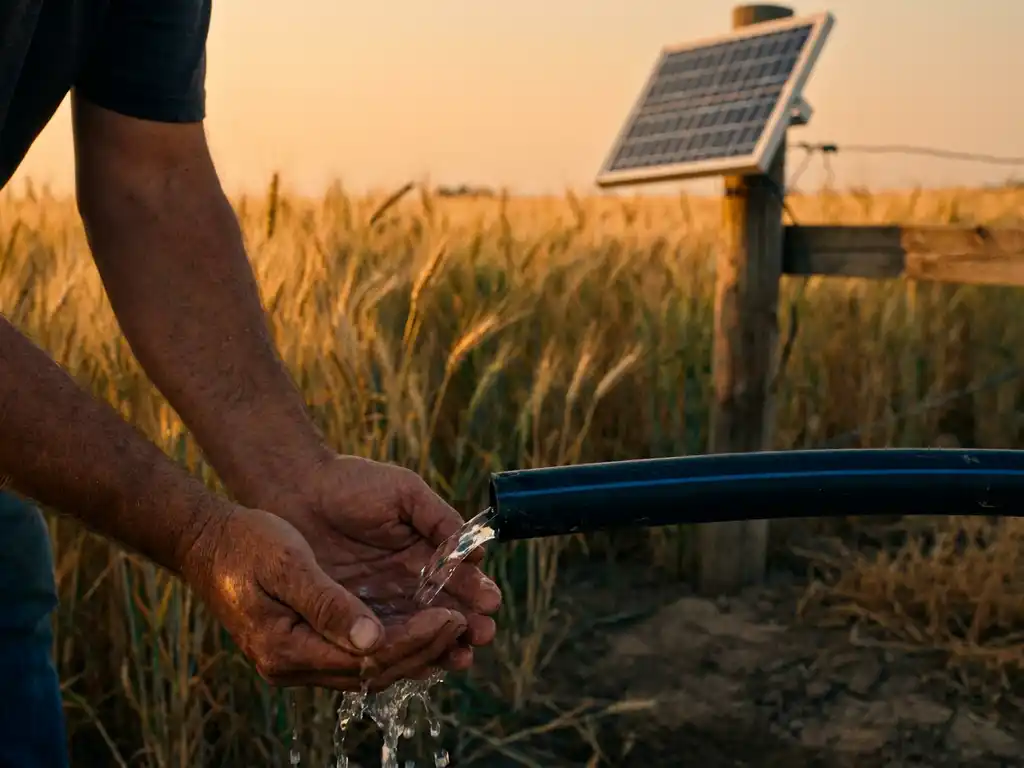
The water-energy-food nexus is the interconnected relationship between water, energy, and food systems, where decisions in one area significantly impact the other two. This integrated approach recognizes that these three resources are fundamentally linked through production, distribution, and consumption processes, requiring coordinated management to ensure sustainable development and resource security.
Fragmented resource planning is costing communities their future security
When governments and organizations manage water, energy, and food systems in isolation, they create dangerous blind spots that lead to resource conflicts and system failures. A city that expands agriculture without considering water availability may drain aquifers, while energy projects that ignore food production needs can displace farmland and threaten local food security. These disconnected decisions compound over time, creating cascading crises that are far more expensive to resolve than to prevent. The solution lies in adopting integrated planning frameworks that assess cross-sector impacts before making major resource allocation decisions.
Resource competition without coordination triggers widespread shortages
Competition among water, energy, and food systems intensifies during periods of stress, turning manageable challenges into full-scale crises. During droughts, agriculture and energy production both demand limited water supplies, while food processing requires energy that may be diverted to cooling systems. Without coordination mechanisms, each sector fights for resources, leading to brownouts, crop failures, and food price spikes that hit vulnerable populations hardest. Communities can break this cycle by establishing cross-sector coordination bodies that prioritize resource allocation based on integrated impact assessments and shared sustainability goals.
What Is the Water-Energy-Food Nexus and Why Does It Matter?
The water-energy-food nexus represents the complex interdependencies among water, energy, and food security systems. It matters because managing these systems separately leads to inefficient resource use, unintended consequences, and missed opportunities for sustainable development.
Traditional approaches treat water, energy, and food as separate sectors with distinct management strategies. However, this siloed thinking ignores fundamental realities: agriculture consumes 70% of global freshwater, energy production requires substantial water for cooling and processing, and food systems depend on energy for production, processing, and distribution. When decisions are made without considering these connections, they often create problems in other sectors.
The nexus approach offers a framework for understanding and managing these trade-offs. It enables policymakers to identify solutions that benefit multiple sectors simultaneously, such as solar-powered irrigation systems that reduce energy costs while conserving water, or biogas production from food waste that generates renewable energy while reducing waste management burdens.
How Are Water, Energy, and Food Systems Interconnected?
Water, energy, and food systems are interconnected through shared resources, infrastructure, and environmental impacts. Water is essential for energy production and agriculture, energy powers water treatment and food processing, and food production affects both water quality and energy demand.
The connections operate in multiple directions. Agriculture requires water for irrigation and energy for machinery, fertilizers, and transportation. Energy production needs water for cooling thermal power plants and for hydroelectric generation, while renewable energy technologies like biofuels compete with food crops for land and water. Food processing and distribution systems consume significant energy, while food waste contributes to methane emissions that affect climate and water cycles.
These interconnections create both vulnerabilities and opportunities. Climate change can simultaneously stress water supplies, reduce energy efficiency, and threaten crop yields. Conversely, integrated solutions can address multiple challenges: precision agriculture reduces water and energy use while maintaining food production, and waste-to-energy systems convert food waste into renewable power while reducing disposal costs.
What Are the Main Challenges in Water-Energy-Food Nexus Management?
The main challenges in nexus management include institutional fragmentation, competing sectoral priorities, limited cross-sector data sharing, and inadequate financing mechanisms for integrated projects. These barriers prevent coordinated decision-making and resource optimization.
Institutional fragmentation represents the most significant obstacle. Water, energy, and food systems typically fall under different government ministries, regulatory frameworks, and planning cycles. Each sector develops policies and investments based on its own priorities, often without consulting other sectors about potential impacts or synergies.
Resource competition intensifies these challenges. During periods of scarcity, sectors compete for limited water, land, and financial resources. Energy projects may conflict with agricultural needs, while food security concerns can override environmental water requirements. Without clear coordination mechanisms, these conflicts lead to suboptimal outcomes for all sectors.
Data and knowledge gaps further complicate management efforts. Cross-sector information sharing remains limited, making it difficult to assess trade-offs and identify integrated solutions. Many regions lack the technical capacity and analytical tools needed to implement nexus approaches effectively.
How Does the Nexus Approach Support Sustainable Development Goals?
The nexus approach directly supports multiple Sustainable Development Goals by addressing interconnected challenges related to poverty, hunger, water access, energy security, and climate action. It enables integrated solutions that advance several SDGs simultaneously rather than pursuing isolated sectoral targets.
SDG 2 (Zero Hunger), SDG 6 (Clean Water and Sanitation), and SDG 7 (Affordable and Clean Energy) form the core nexus, but the approach extends to other goals. Climate action (SDG 13) benefits from reduced resource waste and emissions, while sustainable cities (SDG 11) require integrated resource planning. Economic growth (SDG 8) emerges from efficient resource use and reduced system vulnerabilities.
The nexus approach particularly supports SDG 17 (Partnerships for the Goals) by necessitating cross-sector collaboration and knowledge sharing. It encourages stakeholders to move beyond traditional boundaries and develop shared solutions that benefit multiple sectors and communities.
How WAITRO Helps with Water-Energy-Food Nexus Solutions
We facilitate global collaboration on integrated resource management through our network of research and technology organizations. Our comprehensive approach includes:
- Connecting researchers across water, energy, and food sectors to develop integrated solutions
- Supporting capacity development programs that build nexus management expertise
- Facilitating knowledge sharing between institutions working on cross-sector challenges
- Promoting collaborative research initiatives that address multiple SDGs simultaneously
- Providing platforms for technology transfer and innovation scaling
The upcoming WAITRO Summit 2026 in Istanbul, Türkiye (26–28 October 2026) will focus on “Leading the Path of Implementation: Strengthening Co-Creation for Our Common Future.” This event presents a unique opportunity to connect with global innovators working on nexus solutions, engage in co-creation activities, and be part of a movement shaping sustainable resource management. Join us to advance integrated approaches that strengthen food security, energy access, and water sustainability worldwide. Become a member today to access our full range of services and programs supporting sustainable development through collaborative innovation.
