
Climate research is the systematic scientific study of Earth’s climate system, including how it changes over time, what drives those changes, and what the consequences are for ecosystems, economies, and human societies. It matters in 2026 because the decisions governments, organizations, and communities make right now will shape climate outcomes for decades to come. The questions below unpack how climate science works, what it reveals, and how it can guide smarter action.
How does climate research actually work?
Climate research works by collecting data from a wide range of sources, analyzing patterns over time, and building models that help scientists understand past climate behavior and project future conditions. It is an interdisciplinary field that draws on physics, chemistry, biology, oceanography, and data science to build a comprehensive picture of how Earth’s climate system functions.
At its core, climate science relies on long-term observation. Researchers gather data from satellites, weather stations, ocean buoys, ice cores, tree rings, and atmospheric sensors. This raw information feeds into climate models, which are computational tools that simulate the interactions between the atmosphere, oceans, land surface, and ice. By running these models under different scenarios, scientists can explore how changes in greenhouse gas concentrations, land use, or solar activity might affect global and regional climates.
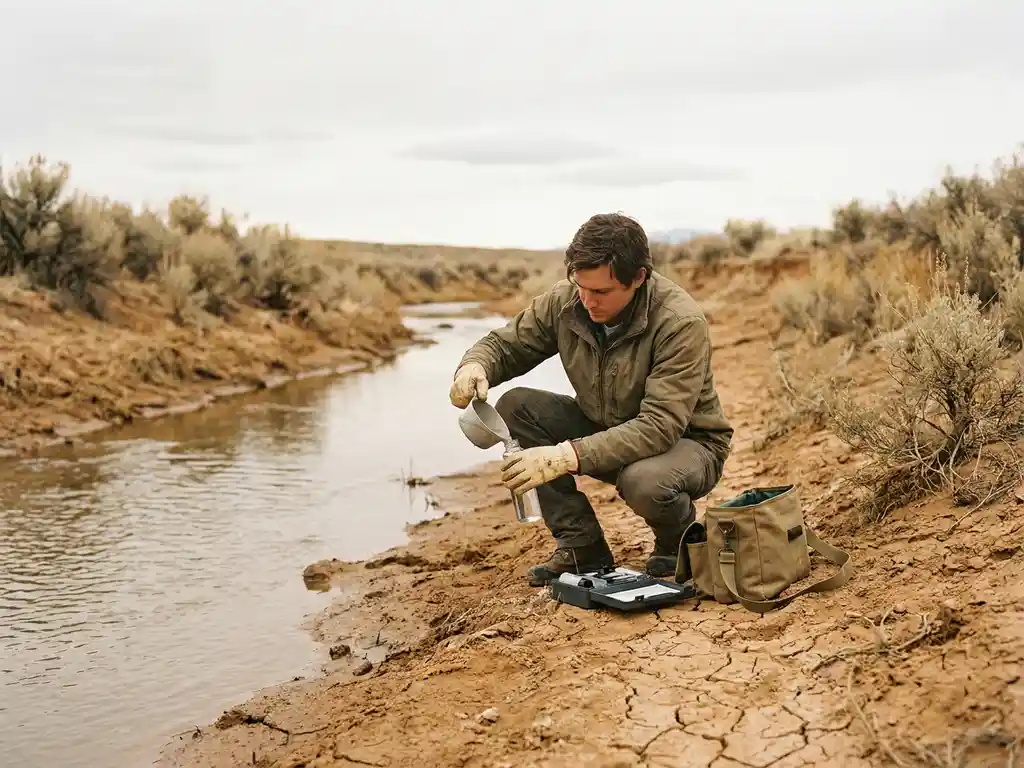
Field research also plays a vital role. Scientists travel to remote environments, from Arctic tundra to tropical rainforests, to collect samples and direct measurements that cannot be captured remotely. These on-the-ground observations are then validated against satellite data and model outputs to ensure accuracy. The result is a layered, cross-checked body of evidence that gives climate science its credibility and reliability.
What are the main types of climate research being conducted today?
The main types of climate research being conducted today include observational studies, climate modeling, impact assessment research, mitigation and adaptation science, and paleoclimatology. Each type addresses a different dimension of the climate challenge, from understanding what is happening now to identifying what societies can do in response.
- Observational research tracks real-time changes in temperature, sea levels, ice extent, and atmospheric composition to establish baselines and detect trends.
- Climate modeling uses supercomputers to simulate climate dynamics and project future scenarios under varying emissions pathways.
- Impact assessment examines how climate shifts affect agriculture, water supply, biodiversity, public health, and infrastructure.
- Mitigation science explores strategies to reduce greenhouse gas emissions, including renewable energy transitions, carbon capture, and land management practices.
- Adaptation research focuses on how communities and ecosystems can adjust to climate changes that are already underway or unavoidable.
- Paleoclimatology reconstructs past climate conditions using geological and biological records to provide context for current changes.
Increasingly, researchers are also studying the social and economic dimensions of climate change, recognizing that technical solutions alone are insufficient without understanding human behavior, governance structures, and equity considerations.
Why is 2026 a critical year for climate research?
2026 is a critical year for climate research because it falls within a narrow window in which the science informing the next generation of international climate commitments must be robust, actionable, and widely accessible. Countries are revising their national climate plans, and the quality of the research underpinning those plans will directly influence their ambition and effectiveness.
The global scientific community is also grappling with accelerating climate signals. Extreme weather events, shifting precipitation patterns, and ecosystem disruptions are occurring faster than many earlier projections anticipated. This urgency is driving demand for higher-resolution climate data, faster modeling cycles, and stronger coordination between research institutions across regions.
At the same time, 2026 represents a moment of growing investment in climate innovation. Governments and multilateral bodies are channeling significant resources into clean technology research, early warning systems, and climate adaptation programs. Research organizations that can translate scientific findings into policy-relevant insights are in high demand, making this a pivotal moment for the entire field of climate science.
How does climate research influence government policy and international agreements?
Climate research influences government policy and international agreements by providing the evidence base that policymakers use to set targets, design regulations, and negotiate commitments. Without credible climate data and projections, it would be impossible to define what is achievable, what is necessary, or what the consequences of inaction would be.
Bodies like the Intergovernmental Panel on Climate Change (IPCC) synthesize thousands of peer-reviewed studies into assessment reports that directly inform negotiations under the United Nations Framework Convention on Climate Change. These reports shape the language of international agreements, the ambition of national pledges, and the criteria used to evaluate progress.
At the national level, governments rely on climate research to design carbon pricing mechanisms, set emissions standards, allocate adaptation funding, and develop long-term energy strategies. Regional research institutions and national meteorological agencies play a particularly important role here, translating global findings into locally relevant guidance that policymakers can act on. The stronger the connection between research institutions and government decision-makers, the more likely it is that science will drive meaningful policy outcomes.
What role do research organizations and global networks play in climate science?
Research organizations and global networks play a foundational role in climate science by conducting original research, building scientific capacity in emerging economies, facilitating data sharing, and translating findings into practical applications. No single institution can address the full scope of the climate challenge alone, which is why collaborative networks are essential to the field’s progress.
Research and technology organizations (RTOs) are particularly valuable because they bridge the gap between academic discovery and real-world application. They work with governments, industries, and communities to develop climate solutions that are technically sound and practically deployable. This applied focus means that their contributions often have a more direct impact on emissions reductions and adaptation outcomes than purely theoretical research.
Global networks amplify this impact by enabling cross-border collaboration, reducing duplication of effort, and ensuring that knowledge generated in one region can benefit another. They also help address a persistent imbalance in climate research: the institutions with the greatest need for climate knowledge, particularly those in climate-vulnerable developing regions, often have the least access to research infrastructure and international partnerships. Networks that actively connect these institutions with well-resourced counterparts help close that gap.
How can governments and NGOs engage with climate research initiatives?
Governments and NGOs can engage with climate research initiatives by forming strategic partnerships with research institutions, participating in international knowledge-sharing networks, funding applied research programs, and integrating scientific findings into their planning and advocacy work. Engagement is most effective when it is structured, sustained, and aligned with clear goals.
Practical entry points include co-funding research programs with academic or technology institutions, commissioning impact assessments tailored to specific policy questions, and participating in multilateral research consortia that pool expertise across borders. NGOs can also play a convening role, bringing together researchers, community stakeholders, and policymakers to ensure that climate science is both rigorous and relevant to the people most affected by climate change.
Capacity building is another critical avenue. Many government agencies and civil society organizations lack the internal expertise to evaluate and apply complex climate data. Investing in training, technical assistance, and institutional development strengthens the ability of these organizations to use climate research effectively in their own decision-making.
How WAITRO supports global climate research engagement
We provide a practical pathway for governments, NGOs, and research institutions to engage meaningfully with global climate science. Through our network of 135 Full Members and 45 Associate Members spanning multiple regions, we connect organizations with the partnerships, knowledge, and resources they need to translate climate research into action.
Our work in this space includes:
- Institutional capacity building to strengthen research and technology organizations so they can conduct, apply, and communicate climate science more effectively
- Cross-border partnership facilitation that connects climate-vulnerable regions with well-resourced research institutions and innovation networks
- Knowledge-sharing platforms that help members stay current with emerging climate data, methodologies, and policy frameworks
- Support for innovation ecosystems that bring climate research to market and into the hands of communities and governments that need it most
- Alignment with the UN SDGs, ensuring that our programs contribute to the broader international framework for sustainable development and climate action
Whether you represent a national government agency, a regional development body, or an international NGO, we offer the connections and programs to amplify your impact in climate research and beyond. Reach out to us today to explore how WAITRO membership or partnership can support your climate goals.
