
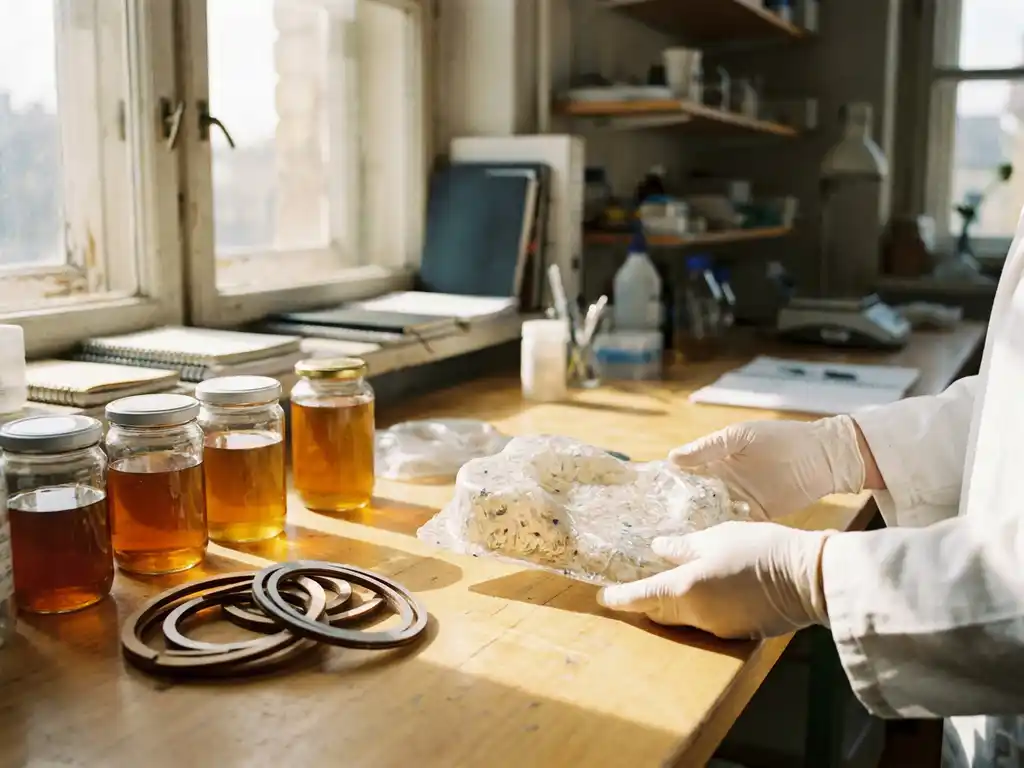
Circular economy innovation refers to the development of new technologies, business models, and processes that eliminate waste and keep resources in continuous use. It transforms how we design, produce, and consume by creating closed-loop systems in which materials are reused, repaired, and recycled rather than discarded after a single use.
Linear thinking is costing you valuable resources and competitive advantage
Organizations stuck in traditional linear models face mounting pressure from resource scarcity, waste disposal costs, and regulatory compliance requirements. This approach burns through raw materials, generates excessive waste streams, and creates vulnerability to supply chain disruptions. The shift toward circular thinking opens new revenue streams through resource recovery, reduces operational costs through efficiency gains, and builds resilience against material price volatility.
Waste streams signal untapped revenue opportunities
What most organizations view as disposal problems actually represent hidden value waiting to be captured. Every waste output contains materials, energy, or byproducts that could feed back into production cycles or serve other industries. Companies that recognize these patterns can transform cost centers into profit drivers by designing recovery systems, developing secondary markets for waste materials, and creating partnerships that turn one organization’s output into another organization’s input.
What is circular economy innovation and why does it matter?
Circular economy innovation creates systems that regenerate resources rather than depleting them. It matters because traditional linear models face increasing pressure from resource constraints, environmental regulations, and changing consumer expectations for sustainable products.
This approach addresses critical challenges facing modern organizations. Resource scarcity drives up material costs and creates supply vulnerabilities. Environmental regulations impose compliance costs and operational restrictions. Consumer demand increasingly favors brands that demonstrate environmental responsibility through measurable actions.
Circular innovation generates multiple benefits beyond environmental impact. Organizations reduce input costs by maximizing resource efficiency. They create new revenue streams by monetizing waste outputs. Risk management improves through diversified supply sources and reduced dependence on virgin materials. These advantages compound over time, creating sustainable competitive positioning.
How does circular economy innovation differ from traditional linear approaches?
Traditional linear models follow a take-make-dispose pattern in which resources become waste after a single use. Circular economy innovation creates closed loops in which materials maintain their value through continuous cycles of use, recovery, and regeneration.
Linear approaches optimize for efficiency within isolated processes. Raw materials enter production, products serve their function, and then disposal removes them from the system. This model assumes unlimited resource availability and infinite waste absorption capacity. Each stage operates independently with minimal consideration for upstream or downstream impacts.
Circular innovation designs interconnected systems in which outputs from one process become inputs for another. Products are conceived for disassembly and material recovery. Business models capture value through service provision rather than ownership transfer. Organizations collaborate across industries to create symbiotic relationships in which waste streams become resource flows.
What are the key principles driving circular economy innovation?
Three core principles drive circular economy innovation: design out waste and pollution, keep products and materials in use, and regenerate natural systems. These principles guide decision-making across product development, business model design, and operational processes.
Designing out waste requires rethinking products from conception. This means selecting materials that can be safely returned to biological or technical cycles. It involves modular design that enables repair, upgrade, and component recovery. Manufacturing processes minimize harmful outputs and maximize material utilization rates.
Keeping products and materials in use extends their functional lifespan through multiple strategies. Sharing platforms maximize utilization rates of underused assets. Repair and refurbishment services restore functionality to damaged items. Remanufacturing returns products to like-new condition using recovered components. When products reach end of life, material recovery preserves their molecular value for new applications.
Regenerating natural systems goes beyond reducing negative impact to creating positive environmental outcomes. This includes using renewable energy sources, supporting biodiversity through land use practices, and returning nutrients to the soil through composting programs.
How can organizations implement circular economy innovation strategies?
Organizations implement circular strategies by conducting material flow audits, redesigning products for circularity, developing partnerships for resource sharing, and creating new business models that capture value from extended product lifecycles.
Material flow audits reveal where resources enter and exit organizational systems. These assessments identify waste streams with recovery potential and highlight inefficiencies in resource utilization. Organizations map their entire value chain to understand interdependencies and spot collaboration opportunities with suppliers and customers.
Product redesign focuses on durability, repairability, and end-of-life material recovery. Design teams select materials based on their ability to maintain quality through multiple use cycles. Modular architectures enable component replacement without full product disposal. Digital integration allows for performance monitoring and predictive maintenance.
Strategic partnerships create the infrastructure needed for circular systems. Organizations collaborate with waste management companies to develop collection and processing capabilities. They partner with other manufacturers to create industrial symbiosis in which one company’s waste becomes another company’s raw material. Service providers enable sharing economy models that maximize asset utilization.
What role does technology play in circular economy innovation?
Technology enables circular economy innovation through advanced materials science, digital tracking systems, automation in recycling processes, and platforms that facilitate resource sharing and optimization across complex supply networks.
Advanced materials create new possibilities for circular design. Bio-based materials can safely return to natural cycles without environmental harm. Smart materials respond to environmental conditions to extend product lifespan. Nanotechnology enables precise material separation and recovery processes that were previously economically unfeasible.
Digital technologies provide the visibility and coordination needed for complex circular systems. Internet of Things sensors track product condition and location throughout their lifecycle. Blockchain systems create transparent supply chain records that verify material origins and processing history. Artificial intelligence optimizes routing and processing decisions across multiple stakeholders.
Automation makes material recovery economically viable at scale. Robotic systems sort mixed waste streams with precision that exceeds manual processes. Advanced recycling technologies break down materials to the molecular level for infinite reuse. Additive manufacturing enables on-demand production that reduces inventory waste and transportation impacts.
How do research organizations contribute to circular economy innovation?
Research organizations develop the foundational technologies, methodologies, and knowledge systems that enable circular economy innovation. They conduct interdisciplinary research that bridges technical feasibility with economic viability and social acceptance.
Technical research advances material science capabilities that make circular systems possible. This includes developing new recycling processes that maintain material quality, creating bio-based alternatives to petroleum-derived materials, and improving separation technologies that enable complex waste stream processing. Research organizations test these innovations at pilot scale before commercial deployment.
Systems research addresses the complexity of circular economy implementation. This involves modeling resource flows across industries, analyzing policy interventions that support circular transitions, and developing metrics that accurately measure circular performance. Research organizations create frameworks that help organizations assess and improve their circular strategies.
Collaborative research brings together diverse stakeholders to address shared challenges. Research organizations facilitate partnerships between industry, government, and civil society to develop solutions that work across different contexts and scales. They provide neutral ground for competitors to collaborate on pre-competitive research that benefits entire sectors.
How WAITRO Advances Circular Economy Innovation
We connect research organizations worldwide to accelerate circular economy innovation through collaborative research programs, technology transfer initiatives, and capacity-building services. Our global network enables knowledge sharing and partnership development that transforms circular concepts into practical solutions.
Our approach includes several key areas:
- Facilitating international research collaborations on circular technologies and business models
- Connecting research organizations with industry partners seeking circular innovation solutions
- Providing capacity-building services that help organizations develop circular economy expertise
- Supporting technology transfer from research labs to commercial applications
- Creating platforms for knowledge exchange through specialized programs and events
The WAITRO Summit 2026 in Istanbul, Türkiye (October 26–28, 2026) focuses on “Leading the Path of Implementation: Strengthening Co-Creation for Our Common Future.” This event brings together global innovators working on circular economy solutions, providing opportunities to engage in collaborative research, share breakthrough technologies, and build partnerships that accelerate circular innovation implementation. Join our network to connect with leading research organizations advancing circular economy innovation and be part of the movement shaping sustainable technological development.
