
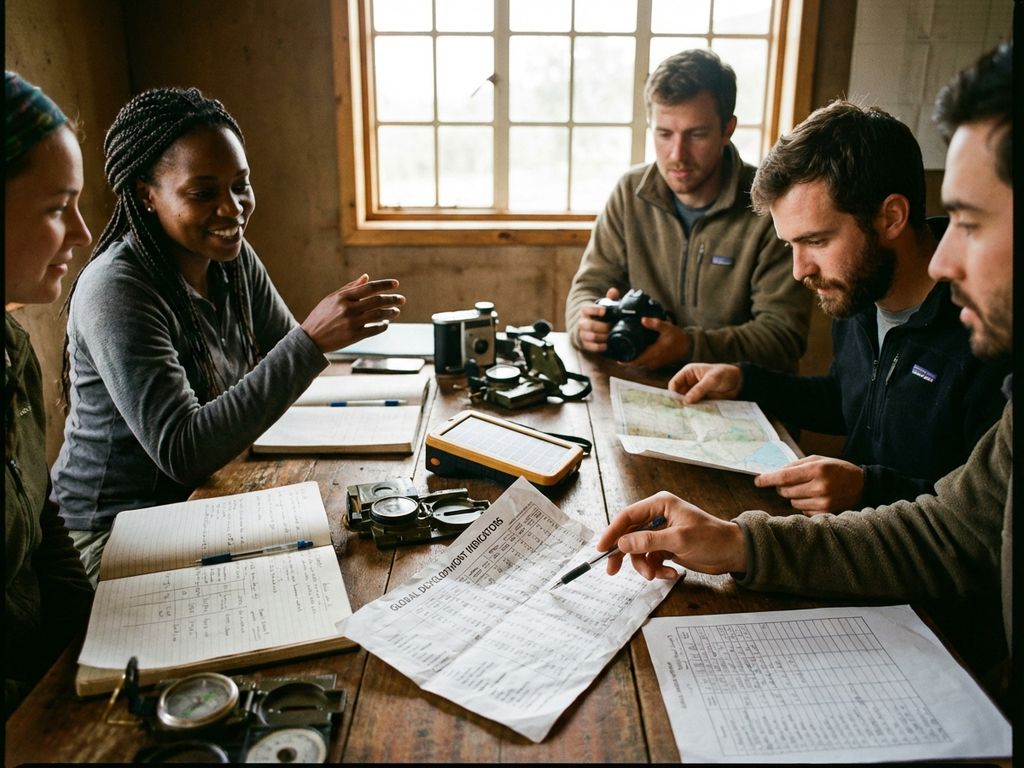
The Global Challenges Research Fund (GCRF) is a £1.5 billion UK government initiative that funds research addressing global development challenges through partnerships between UK institutions and developing countries. Established in 2016 under the Official Development Assistance budget, GCRF supports collaborative research tackling issues such as poverty, health inequalities, and climate change while building research capacity in developing nations.
What is the Global Challenges Research Fund and why was it created?
The Global Challenges Research Fund is a UK government funding programme administered by UK Research and Innovation (UKRI) that channels Official Development Assistance through research partnerships. GCRF was created to ensure UK research contributes meaningfully to international development while maintaining scientific excellence and building lasting research capacity in developing countries.
The fund emerged from the recognition that complex global challenges require collaborative research approaches that combine UK expertise with local knowledge from developing nations. Unlike traditional research funding, GCRF explicitly requires projects to demonstrate development impact alongside academic merit, ensuring research outcomes benefit communities in developing countries.
GCRF operates across multiple research councils and funding bodies, creating a coordinated approach to international development research. The programme emphasises capacity building, requiring UK institutions to work as equal partners with researchers in developing countries rather than simply conducting research about these regions.
How does GCRF funding actually work for researchers?
GCRF funding operates through various mechanisms, including responsive mode grants, strategic programmes, and partnership awards. UK-based researchers must demonstrate genuine collaboration with partners in countries eligible for Official Development Assistance, with projects typically requiring co-design and shared leadership between UK and international partners.
The application process varies by funding council but generally requires detailed development impact statements, capacity-building plans, and evidence of meaningful partnership arrangements. Projects must show how research will address development challenges while building research capability in partner countries.
Eligible research spans fundamental science through to applied research, provided it addresses development challenges and includes substantial collaboration with developing-country partners. Funding covers direct research costs, capacity-building activities, and partnership development, with grants ranging from small awards to multi-million-pound programmes spanning several years.
What types of global challenges does GCRF research address?
GCRF research focuses on challenges that disproportionately affect developing countries, organised around themes including health systems, food security, sustainable cities, climate resilience, and conflict prevention. These areas directly align with the UN Sustainable Development Goals, ensuring research contributes to internationally agreed development priorities and supports global development impact that many international research organisations prioritise.
Health research includes infectious disease control, maternal and child health, and health system strengthening. Food security projects address agricultural productivity, nutrition, and sustainable farming practices. Climate and environment research covers adaptation strategies, renewable energy, and natural resource management.
The fund also supports research into governance, education, and economic development, recognising that sustainable development requires addressing interconnected social, economic, and environmental challenges. Projects often adopt interdisciplinary approaches, combining natural sciences with social sciences to develop holistic solutions.
What’s the difference between GCRF and other international research funding?
GCRF differs from other international research funding through its explicit development focus and mandatory partnership requirements. Unlike traditional research councils that prioritise academic excellence, GCRF requires equal weighting of scientific merit and development impact, with projects assessed on their potential to improve lives in developing countries.
The fund’s partnership approach distinguishes it from programmes where UK researchers simply study international issues. GCRF mandates genuine collaboration, capacity building, and shared leadership with developing-country partners. This contrasts with many international funding schemes that allow UK-led research about global issues without requiring meaningful international partnership.
GCRF’s Official Development Assistance status also creates unique requirements around beneficiary countries and development outcomes. Projects must demonstrate clear pathways to impact in ODA-eligible countries, with robust monitoring and evaluation frameworks tracking both research outputs and development outcomes.
How do you measure the impact of GCRF-funded research?
GCRF impact assessment combines traditional research metrics with development outcome indicators, measuring both academic excellence and real-world change in developing countries. Projects must demonstrate pathways to impact through policy influence, practice change, or direct community benefits, with monitoring frameworks tracking progress throughout project lifecycles.
Assessment frameworks evaluate capacity-building outcomes, measuring how projects strengthen research capability in partner institutions and countries. This includes tracking researcher development, institutional strengthening, and knowledge transfer activities that build lasting research capacity beyond individual projects.
The fund employs mixed-method evaluation approaches, combining quantitative indicators with qualitative assessment of partnership quality and development outcomes. Impact measurement extends beyond project completion, tracking longer-term changes in research capacity, policy influence, and community benefits resulting from GCRF investments.
How WAITRO supports global challenges research collaboration
WAITRO facilitates global challenges research collaboration by connecting UK institutions with research organisations across developing countries through our extensive network of 135 full members and 45 associate members worldwide. Our platform enables researchers to identify qualified partners in ODA-eligible countries, supporting the partnership requirements essential for GCRF funding success.
Our support for global challenges research includes:
- Connecting UK institutions with established research organisations in developing countries
- Facilitating partnership development through networking events and collaboration platforms
- Providing capacity-building programmes that strengthen research institutions in developing nations
- Supporting knowledge sharing and best-practice exchange across our global network
- Amplifying research impact through our member organisations’ local networks and policy connections
We understand that successful GCRF applications require genuine, long-term partnerships built on mutual respect and shared expertise. Through our global network and collaborative programmes, we help researchers build the meaningful international partnerships that drive both scientific excellence and sustainable development impact. Become a member to explore how our network can support your global challenges research collaboration.
