
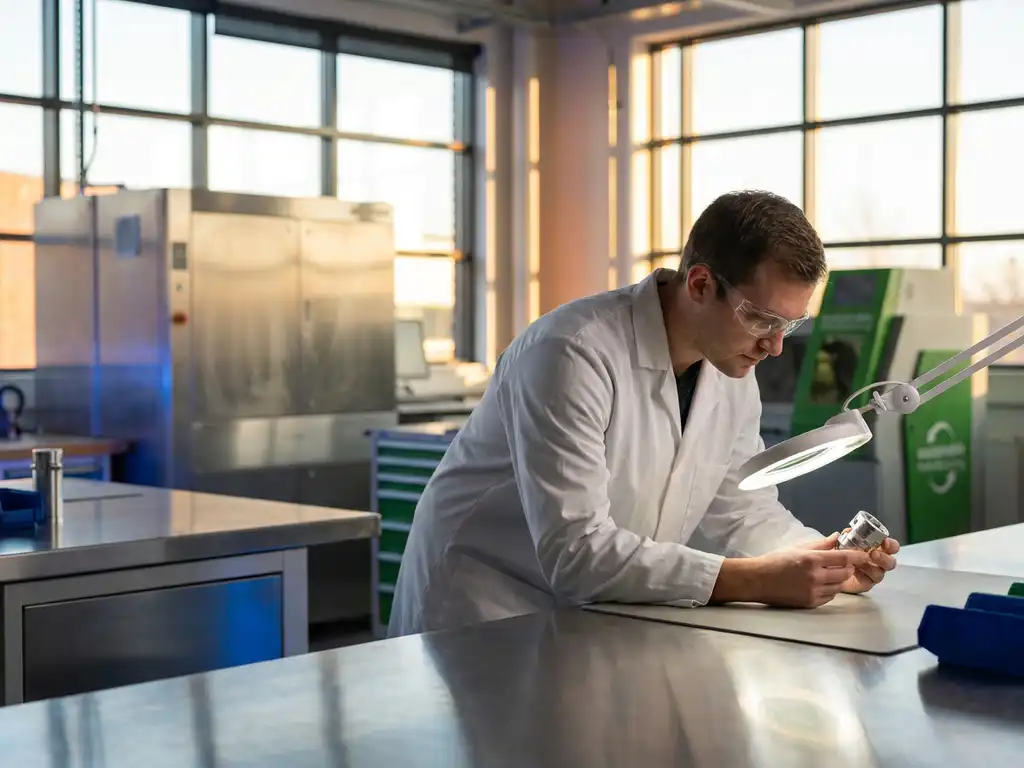
Sustainable manufacturing systems research is the scientific study of production processes that minimize environmental impact while maintaining economic viability and social responsibility. This interdisciplinary field combines engineering, environmental science, and business principles to develop manufacturing approaches that reduce waste, conserve resources, and support long-term industrial sustainability goals.
Outdated manufacturing practices are costing companies billions in hidden expenses
Traditional manufacturing systems waste up to 30% of raw materials and consume excessive energy, creating mounting regulatory compliance costs and supply chain vulnerabilities. Companies face increasing carbon taxes, stricter environmental regulations, and growing consumer demand for sustainable products. The solution lies in adopting research-backed sustainable manufacturing practices that optimize resource efficiency, reduce operational costs, and future-proof operations against evolving environmental standards.
Resource inefficiency signals deeper operational problems
When manufacturing systems consume more energy, water, or materials than necessary, it reveals fundamental design flaws in production processes that compound over time. These inefficiencies create cascading problems, including higher production costs, increased waste disposal fees, and reduced competitiveness in sustainability-conscious markets. Organizations can address these issues by implementing systematic resource monitoring, adopting circular economy principles, and integrating sustainable design thinking into their manufacturing strategy from the ground up.
What is sustainable manufacturing systems research?
Sustainable manufacturing systems research is the systematic investigation of production methods that balance environmental protection, economic efficiency, and social equity. It focuses on developing technologies, processes, and frameworks that reduce environmental impact while maintaining or improving manufacturing performance and profitability.
This research field encompasses multiple disciplines, including industrial engineering, environmental science, materials science, and economics. Researchers examine how manufacturing processes can be redesigned to minimize resource consumption, reduce emissions, and eliminate waste throughout the production lifecycle. The goal is to create manufacturing systems that meet present needs without compromising future generations’ ability to meet their own.
The research covers everything from individual machine optimization to entire supply chain transformation. Scientists and engineers work to understand the complex relationships between manufacturing decisions and their environmental, economic, and social consequences, developing solutions that improve all three dimensions simultaneously.
Why is sustainable manufacturing research important for industry?
Sustainable manufacturing research is crucial because it helps industries reduce costs, meet regulatory requirements, and remain competitive in increasingly environmentally conscious markets. Companies that implement research findings often achieve significant cost savings through improved resource efficiency and waste reduction.
Environmental regulations are becoming stricter worldwide, with governments implementing carbon pricing, emissions limits, and extended producer responsibility requirements. Research provides the technical foundation for compliance strategies that go beyond mere regulatory adherence to create competitive advantages. Companies that proactively adopt sustainable practices often find themselves better positioned when new regulations emerge.
Consumer preferences are shifting toward sustainable products, with studies showing a growing willingness to pay premiums for environmentally responsible goods. Sustainable manufacturing research helps companies respond to this market demand while maintaining profitability. Additionally, investors increasingly consider environmental performance when making funding decisions, making sustainability research essential for access to capital.
What are the main focus areas of sustainable manufacturing research?
The main focus areas include energy efficiency optimization, waste minimization and circular economy implementation, sustainable materials development, and water conservation technologies. Researchers also examine supply chain sustainability, product lifecycle assessment, and the integration of renewable energy sources into manufacturing operations.
Energy efficiency research concentrates on reducing power consumption through advanced motor technologies, heat recovery systems, and process optimization. Scientists develop methods to capture and reuse waste heat, implement smart grid technologies, and design manufacturing schedules that take advantage of renewable energy availability.
Circular economy research focuses on creating closed-loop systems in which waste from one process becomes input for another. This includes developing biodegradable materials, designing products for disassembly and recycling, and creating industrial symbiosis networks in which different companies share resources and waste streams.
Sustainable materials research involves developing alternatives to environmentally harmful substances, improving material durability to extend product lifecycles, and creating bio-based materials that can replace petroleum-derived inputs. Water conservation research addresses treatment and reuse technologies, closed-loop water systems, and drought-resistant manufacturing processes.
How do researchers measure sustainability in manufacturing systems?
Researchers measure sustainability using comprehensive metrics, including carbon footprint analysis, resource consumption ratios, waste generation rates, and lifecycle assessment scores. These measurements combine environmental indicators with economic performance metrics to provide holistic sustainability evaluations.
Environmental metrics include greenhouse gas emissions per unit produced, water-use efficiency, energy-intensity ratios, and waste-to-product ratios. Researchers use standardized methodologies such as ISO 14040 for lifecycle assessment and the Greenhouse Gas Protocol for emissions accounting. These tools enable consistent measurement across different manufacturing contexts and facilitate meaningful comparisons.
Economic sustainability indicators include cost per unit, return on investment for sustainability initiatives, and total cost of ownership calculations that include environmental externalities. Social sustainability metrics examine worker safety rates, community impact assessments, and supply chain labor practices.
Advanced measurement approaches use real-time monitoring systems with IoT sensors to track resource flows continuously. Machine learning algorithms analyze this data to identify optimization opportunities and predict sustainability performance under different operating conditions.
What technologies are driving sustainable manufacturing innovation?
Key technologies include artificial intelligence for process optimization, additive manufacturing for waste reduction, renewable energy integration systems, and advanced materials such as bioplastics and recycled composites. Digital twin technology and IoT sensors enable real-time monitoring and optimization of sustainability parameters.
Artificial intelligence and machine learning optimize manufacturing processes by predicting optimal operating conditions, scheduling production to minimize energy consumption, and identifying maintenance needs before equipment efficiency degrades. These technologies can reduce energy consumption by 10–20% while improving product quality.
Additive manufacturing, or 3D printing, reduces material waste by building products layer by layer using only the necessary material. This technology also enables local production, reducing transportation emissions, and allows for complex geometries that improve product efficiency while using less material.
Smart manufacturing systems integrate renewable energy sources, energy storage, and demand response capabilities to minimize carbon footprint. Advanced sensor networks monitor environmental parameters continuously, enabling rapid adjustments to maintain optimal sustainability performance while meeting production targets.
How can organizations implement sustainable manufacturing research findings?
Organizations can implement research findings through systematic assessment of current practices, pilot testing of new technologies, employee training programs, and gradual scaling of successful innovations. Implementation requires strong leadership commitment, adequate funding, and cross-functional collaboration among engineering, operations, and sustainability teams.
The implementation process typically begins with comprehensive baseline assessments to identify improvement opportunities and prioritize interventions based on potential impact and feasibility. Organizations should start with pilot projects that demonstrate value before committing to large-scale changes. This approach reduces risk while building internal support for sustainability initiatives.
Successful implementation requires employee training and engagement to ensure new practices are adopted effectively. Organizations must also establish measurement systems to track progress and adjust strategies based on results. Regular monitoring helps identify unexpected challenges and opportunities for further improvement.
Collaboration with research institutions, technology providers, and industry partners accelerates implementation by providing access to expertise, funding opportunities, and proven solutions. Many organizations find value in joining industry consortia focused on sustainable manufacturing to share costs and learn from peers.
How WAITRO Supports Sustainable Manufacturing Research
We facilitate global collaboration in sustainable manufacturing research through our extensive network of 135 Full Members and 45 Associate Members worldwide. Our services connect research organizations, universities, and industry partners to accelerate the development and implementation of sustainable manufacturing solutions. Key ways we support this field include:
- Connecting researchers with leading organizations such as Fraunhofer and JITRI for collaborative sustainable manufacturing projects
- Providing capacity development programs that strengthen research capabilities in sustainable manufacturing
- Facilitating knowledge sharing through our global network to accelerate the translation of research into practical applications
- Supporting international consortia focused on sustainable manufacturing innovation
- Offering funding opportunities for sustainable manufacturing research initiatives
The upcoming WAITRO Summit 2026 in Istanbul, Türkiye (October 26–28, 2026) presents an exceptional opportunity to engage with the global sustainable manufacturing research community. Under the theme “Leading the Path of Implementation: Strengthening Co-Creation for Our Common Future,” the summit will bring together researchers, industry leaders, and policymakers to advance sustainable manufacturing solutions. Join us to connect with global innovators, participate in co-creation sessions, and help shape the future of sustainable manufacturing. Become a member today to be part of this transformative movement in sustainable manufacturing research.
Related Articles
- What is dual-use research and why does it raise ethical concerns?
- How do investors use the SDGs to guide decisions?
- What is the difference between SDG targets and SDG indicators?
- What is the difference between climate innovation and green technology?
- What Is Co-Funding in International Research Projects?
