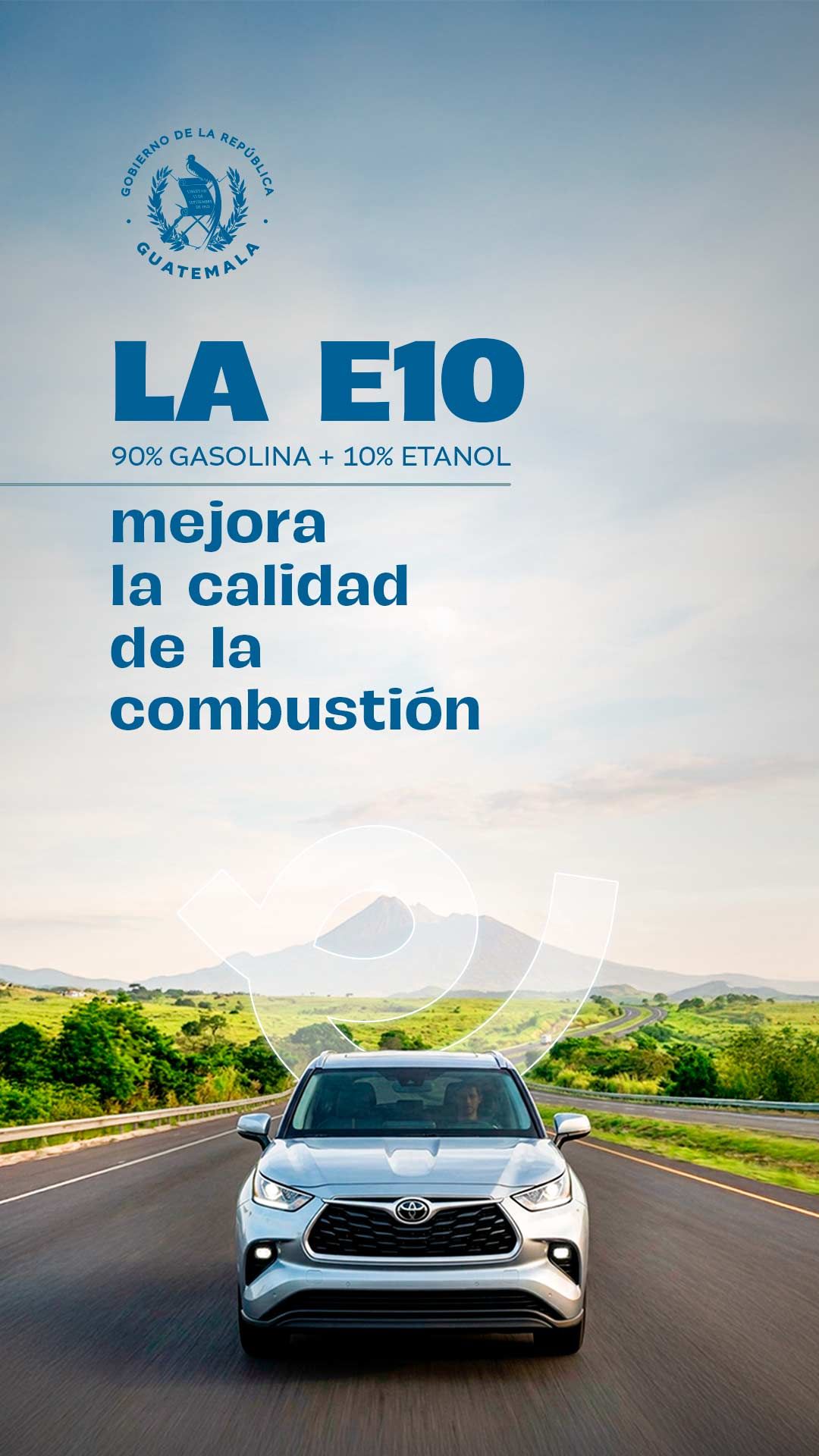
Guatemala’s nationwide introduction of E10 gasoline, containing 10% ethanol, as a regulated pathway to reduce greenhouse-gas emissions from the transport sector and support the country’s low-emissions strategy.
Date:
2026
Location:
Guatemala
Partners:
Universidad del Valle de Guatemala
Research Area:
Decarbonizing Industry & Circular Economy
Sustainable Development Goals:
03 - Good Health and Well-Being, 07 - Affordable and Clean Energy, 11 - Sustainable Cities an Communities, 13 - Climate Action
E10 Ethanol Blending for Low-Emission Transport
Guatemala is implementing E10 gasoline, a fuel blend consisting of 90% petroleum-based gasoline and 10% ethanol, as part of its national strategy to reduce greenhouse gas emissions from the transport sector. Led by the Ministry of Energy and Mines, the initiative responds to Guatemala’s historical dependence on fossil fuels and aims to provide a cleaner and more environmentally responsible alternative while supporting public health and the country’s international climate commitments.
The implementation has involved extensive technical, legal, social, and policy development. Universities, research centres, laboratories, and national and international institutions have conducted vehicle and environmental studies, including testing different ethanol concentrations and assessing potential impacts on vehicle engines and greenhouse gas emissions. The Technical Laboratories of the Ministry of Energy and Mines have supported the development of quality-control standards and methodologies for fuel ethanol and E10.
Technical and Regulatory Framework
Guatemala has established the regulatory framework required for the implementation of E10, including standards covering ethanol quality, quality control, storage and inventory, greenhouse gas accounting, and carbon-intensity calculations. Studies conducted by the Universidad del Valle de Guatemala in 2015, 2020, and 2026 contributed to the technical validation of ethanol use in vehicles and the assessment of its environmental impacts.
The initiative is therefore supported by completed technical studies and a comprehensive regulatory framework. The relevant regulations are scheduled to enter into force in August 2026, enabling the country to move from preparation and testing toward national implementation.
National Implementation and Climate Impact
The project has been pilot tested under real-world conditions, with the necessary studies and regulatory preparations completed. Guatemala plans to implement E10 progressively, beginning with regular gasoline before subsequently extending the blend to premium gasoline.
By replacing a portion of fossil-derived gasoline with ethanol, the initiative is intended to reduce the transport sector’s greenhouse gas emissions and support Guatemala’s transition toward a lower-emission energy system. The project also establishes a framework for monitoring ethanol quality and its associated carbon intensity, helping ensure that the transition is technically controlled and aligned with national and international environmental objectives.
The initiative has been led primarily through government funding, with contributions from universities, research centres, laboratories, and other collaborating institutions.