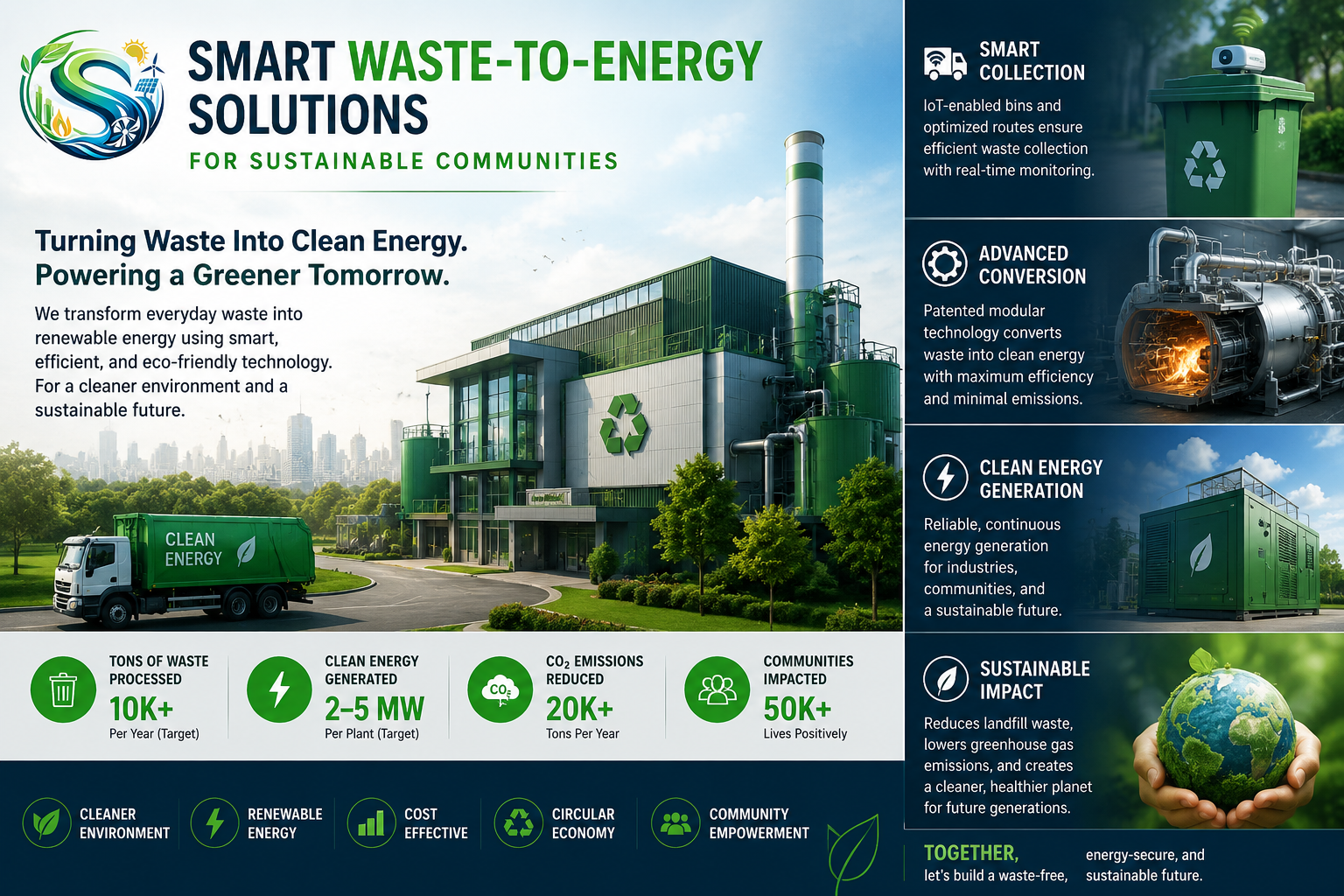
Transforming waste into clean energy through an integrated approach to waste segregation, resource recovery, and renewable energy generation for sustainable and climate-resilient communities.
Date:
-
Location:
India
Partners:
-
Research Area:
Decarbonizing Industry & Circular Economy
Sustainable Development Goals:
07 - Affordable and Clean Energy, 09 - Industry, Innovation and Infrastructure, 11 - Sustainable Cities an Communities, 12 - Responsible Consumption and Production, 13 - Climate Action
Smart Waste-to-Energy Solution
The Smart Waste-to-Energy Solution for Sustainable Communities is an emerging innovation designed to address two interconnected challenges: increasing waste generation and rising energy demand. By converting organic and non-recyclable waste into clean and usable energy, the project adopts a circular economy approach that treats waste as a resource while reducing landfill dependency and greenhouse gas emissions.
The proposed solution begins with waste segregation at the source. Organic waste can be processed through bioenergy systems such as anaerobic digestion to produce biogas for cooking, heating, or electricity generation. Non-recyclable combustible waste can be directed toward environmentally responsible energy recovery processes, while recyclable materials are separated and sent to recycling facilities. This integrated approach aims to maximize resource efficiency and minimize environmental impacts.
Community Impact and Environmental Benefits
A central element of the project is its community-centered approach, involving households, educational institutions, local organizations, and municipalities. Awareness initiatives, combined with simple monitoring and reporting tools, can support improved waste management practices and help communities better understand their environmental footprint. The model is designed to be adaptable to both urban and rural settings.
The solution has the potential to reduce methane emissions by diverting waste from landfills, while renewable energy generation can contribute to reduced fossil fuel dependence, energy security, and affordability. The approach could also create opportunities for local employment, skill development, and environmental education.
Pilot Development and Partnership Needs
As an early-stage innovation, the project is intended to begin with pilot projects in communities, campuses, and local government initiatives. With support from research institutions, industry partners, environmental organizations, and policymakers, the model could be further developed and scaled. Future development may include digital monitoring platforms, data-driven waste management systems, and integration with broader climate resilience strategies.
The project is currently at the concept stage, with no prototype yet, and is seeking pilot partners, technical mentors, research collaborators, funding support, and engagement with local authorities to validate, refine, and scale the solution.