Transforming textile waste into recycled yarns, fabrics, rugs, mats, and non-woven products to reduce pollution, conserve resources, and create local economic opportunities.
Date:
-
Location:
Uganda
Partners:
-
Research Area:
Decarbonizing Industry & Circular Economy
Sustainable Development Goals:
08 - Decent Work and Economic Growth, 09 - Industry, Innovation and Infrastructure, 12 - Responsible Consumption and Production, 13 - Climate Action
Circular Textile Waste Utilization in Uganda
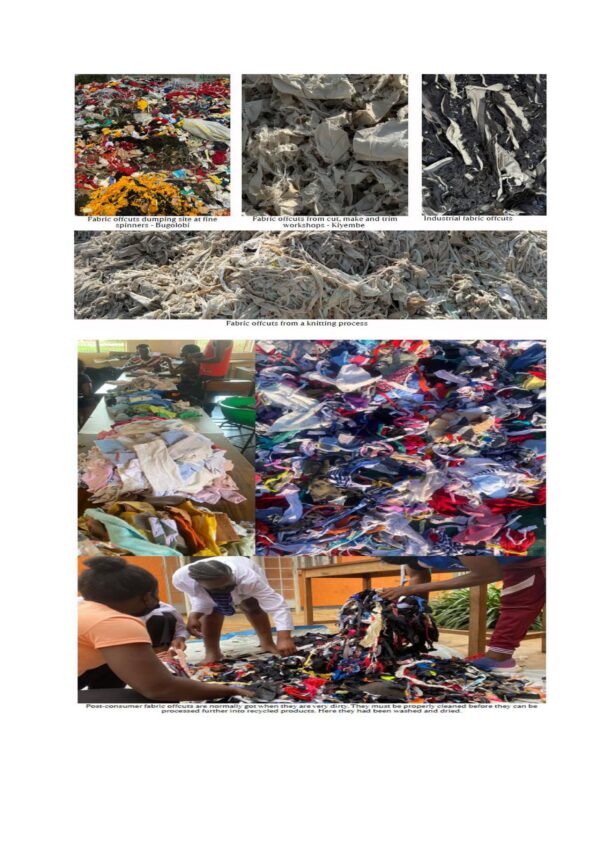
The Uganda Industrial Research Institute (UIRI) has developed and deployed a practical circular economy approach for transforming textile waste into valuable products while reducing pollution and supporting sustainable manufacturing. The project addresses the growing volume of textile waste generated by garment factories, tailoring workshops, cut-make-trim facilities, and second-hand clothing markets in Uganda, much of which is otherwise dumped, landfilled, burned, or enters drainage systems.
The project collects textile waste from garment manufacturers such as Fine Spinners, tailoring centers including Kiyembe, and second-hand clothing markets such as Owino. Materials are sorted according to fibre type, colour, and condition, with buttons, zippers, and other non-textile components removed before cleaning and processing. Sorting by original colour reduces the need for additional dyeing, helping to lower water use, chemical consumption, and production costs while improving the consistency of recycled materials.
From Textile Waste to Valuable Products
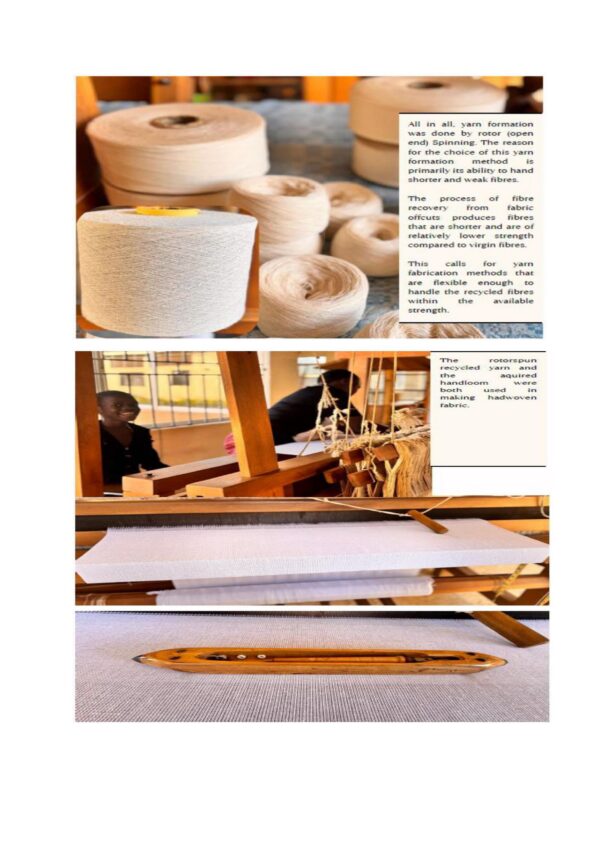
The recovered materials are transformed into a range of new products, demonstrating how textile waste can remain in productive use rather than becoming environmental pollution. Larger fabric pieces are woven into rugs and floor mats, while smaller textile fibres are processed into recycled yarn and new woven fabrics. Other recovered fibres are converted into non-woven materials for applications such as cleaning cloths and padding.
The project has successfully produced these recycled products and validated the recovered materials through SEM and EDS characterization. The approach combines scientific material analysis with locally appropriate technologies, including manually operated handlooms, allowing small-scale producers and community enterprises to participate using affordable and accessible equipment.
Circular Manufacturing
The project is currently at the operational deployment stage and demonstrates a practical circular manufacturing model for Uganda’s textile industry. Beyond reducing waste and conserving resources, the initiative creates opportunities for local businesses, entrepreneurship, and employment, particularly for young people and women. The project is already working in partnership with 15 community fashion designer groups in Uganda, as well as local industries and city council waste collectors.
The model can be replicated by textile industries, communities, and small enterprises using locally available waste streams and appropriate processing technologies. By turning discarded textiles into marketable products, the approach offers a scalable pathway toward more resource-efficient manufacturing while creating economic opportunities within Uganda’s growing fashion and textile sectors.