Demonstrating circular, water-efficient, and nature-based agricultural solutions in Jordan to strengthen food security, climate resilience, and local capacity in water-scarce regions.
Date:
-
Location:
Jordan
Partners:
-
Research Area:
Climate Resilience & the Water–Food–Energy Nexus
Sustainable Development Goals:
02 - Zero Hunger, 06 - Clean Water and Sanitation, 08 - Decent Work and Economic Growth, 12 - Responsible Consumption and Production, 13 - Climate Action
Climate-Resilient Agriculture through Circular and Green Solutions
The Royal Scientific Society (RSS) in Jordan has developed and demonstrated a modular Climate-Resilient Agriculture (CRA) framework designed to strengthen food security and agricultural resilience in water-scarce regions. Implemented since 2024 through the EU-funded Building Resilience through Circularity (BRCkA) project, the approach combines circular, nature-based, and smart farming practices across six demonstration sites, including a university, agricultural training centre, rural community organization, vocational schools, and a centre for youth with disabilities.
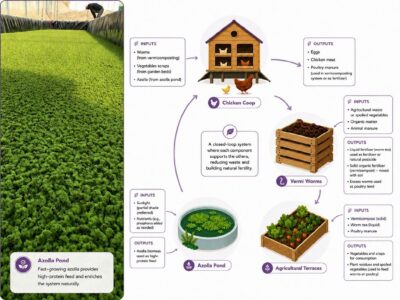
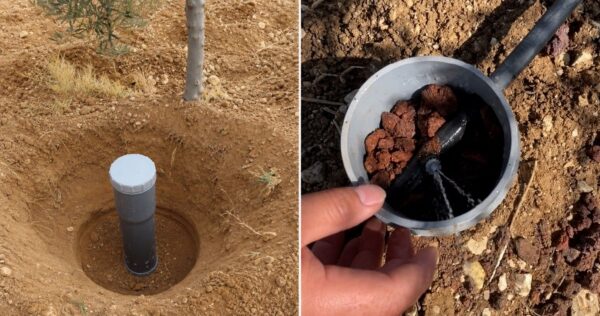
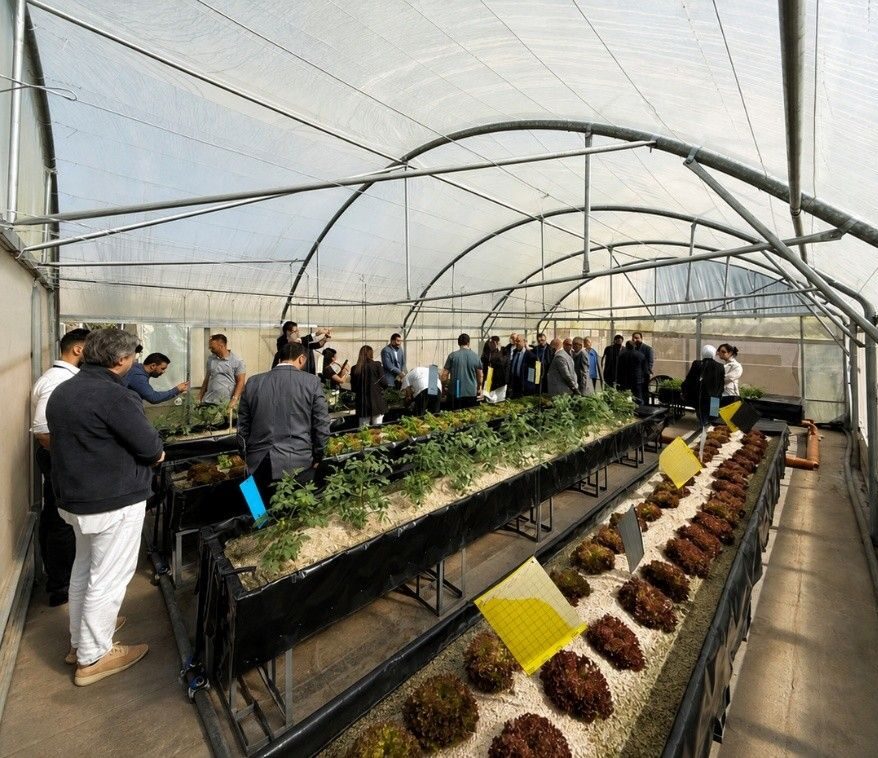
The framework integrates three complementary approaches. Permaculture uses vermicomposting to transform agricultural and food waste and manure into compost and nutrient-rich liquid fertilizer, while Azolla provides a locally available protein-rich supplementary feed. Aquaponics and soilless agriculture recirculate nutrient-rich fish water to grow vegetables, significantly reducing water requirements. Smart agriculture combines soil sensors, rainwater harvesting, and deep subsurface irrigation to deliver water more efficiently directly to plant root zones.
Water Efficiency, Circularity, and Community Impact
The demonstrated solutions have generated measurable improvements in resource efficiency. Aquaponics and soilless systems have reduced agricultural water consumption by up to 70% compared with traditional farming, while deep subsurface irrigation can reduce evaporation and runoff losses by 30–50% compared with surface irrigation. Together, these approaches turn agricultural waste into productive inputs, recycle water and nutrients, and reduce dependence on synthetic fertilizers and conventional irrigation.
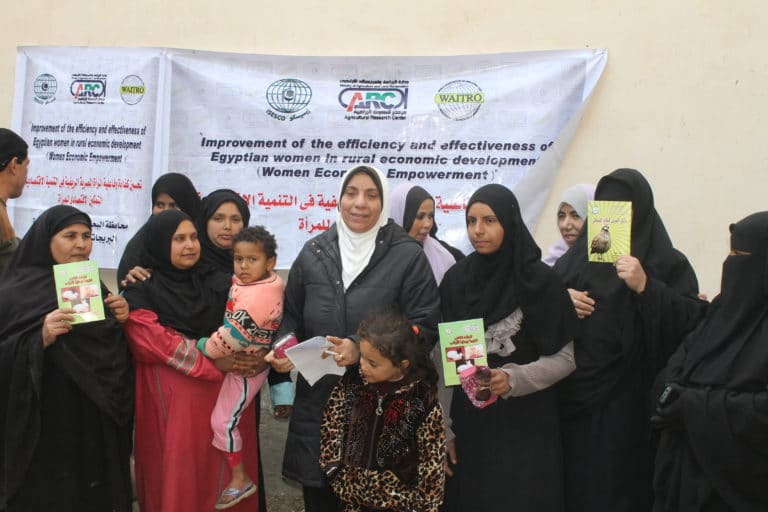
Since 2024, the interventions have reached more than 400 direct beneficiaries and the demonstration sites have developed into regional knowledge hubs and living laboratories. They produce vegetables, fish, compost, liquid fertilizer, and supplementary feed while providing practical training and capacity building. At the centre for youth with disabilities, aquaponics is combined with skills development, while the university site demonstrates permaculture and ecosystem-based resource management. The model therefore links climate adaptation with food security, resource efficiency, skills development, and inclusive community participation.
Replication and Regional Scale-Up
The solution is currently at the demonstrated and validated stage, with consistent results across multiple real-world demonstration sites. Its modular design allows individual components to be implemented independently or combined according to local water availability, land constraints, and agricultural needs. This makes the approach particularly relevant for other arid and water-scarce regions facing climate stress.
The next stage is to expand demonstration sites, establish regional training hubs, strengthen commercial and community-farm adoption, and transfer knowledge to other water-scarce areas. Current partners include AMANGrow and Bab Al Hawa Agricultural service providers, alongside the organizations hosting the demonstration sites. RSS is seeking additional funding, institutional partnerships, and capacity-building support to replicate and scale the proven Climate-Resilient Agriculture solutions regionally.