An estimated 730 million m³ of untreated wastewater are discharged annually in Europe through stormwater overflows. As climate change increases the frequency of heavy rainfall events, utilities need digital tools that can anticipate risks, reduce untreated discharges, and strengthen the resilience of urban wastewater infrastructure.
Date:
-
Location:
Moaña, Galicia, Spain and Søndersø, Denmark
Partners:
-
Research Area:
Climate Resilience & the Water–Food–Energy Nexus
Sustainable Development Goals:
06 - Clean Water and Sanitation, 09 - Industry, Innovation and Infrastructure, 11 - Sustainable Cities an Communities, 13 - Climate Action, 14 - Life Below Water
Challenge
Climate change is increasing the frequency and intensity of heavy rainfall events, placing growing pressure on urban wastewater infrastructure. During storms, infiltration and inflow can introduce large volumes of rainwater into sewer networks, potentially overwhelming wastewater treatment plants and increasing the risk of combined sewer overflows and untreated wastewater discharges. These events can degrade water quality, damage ecosystems, and create significant operational and financial challenges for utilities.
With an estimated 730 million m³ of untreated wastewater discharged annually in Europe through stormwater overflows, utilities require better capabilities to anticipate these risks. Traditional monitoring and analysis can also be difficult to translate into day-to-day operational decisions, particularly when complex modelling expertise is required. SiiMS addresses this gap by turning diverse operational and environmental data into accessible information that water managers can use to identify vulnerabilities, prioritize interventions, and prepare for extreme rainfall events.
Solution and Innovation
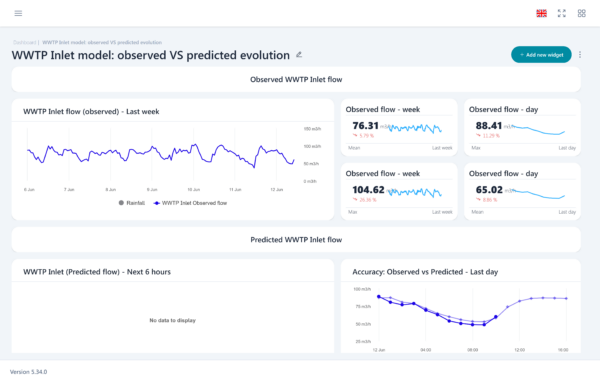
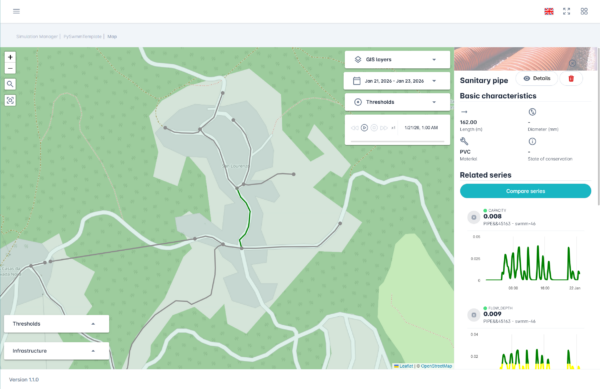
SiiMS integrates real-time monitoring, advanced data analytics, predictive modelling, and GIS into one digital environment. The platform can identify infiltration and stormwater inflows, locate critical areas within sewer networks, and analyse how infrastructure responds to rainfall. Complex analytical results are presented through intuitive maps and dashboards, allowing operators and managers to use the information without requiring specialist modelling expertise.
Beyond assessing current network conditions, SiiMS includes modelling toolboxes that allow utilities to simulate network behaviour under different operational and climate scenarios. This enables them to anticipate potential failures, assess the consequences of heavy rainfall, and evaluate mitigation measures before problems occur. The platform therefore supports a shift from reactive wastewater management towards data-driven, predictive, and proactive infrastructure management.
The solution has been deployed and tested through the LIFE RESEAU project at demonstration sites in Moaña, Galicia, Spain, and Søndersø, Denmark. Across these sites, SiiMS was validated on wastewater systems serving approximately 40,000 population equivalent (PE) and 225 km of sewer network, where it quantified infiltration and inflow, including seawater intrusion. Within LIFE RESEAU, the platform contributed to reported reductions in combined sewer overflows of up to 100% and increases in treatment capacity of up to 600%, demonstrating its potential to support more resilient wastewater systems.
Expected Impact
SiiMS helps utilities improve preparedness for heavy rainfall, reduce vulnerabilities within sewer networks, and make more informed decisions about maintenance and infrastructure investment. By identifying infiltration and inflow sources and enabling utilities to test mitigation strategies before implementation, the platform can help reduce untreated wastewater discharges and protect receiving water bodies and ecosystems.
Its ability to work with data and infrastructure already available to many utilities also supports more efficient deployment and adaptation to different operational environments. By improving visibility of network behaviour and enabling proactive decision-making, SiiMS strengthens the resilience of critical urban water infrastructure and the communities that depend on it.
Development and Scale-Up
SiiMS is currently Demonstrated / Validated (consistent results, strong evidence) following successful validation in Spain and Denmark. The solution is now being assessed through four additional replication cases and supported by 10 early adopters, providing opportunities to test and refine the platform across additional operational contexts.
The integrated digital workflows provide a transferable methodology for water utilities facing similar climate-related pressures. Further collaboration is sought with utilities, municipalities, and technology providers to demonstrate SiiMS in new locations, transfer knowledge, validate its benefits under different conditions, and accelerate wider adoption and replication.