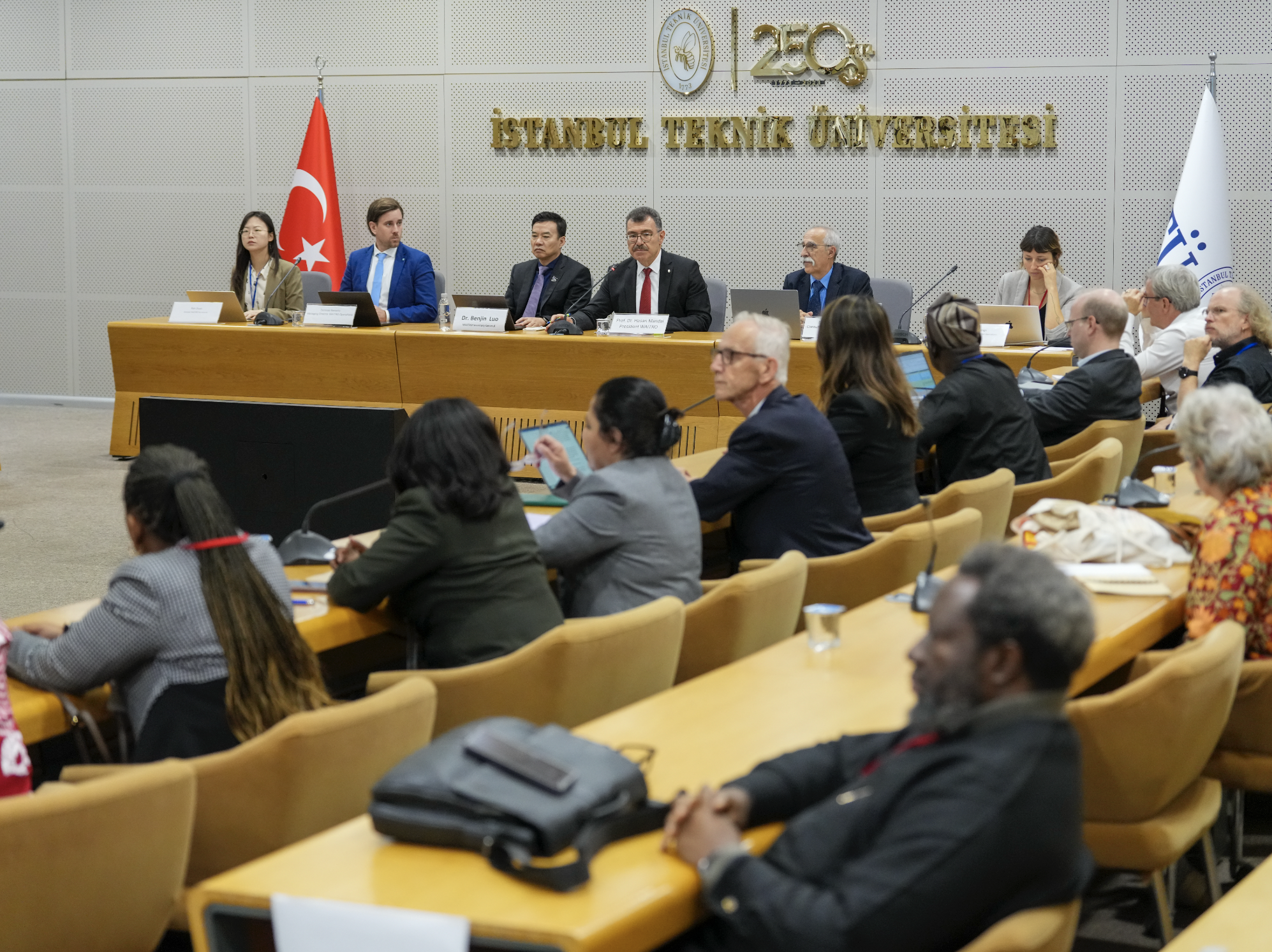
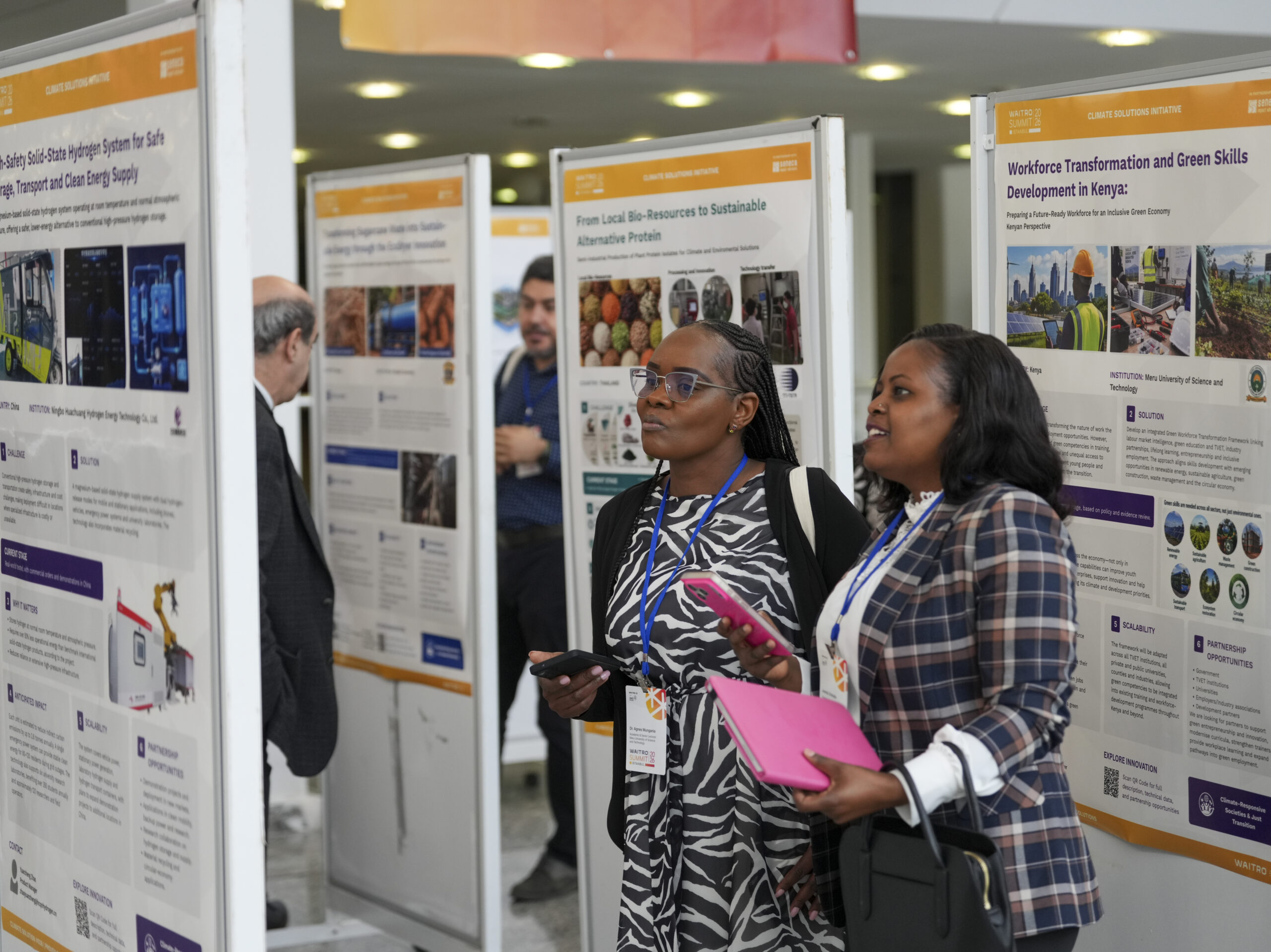
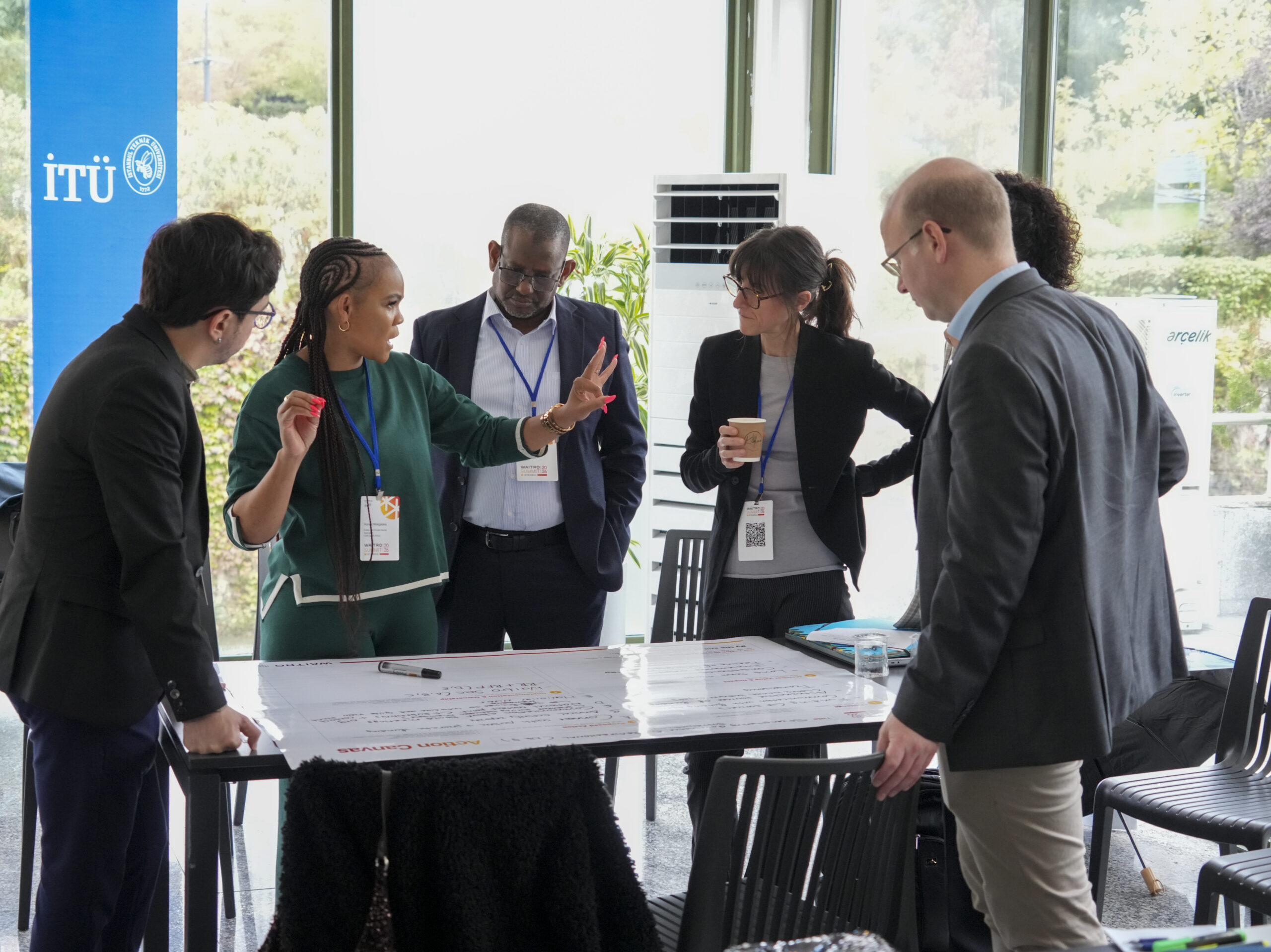
At the WAITRO Summit 2026 in Istanbul, 38 participants came together to develop new ideas, advance existing initiatives and explore opportunities for international collaboration. The result: five project concepts across three transformation areas.
Building on 18 Seed Cards collected during the Summit, the Co-Creation Workshops brought together researchers, innovators and experts to address climate and sustainability challenges through collaborative project development.
A Day Dedicated to Co-Creation
The workshops followed four consecutive phases: Explore, Build, Refine and Harvesting.
Working in small groups, participants identified shared priorities, developed project concepts, explored implementation requirements and discussed potential partnerships.
While some groups developed new ideas, others built on existing initiatives, using complementary expertise to explore opportunities for further development and scaling.
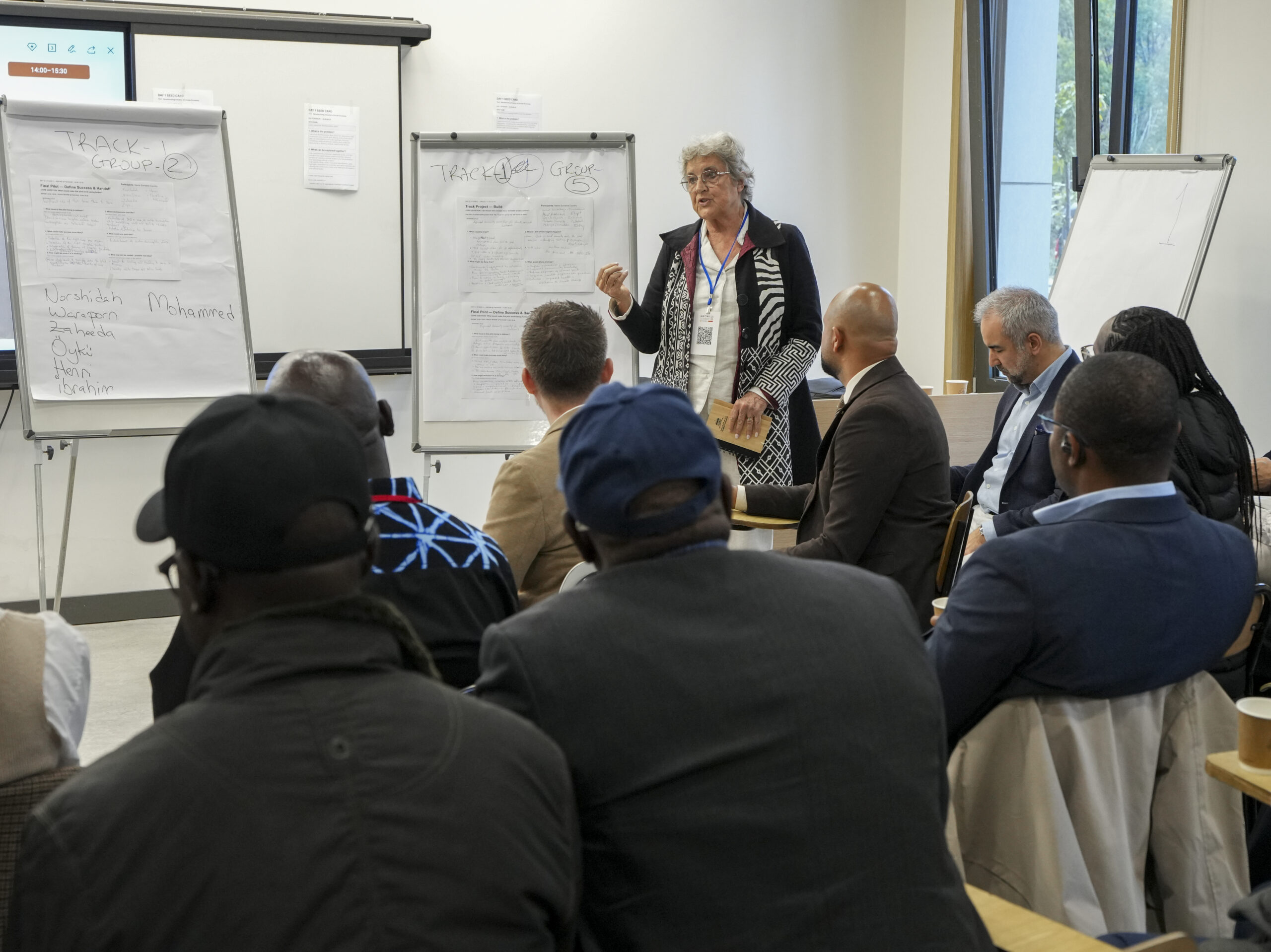
The day concluded with a joint Harvesting session, where all groups presented their concepts, received constructive feedback and identified opportunities for collaboration.
Five Project Concepts Across Three Transformation Areas
Track 1: Climate Resilience & Water–Food–Energy Nexus
Precision Irrigation from Farm to Fork
This concept explores how precision irrigation can reduce agricultural water consumption while maintaining crop productivity and quality. The proposed pilot would compare irrigation systems through living labs in different regions, targeting at least 20% water savings without compromising crop yield or quality.
Community Ownership for Resilient Livelihoods
Building on established community engagement approaches, including Community Health Clubs, this initiative focuses on involving communities in identifying and implementing locally relevant solutions related to water, health, food production and energy.
Participants explored how existing models could be adapted to different contexts, emphasizing community ownership and long-term sustainability.
Track 2: Decarbonizing Industry & Circular Economy
Pilots for Policy
This concept brings together technology providers, end users, public authorities and research organizations to explore how sustainable technologies can be adopted more widely.
By combining technology demonstrations with policy learning, the proposed approach aims to identify implementation barriers and inform future decisions.
AI for Critical Raw Materials
Participants explored the development of an AI-supported platform providing standardized information on critical raw materials, extraction processes and environmental impacts.
A potential pilot in Nigeria would examine how improved data availability could support more informed decisions and environmental assessments.
Track 3: Climate-Responsive Societies & Just Transition
Sugarcane Waste into Value in Africa
Building on an existing collaboration involving Kibabii University in Kenya and the University of Huddersfield in the United Kingdom, this initiative explores opportunities to scale a solution that transforms sugarcane waste into valuable energy resources.
During the workshop, participants contributed additional technical and financial perspectives, discussing the replication of biomass drying technology, local manufacturing and potential partnerships to support further development.
Connecting Expertise and Advancing Collaboration
Beyond the individual projects, the workshops demonstrated the value of bringing together different perspectives and professional backgrounds.
Participants contributed technical knowledge, financial considerations and experience in community engagement, helping refine project concepts and identify practical challenges.
The final Harvesting session encouraged further exchange across the tracks. Discussions highlighted the importance of adapting solutions to local contexts, involving communities and considering long-term implementation requirements.
The workshops also demonstrated how existing collaborations, including those established through WAITRO’s matchmaking activities, can provide a foundation for further innovation and scaling.
Next Steps: Turning Concepts into Action
The workshops concluded with the Istanbul Implementation Declaration, outlining shared priorities for continued collaboration.
These included community participation, technology transfer, evidence-based implementation, policy learning and viable operating models.
Project teams and interested partners are encouraged to further refine their concepts, identify practical next steps and explore opportunities for continued cooperation.
Whether developing new ideas or advancing existing solutions, the Co-Creation Workshops demonstrated how our Global Innovation Family can bring together expertise and partnerships to turn collaboration into meaningful impact.
Author