
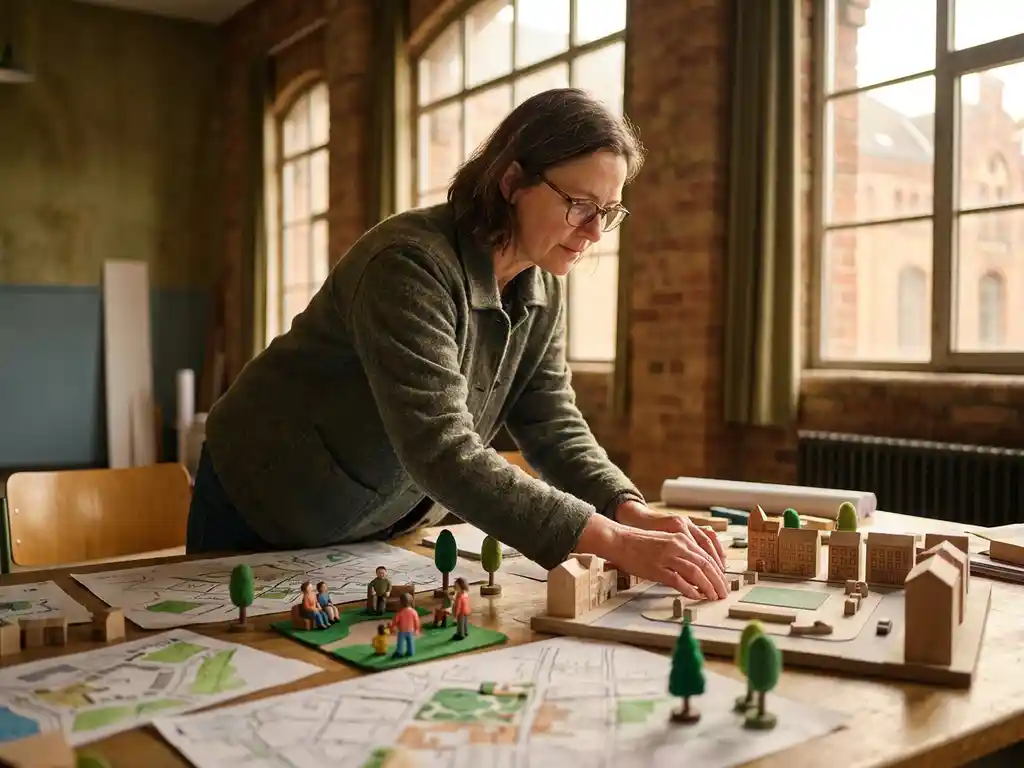
Cities play a central role in delivering the Sustainable Development Goals. As home to more than half the world’s population, urban areas are where the majority of SDG progress is made or lost. From clean water access and affordable housing to climate action and economic opportunity, most of the 17 SDGs have a direct urban dimension. The questions below unpack how cities contribute, what gets in the way, and how research and technology organizations can help accelerate progress.
How do cities contribute to achieving the SDGs?
Cities contribute to achieving the SDGs by acting as the primary sites where global goals are translated into local action. Urban governments control land use, public services, infrastructure investment, and community programs, giving them direct influence over outcomes across health, education, climate, inequality, and economic development. Because so many people live and work in cities, urban policy decisions have an outsized effect on SDG progress at the national and global levels.
Local governments are not simply implementers of national policy. Many cities have adopted their own SDG frameworks, aligning municipal budgets and strategic plans with specific goals and targets. This localization of the SDGs means urban leaders can tailor global ambitions to local realities, prioritizing the goals most relevant to their communities.
Cities also function as innovation hubs. They concentrate talent, institutions, and investment in ways that generate new solutions to shared challenges. Pilot programs tested in cities, whether in sustainable transport, digital public services, or circular waste systems, often scale to national or international adoption. In this sense, cities are not just contributors to the SDGs but active drivers of the innovation needed to achieve them.
Together, We Drive Innovation
Support global research, foster collaboration, and create a sustainable future.
Which SDGs are most directly linked to urban areas?
SDG 11, Sustainable Cities and Communities, is the most directly linked to urban areas, but cities are relevant to nearly every goal in the 2030 Agenda. Urban environments shape outcomes across health (SDG 3), quality education (SDG 4), clean water (SDG 6), affordable and clean energy (SDG 7), decent work (SDG 8), reduced inequalities (SDG 10), and climate action (SDG 13).
SDG 11 specifically targets inclusive, safe, resilient, and sustainable cities. Its targets cover affordable housing, public transport, air quality, green spaces, and disaster risk reduction. These are fundamentally urban issues that require city-level planning and investment to address.
Beyond SDG 11, the urban link runs deep. Cities account for a significant share of global energy consumption and greenhouse gas emissions, making them central to any serious climate action strategy under SDG 13. Urban poverty and informal settlements connect directly to SDG 1 (No Poverty) and SDG 10 (Reduced Inequalities). Municipal water and sanitation systems determine whether SDG 6 targets are met for millions of people. The concentration of economic activity in cities shapes progress on SDG 8 and SDG 9. In short, the SDGs cannot be achieved without cities.
What challenges do cities face in implementing the SDGs?
Cities face significant challenges in implementing the SDGs, including funding gaps, fragmented governance, data limitations, and the difficulty of balancing competing priorities. Many local governments, particularly in low- and middle-income countries, lack the financial resources and institutional capacity to align their operations with SDG frameworks in a meaningful way.
Governance fragmentation is a persistent obstacle. Urban areas often span multiple jurisdictions, and coordination between municipal, regional, and national governments is frequently inconsistent. This makes it difficult to deliver integrated solutions to problems like transport, housing, or environmental management that cross administrative boundaries.
Rapid urbanization adds further pressure. Cities in the Global South are growing at a pace that strains infrastructure and public services, making it hard to keep up with demand, let alone invest in sustainable systems. Informal settlements, where residents may lack access to clean water, sanitation, or legal tenure, represent some of the most acute SDG challenges cities face.
Climate vulnerability is also a growing concern. Coastal cities face rising sea levels, while inland cities contend with heat islands, flooding, and drought. Adapting urban infrastructure to these realities requires long-term investment and technical expertise that many cities struggle to mobilize.
How do local governments measure SDG progress at the city level?
Local governments measure SDG progress at the city level through voluntary local reviews, localized indicator frameworks, and partnerships with national statistical agencies or international organizations. The most widely used approach is the Voluntary Local Review (VLR), a self-assessment process through which cities report on their SDG performance, share lessons, and identify gaps.
VLRs allow cities to adapt global SDG indicators to local contexts, selecting metrics that reflect their specific priorities and data availability. Cities like New York, Helsinki, and Taipei have published detailed VLRs that track progress across dozens of indicators, from air quality and housing affordability to digital inclusion and community wellbeing.
Beyond VLRs, many cities use integrated data platforms that aggregate information from multiple municipal departments, making it possible to monitor SDG-relevant outcomes in near real time. These platforms support evidence-based decision-making and help local governments allocate resources where they are most needed.
International networks and frameworks, including those supported by UN-Habitat and the Global Taskforce of Local and Regional Governments, provide cities with guidance, peer learning, and technical support for SDG monitoring. Collaboration between cities is increasingly recognized as one of the most effective ways to build measurement capacity, particularly for municipalities with limited in-house expertise.
What role do research and technology organizations play in urban SDG delivery?
Research and technology organizations (RTOs) play a critical role in urban SDG delivery by providing the technical expertise, applied research, and innovation capacity that cities need to translate goals into practical outcomes. RTOs bridge the gap between scientific knowledge and municipal implementation, helping local governments design smarter infrastructure, test new technologies, and build the evidence base for policy decisions.
In practice, RTOs contribute to urban sustainability across several areas:
- Clean energy and climate resilience: RTOs develop and adapt technologies for renewable energy, energy-efficient buildings, and urban heat management, supporting cities’ climate action commitments under SDG 13.
- Smart urban systems: From intelligent transport networks to digital water management, RTOs help cities integrate technology into public services in ways that improve efficiency and equity.
- Environmental monitoring: RTOs design monitoring systems that track air quality, water safety, and biodiversity, giving cities the data they need to meet environmental SDG targets.
- Capacity building: RTOs train municipal staff, support institutional reform, and help cities develop the in-house skills needed for sustained SDG implementation.
- Policy and innovation ecosystems: RTOs connect local governments with universities, industry partners, and international networks, accelerating the adoption of proven solutions.
The relationship between RTOs and cities is most effective when it is long-term and collaborative rather than transactional. Cities that embed RTOs into their planning and governance processes benefit from ongoing access to expertise, not just one-off project support.
How WAITRO supports urban SDG delivery
We connect research and technology organizations with the global networks, partnerships, and capacity they need to make a real difference in cities and sustainable development. Through our global membership community spanning 135 Full Members and 45 Associate Members, we open doors to cross-border collaboration on exactly the kinds of urban challenges described in this article.
Here is how we support RTOs working on urban SDG delivery:
- Global partnership access: We connect members with leading research organizations worldwide, enabling joint projects on urban sustainability, municipal sustainability, and cities’ climate action.
- Capacity Development Program: Our Capacity Development Program strengthens the institutional skills RTOs need to manage complex urban projects, including strategic planning, project coordination, and thematic expertise in areas like digital transformation and sustainability.
- Knowledge exchange: We facilitate peer learning between members tackling similar urban development goals, helping RTOs avoid duplication and build on proven approaches.
- Visibility and outreach: We amplify the work of our members on the global stage, connecting their urban innovation with the policymakers, funders, and partners who can scale it.
If your organization is working to advance urban sustainability and wants to increase its reach and impact, we would love to connect. Explore WAITRO membership and find out how we can support your work on the SDGs.
Related Articles
- What are the benefits of climate innovation for businesses?
- How does climate research influence international development funding in 2026?
- How Do Research Institutes Engage with Policymakers?
- How Do Research Institutes Work with Venture Capital?
- How Do Research Institutes Value Their Intellectual Property?
