
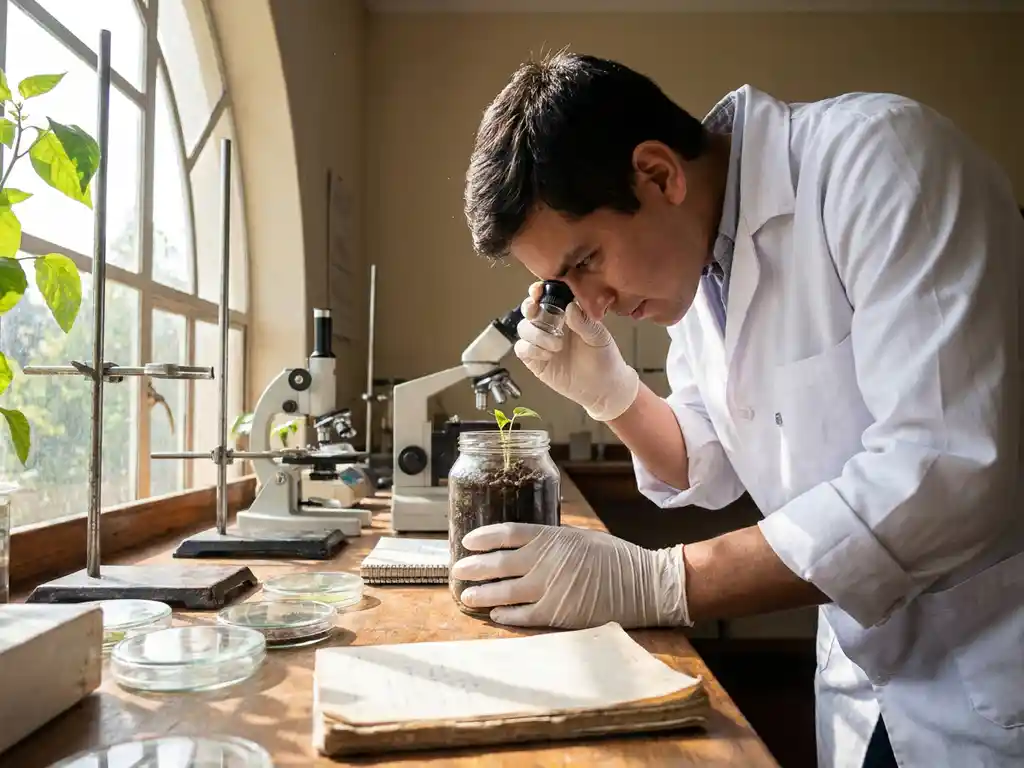
Proof-of-concept funding for climate innovation provides early-stage financial support to test and validate promising climate technologies before full commercial development. This specialized funding helps climate entrepreneurs and researchers demonstrate the technical feasibility, market potential, and environmental impact of their solutions, typically ranging from $10,000 to $500,000 for projects lasting 6–18 months.
Limited funding windows are costing climate innovators critical development time
Most climate proof-of-concept funding programs operate on rigid application cycles, often opening just once or twice per year with narrow submission windows. This timing mismatch means innovative climate solutions may have to wait 6–12 months before they can even apply for funding, while urgent climate challenges demand immediate action. The delay compounds when you factor in lengthy review processes and funding disbursement timelines. To overcome this, climate innovators should identify multiple funding sources with staggered deadlines and prepare applications in advance, maintaining a pipeline of ready-to-submit proposals that can be submitted as opportunities arise.
Inadequate market validation is killing promising climate technologies
Many climate innovators focus heavily on technical development while neglecting crucial market research during the proof-of-concept phase. This oversight leads to solutions that work in the lab but fail commercially because they do not address real market needs or viable price points. Without proper market validation, even technically sound climate innovations struggle to attract follow-on investment or achieve widespread adoption. Climate entrepreneurs must integrate customer discovery, market sizing, and business model validation directly into their proof-of-concept process, treating market fit as equally important as technical proof points.
What Is Proof of Concept Funding for Climate Innovation?
Proof-of-concept funding for climate innovation is early-stage financing that helps researchers and entrepreneurs test the technical feasibility and commercial viability of climate solutions. It bridges the gap between initial research and full product development by providing resources to build prototypes, conduct experiments, and validate market assumptions.
This funding typically supports activities such as building minimum viable products, conducting field tests, analyzing environmental impact data, and exploring potential market applications. Climate proof-of-concept funding recognizes that environmental technologies often require longer development timelines and higher upfront costs than other sectors, making traditional venture capital less accessible in the early stages.
The funding serves multiple purposes beyond financial support. It helps climate innovators refine their value propositions, identify technical challenges early, establish partnerships with potential customers, and generate preliminary data needed for larger funding rounds. Many programs also provide mentorship, technical expertise, and access to specialized facilities or equipment.
Who Is Eligible for Climate Innovation POC Funding?
Eligibility for climate proof-of-concept funding typically includes early-stage startups, research institutions, individual inventors, and established companies developing new climate technologies. Most programs require applicants to demonstrate clear environmental benefits and technical innovation potential, though specific requirements vary by funding source.
Academic researchers often qualify when their work addresses climate challenges and shows commercial potential. Many programs specifically encourage university–industry partnerships or require academic institutions to collaborate with commercial partners. Graduate students and postdoctoral researchers may also be eligible, particularly for programs designed to support emerging talent in climate technology.
Established companies can access proof-of-concept funding when developing new climate-focused product lines or technologies that are significantly different from their core business. However, many programs prioritize smaller organizations or limit company size by revenue or employee count. Some funding sources specifically target underrepresented entrepreneurs or organizations in developing countries working on climate solutions.
Geographic restrictions apply to certain programs, with some limited to specific countries or regions. International programs may require partnerships with local organizations or a demonstration of how the technology addresses regional climate challenges.
How Much Funding Can Climate Innovators Expect to Receive?
Climate innovation proof-of-concept funding typically ranges from $10,000 to $500,000, with most awards falling between $50,000 and $250,000. The amount depends on the funding source, project scope, development stage, and specific technology requirements.
Government programs often provide larger amounts, sometimes reaching $1 million for complex projects involving multiple partners or extensive testing requirements. Foundation grants tend toward the lower end of the range but may offer additional non-financial support, such as mentorship or access to facilities. Corporate innovation programs vary widely but typically offer $25,000 to $200,000 for promising technologies aligned with their strategic interests.
Funding duration usually spans 12–18 months, though some programs offer shorter 6-month sprints or longer 24-month development periods. Many funders structure payments around milestones tied to specific deliverables or technical achievements rather than lump-sum disbursements.
Beyond direct funding, many programs provide in-kind support that adds significant value. This might include laboratory access, technical expertise, regulatory guidance, or connections to potential customers and partners. When evaluating funding opportunities, climate innovators should consider total program value rather than cash amounts alone.
What Are the Main Sources of Climate POC Funding?
The primary sources of climate proof-of-concept funding include government agencies, private foundations, corporate innovation programs, and specialized climate investment funds. Each source has distinct priorities, application processes, and support structures tailored to different types of climate innovations.
Government funding comes from agencies focused on energy, the environment, and economic development. These programs often emphasize technologies with broad societal benefits and may require detailed technical specifications and regulatory compliance. Examples include energy departments, environmental agencies, and innovation councils at national and regional levels.
Private foundations represent a significant funding source, particularly for early-stage and high-risk climate technologies. Many foundations focus on specific climate challenges such as renewable energy, carbon capture, sustainable agriculture, or climate adaptation. They often provide more flexible terms and faster decision-making than government programs.
Corporate programs target innovations that align with a company’s strategic goals or supply chain needs. These partnerships can provide not just funding but also market access, technical expertise, and potential acquisition opportunities. Corporations in the energy, automotive, agriculture, and manufacturing sectors actively seek climate innovations.
Specialized climate funds and accelerators have emerged to address the unique needs of environmental technologies. These programs understand sector-specific challenges and often provide industry connections, regulatory expertise, and follow-on funding pathways that generic startup programs cannot match.
How Do You Apply for Climate Innovation POC Funding?
Applying for climate proof-of-concept funding requires a clear problem statement, technical approach, market analysis, team qualifications, and a detailed budget with specific milestones. Most applications also require a demonstration of environmental impact potential and preliminary validation of the proposed solution.
Start by thoroughly researching funding programs that match your technology focus, development stage, and organizational type. Each program has specific priorities, evaluation criteria, and application requirements that must be carefully addressed. Create a master application document that can be customized for different opportunities while maintaining consistent core messaging.
Your technical approach should clearly explain the innovation, why current solutions are inadequate, and how your concept addresses these limitations. Include preliminary data, theoretical modeling, or prototype results that support feasibility claims. Be specific about technical risks and your strategies for addressing them.
Market analysis must demonstrate clear demand for your solution, target customer segments, the competitive landscape, and a viable business model. Quantify the environmental problem you are solving and estimate the impact your solution could achieve at scale. Many programs specifically evaluate applications based on potential climate benefits per dollar invested.
Budget requests should align closely with proposed activities and timelines. Break down costs by category and justify major expenses. Include contingency planning for common development challenges and explain how you will measure progress toward the stated milestones.
How WAITRO Helps with Climate Innovation Funding
We connect climate innovators with funding opportunities and collaborative partnerships through our global network of research and technology organizations. Our comprehensive approach supports climate innovation from early concept through market implementation, helping to bridge the critical gap between research and commercialization.
Our support for climate innovators includes:
- Access to our network of 180 member organizations worldwide, including leading research institutions and potential industry partners
- Visibility for climate innovations through our programs that connect researchers with funding sources and commercial partners
- Capacity development opportunities that strengthen proposal writing, technology transfer, and commercialization skills
- Facilitation of international collaboration that can strengthen funding applications and improve project outcomes
- Strategic guidance on navigating the complex landscape of climate innovation funding and partnerships
The upcoming WAITRO Summit 2026, taking place October 26–28 in Istanbul, Türkiye, will focus on “Leading the Path of Implementation: Strengthening Co-Creation for Our Common Future.” This event presents an exceptional opportunity for climate innovators to connect with global research leaders, explore funding partnerships, and engage in collaborative initiatives that can accelerate climate solutions from concept to market impact.
Ready to advance your climate innovation? Become a member to access our global network and funding opportunities, or explore our current opportunities to connect with potential partners and funders who share your commitment to addressing climate challenges.
Related Articles
- What are the biggest research ethics challenges in global collaborations?
- What funding options are available for early-stage technology transfer?
- Why is SDG 17 considered the foundation of all other goals?
- What Is an International Research Collaboration Platform?
- How Do Research Institutes Handle Export Controls?
