
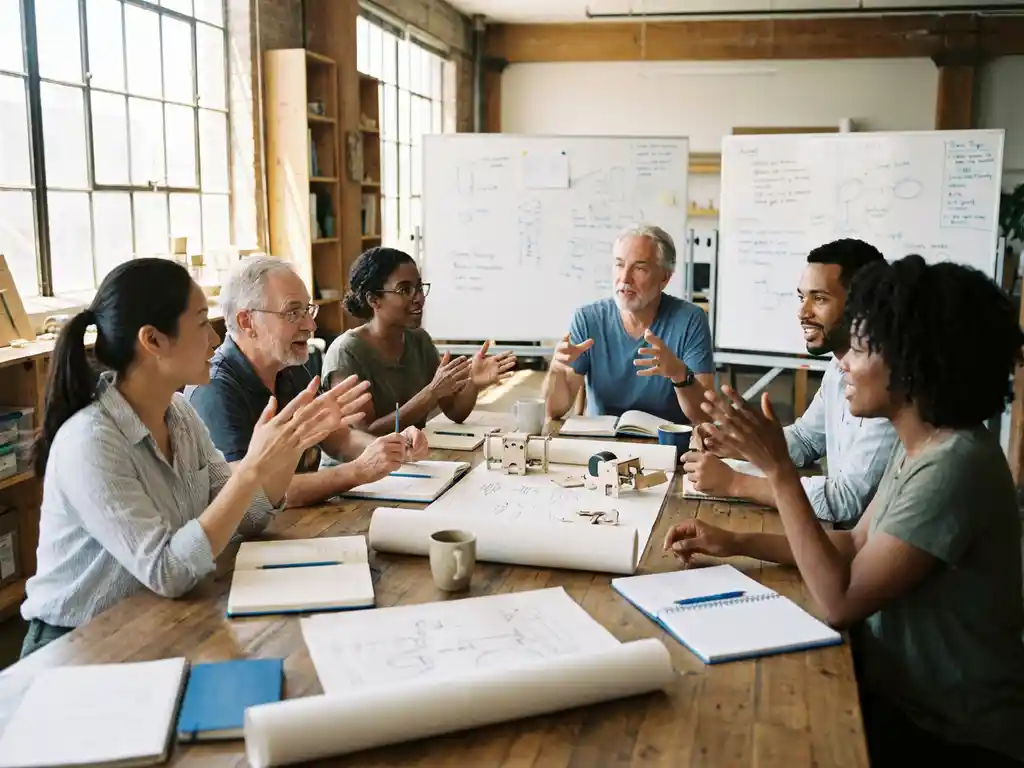
A co-creation workshop is a structured, collaborative session in which diverse stakeholders work together to solve problems, generate ideas, or design solutions by combining their expertise and perspectives. These workshops blend design thinking methodologies with participatory design principles to produce outcomes that no single participant could achieve alone, fostering innovation through collective intelligence and stakeholder engagement.
Poor stakeholder engagement is costing you breakthrough innovations
When organizations rely solely on internal teams or traditional brainstorming sessions, they miss critical insights from users, partners, and domain experts who understand real-world challenges. This isolation leads to solutions that look good on paper but fail in practice, wasting months of development time and resources. Co-creation workshops break down these silos by bringing diverse voices into the innovation process from the start, ensuring solutions address real needs rather than assumed problems.
One-way consultation signals a deeper collaboration problem
Many organizations still seek stakeholder input through surveys, interviews, or feedback sessions in which participants remain passive recipients rather than active contributors. This approach captures opinions but misses the creative potential that emerges when people build ideas together in real time. Shifting to a co-creation methodology transforms stakeholders from consultees into co-designers, generating richer solutions and stronger buy-in for implementation.
What is a co-creation workshop and why is it important?
A co-creation workshop is a facilitated session in which multiple stakeholders collaborate as equals to solve challenges, develop ideas, or design solutions together. It combines structured methodologies with creative techniques to harness collective intelligence and ensure that all voices contribute to the outcome.
The importance of co-creation workshops lies in their ability to break down traditional hierarchies and silos that often limit innovation. Unlike conventional meetings, where information flows in one direction, these workshops create space for genuine collaboration in which participants build on each other’s ideas in real time. This approach leads to more robust solutions because they incorporate diverse perspectives from the start rather than adding them as afterthoughts.
Research collaboration becomes more effective when organizations use co-creation workshops to align different research priorities and methodologies. The participatory design elements ensure that end users have meaningful input throughout the development process, reducing the risk of creating solutions that miss the mark. In innovation methodology, co-creation workshops serve as a bridge between theoretical frameworks and practical implementation.
How does a co-creation workshop actually work?
Co-creation workshops follow a structured process that typically includes preparation, divergent thinking, convergent thinking, and action-planning phases. Skilled workshop facilitation guides participants through design thinking exercises, collaborative activities, and decision-making processes that build consensus around shared outcomes.
The process usually begins with setting clear objectives and establishing ground rules for participation. Facilitators use various techniques, such as brainstorming, mind mapping, prototyping, and role-playing, to encourage creative thinking and ensure that all participants contribute meaningfully. The workshop moves between individual reflection, small-group work, and large-group discussions to maximize both creative output and collective alignment.
Successful workshops include documentation methods that capture not only final decisions but also the reasoning behind them. This creates a shared understanding that participants can reference later during implementation. The collaborative innovation that emerges comes from the iterative process of building ideas together rather than simply voting on pre-formed options.
Who should participate in a co-creation workshop?
Effective co-creation workshops include 6–12 participants representing different perspectives relevant to the challenge at hand. This typically includes end users, subject matter experts, implementers, decision-makers, and external stakeholders who will be affected by or involved in the solution.
The key is balancing diverse viewpoints with manageable group dynamics. Too few participants limit the range of perspectives, while too many make meaningful participation difficult. The most productive workshops include people who can speak to different aspects of the problem: those who understand user needs, technical constraints, organizational priorities, and market realities.
Stakeholder engagement works best when participants have both the knowledge to contribute and the authority to act on workshop outcomes. Including people who will be responsible for implementation ensures that solutions remain grounded in practical reality while maintaining the creative ambition that makes co-creation workshops valuable.
What’s the difference between co-creation workshops and traditional meetings?
Co-creation workshops emphasize the collaborative development of ideas through structured activities, while traditional meetings focus on information sharing, discussion, and decision-making through verbal exchange. Co-creation sessions use visual tools, hands-on exercises, and facilitated processes to generate new solutions together.
Traditional meetings often follow predictable patterns: presentations, discussions, and decisions made by the highest-ranking person in the room. Co-creation workshops deliberately flatten these hierarchies by using activities that give every participant an equal opportunity to contribute. The physical environment also differs, with flexible seating, wall space for posting ideas, and materials for prototyping or visualizing concepts.
The outcomes differ significantly as well. Traditional meetings typically result in action items assigned to individuals, while co-creation workshops produce shared artifacts that represent collective thinking. These might include concept sketches, process maps, or prototype solutions that no single participant could have created alone. This collaborative innovation methodology ensures that final outcomes reflect genuine group intelligence rather than individual preferences.
How do you prepare for a successful co-creation workshop?
Successful co-creation workshop preparation involves defining clear objectives, selecting appropriate participants, designing structured activities, and preparing physical and digital materials. The preparation phase typically requires two to three times the workshop duration to ensure smooth execution and meaningful outcomes.
Start by clarifying what success looks like and what specific outputs you need from the session. This shapes everything from participant selection to activity design. Choose activities that match your objectives: idea generation requires different techniques than problem analysis or solution prioritization. Workshop facilitation becomes much easier when you have a clear roadmap that balances structure with flexibility for unexpected insights.
Prepare participants by sharing context materials in advance, but avoid overwhelming them with information. A brief overview of the challenge, relevant background, and what to expect during the workshop helps people arrive ready to contribute. Set up the physical space to encourage collaboration with movable furniture, wall space for posting ideas, and adequate materials for hands-on activities.
What common mistakes should you avoid in co-creation workshops?
The most common co-creation workshop mistakes include unclear objectives, poor participant selection, inadequate facilitation, and a lack of follow-through on outcomes. These issues can turn potentially valuable collaborative sessions into frustrating experiences that damage rather than build stakeholder relationships.
Many workshops fail because organizers confuse activity with progress. Having participants do exercises without a clear connection to meaningful outcomes creates the appearance of collaboration without substance. Another frequent mistake is allowing dominant personalities to override the collaborative process, essentially turning the workshop into a traditional meeting with props.
Inadequate time allocation often undermines workshop effectiveness. Rushing through activities or cutting short discussion time prevents the deep thinking that makes co-creation valuable. Similarly, failing to document and act on workshop outcomes signals to participants that their contributions were not truly valued, making future collaboration more difficult to achieve.
How WAITRO Facilitates Global Co-Creation
At WAITRO, we understand that the most significant breakthroughs in research and technology emerge when diverse minds collaborate across borders and disciplines. Our global network of 135 Full Members and 45 Associate Members creates unique opportunities for co-creation that address pressing global challenges and advance the UN Sustainable Development Goals.
We facilitate co-creation through several key initiatives:
- International partnerships: Connecting research organizations with complementary expertise through our consortia partnership opportunities
- Capacity-building programs: Providing frameworks and methodologies that strengthen collaborative innovation capabilities across our member network
- Knowledge-sharing platforms: Creating spaces where researchers can co-develop solutions through our comprehensive services portfolio
- Strategic networking: Facilitating connections between research organizations, universities, and industry partners who share common innovation goals
The WAITRO Summit 2026 exemplifies our commitment to co-creation on a global scale. Taking place October 26–28, 2026, in Istanbul, Türkiye, under the theme “Leading the Path of Implementation: Strengthening Co-Creation for Our Common Future,” this summit brings together innovators, researchers, and industry leaders for intensive collaborative sessions. Join us to engage directly in co-creation workshops, connect with global partners, and contribute to shaping sustainable innovation solutions. Become a member to access these transformative collaborative opportunities and be part of a movement that is strengthening international research cooperation through the power of co-creation.
