
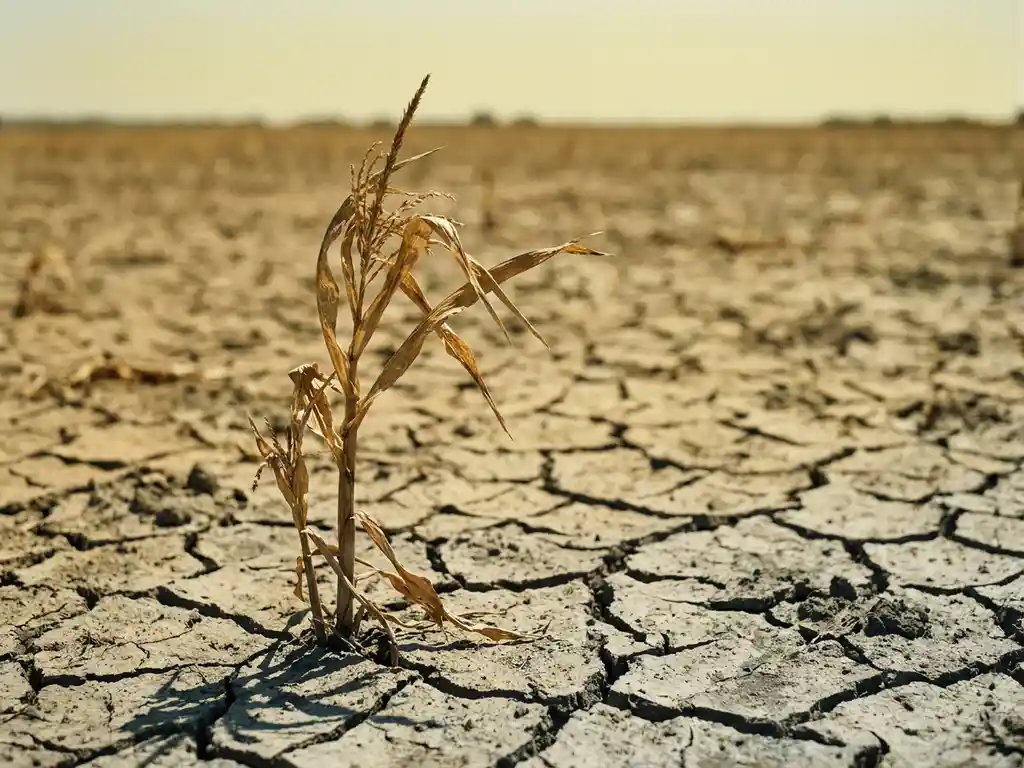
If the SDGs are not met by 2030, the world faces compounding crises across poverty, health, climate, and inequality that will be significantly harder and more expensive to address the longer they go unresolved. Missing the deadline does not mean failure is permanent, but it does mean billions of people will continue to live without access to clean water, quality education, or economic opportunity while global systems absorb the knock-on costs. Below, we unpack which goals are most at risk, who bears the heaviest burden, and what the research and innovation community can do about it.
Which SDGs are most at risk of being missed by 2030?
Based on current SDG progress assessments, the goals most at risk of being missed by 2030 include SDG 1 (No Poverty), SDG 2 (Zero Hunger), SDG 13 (Climate Action), SDG 14 (Life Below Water), and SDG 15 (Life on Land). Progress on these goals has either stalled, reversed, or advanced far too slowly to reach the 2030 targets at the current pace.
The COVID-19 pandemic pushed an estimated hundreds of millions of people back into extreme poverty after years of gains, and food insecurity has worsened due to conflict, climate shocks, and supply chain disruptions. Climate-related goals face a structural challenge: the emissions reductions required to limit global warming are not aligned with current national commitments. Biodiversity loss continues at a rate that outpaces conservation efforts, and ocean health is deteriorating faster than protective policies can respond.
Gender equality (SDG 5), clean water and sanitation (SDG 6), and reduced inequalities (SDG 10) are also lagging significantly. Progress on these goals tends to be uneven across regions, with low-income countries falling furthest behind while higher-income nations post modest gains. The result is a widening gap rather than convergence toward the shared targets the international community agreed to in 2015.
What are the consequences of failing to meet the SDGs?
The consequences of failing to meet the Sustainable Development Goals are wide-ranging and interconnected. Unmet SDGs do not represent isolated policy shortfalls. They translate into real-world outcomes: preventable deaths, persistent poverty cycles, accelerating environmental degradation, and growing social instability. Each goal that goes unmet makes the others harder to achieve.
When SDG 3 (Good Health and Well-Being) targets are missed, healthcare systems remain underfunded and understaffed, leaving populations vulnerable to disease outbreaks and reducing workforce productivity. When SDG 4 (Quality Education) falls short, the next generation enters the labor market without the skills needed for a knowledge-based economy, perpetuating inequality. When climate goals are missed, the economic costs of extreme weather events, displacement, and agricultural disruption rise sharply.
There is also a credibility cost. The SDGs represent a global commitment made by 193 UN member states. Widespread failure to meet them risks eroding trust in multilateral institutions and international cooperation frameworks, making it harder to build consensus on future global challenges. The 2030 deadline was never just a policy milestone. It was a signal of collective political will, and missing it sends a troubling message about humanity’s capacity to act on shared priorities.
How does missing the SDGs affect developing countries most?
Developing countries bear a disproportionate burden when the SDGs are missed because they have the least financial and institutional capacity to absorb the consequences. Nations with limited public infrastructure, weaker healthcare systems, and climate-vulnerable economies face the sharpest deterioration in living standards when global development targets go unmet.
In low-income countries, the failure to achieve SDG 2 (Zero Hunger) directly increases malnutrition rates, which in turn affects children’s cognitive development and long-term economic productivity. Missing SDG 6 (Clean Water and Sanitation) means continued reliance on unsafe water sources, contributing to preventable disease. Missing SDG 7 (Affordable and Clean Energy) keeps communities locked out of the economic activity that electrification enables.
Developed nations have social safety nets, reserve currencies, and diversified economies that cushion the impact of global shortfalls. Developing countries do not. They are also often the least responsible for the environmental damage driving climate-related SDG failures, yet they absorb the most severe consequences of rising temperatures, flooding, and drought. The SDG gap is, in many ways, a justice gap.
What happens to global research and innovation funding if SDGs fail?
If the SDGs fail to be met by 2030, global research and innovation funding faces a likely reorientation rather than a simple reduction. Governments and international bodies may redirect resources toward crisis response, such as managing climate disasters, food shortages, and public health emergencies, rather than the longer-term innovation investments that drive sustainable development.
Research and technology organizations depend heavily on funding streams tied to development priorities. When multilateral institutions lose confidence in SDG-aligned frameworks, the funding pipelines that support applied research in sustainability, clean energy, agriculture, and health can shrink or fragment. Private sector investment also tends to follow stable policy signals. Uncertainty about global development direction makes long-term R&D commitments harder to justify.
There is also a talent and collaboration dimension. International research partnerships are often structured around shared SDG-aligned goals. If those goals lose their organizing power, the collaborative infrastructure built around them, including joint research programs, cross-border funding mechanisms, and multilateral technology transfer initiatives, becomes harder to sustain. Innovation ecosystems thrive on continuity and shared purpose. SDG failure introduces exactly the kind of instability that disrupts both.
Can the SDGs be extended or replaced after 2030?
Yes, the SDGs can be extended, revised, or replaced after 2030. The UN is already engaged in discussions about what a post-2030 development framework will look like. The SDGs themselves were the successor to the Millennium Development Goals (MDGs), which ran from 2000 to 2015, so there is clear precedent for renewing or redesigning global development agendas when a deadline passes.
However, extension is not a neutral outcome. A post-2030 framework would need to reckon honestly with why the current goals were missed and whether the structural conditions, financing mechanisms, and political commitments exist to do better. Simply rolling targets forward without addressing root causes would repeat the same shortfalls on a longer timeline.
The most likely scenario involves a new framework that builds on the SDGs while incorporating lessons learned, updated climate science, and emerging challenges such as artificial intelligence governance, digital equity, and pandemic preparedness. Whether that framework will carry the same political momentum as the original 2030 Agenda depends heavily on how the international community interprets and responds to the current shortfalls in SDG progress.
How can RTOs help close the SDG gap before the deadline?
Research and technology organizations are among the most strategically positioned actors to accelerate SDG progress before the 2030 deadline. RTOs bridge applied science and real-world implementation, making them uniquely capable of translating global development goals into practical, deployable solutions at national and regional levels.
RTOs can contribute meaningfully in several areas:
- Technology transfer and adaptation: RTOs can identify proven technologies from other regions and adapt them for local contexts, accelerating adoption in areas like clean energy, water treatment, and sustainable agriculture.
- Policy and technical advisory roles: Governments often lack in-house technical expertise to design and evaluate SDG-aligned programs. RTOs can fill that gap with evidence-based guidance.
- Cross-sector collaboration: By working across industry, government, and academia, RTOs can connect stakeholders who would not otherwise engage, building the partnerships that complex SDG challenges require.
- Capacity building in underserved regions: RTOs in higher-income countries can support counterpart organizations in developing nations, helping to build the local research infrastructure needed to sustain long-term progress.
- Applied research on SDG-critical problems: From climate resilience to food security, RTOs can direct their R&D capacity toward the specific technical bottlenecks slowing SDG progress.
The window before 2030 is narrow, but it is not closed. Every year of accelerated action reduces the scale of the consequences described above.
How WAITRO helps RTOs drive SDG progress
We connect, equip, and amplify the work of research and technology organizations around the world so that their contributions to the SDGs go further and reach further. Through our global network of over 180 members across multiple regions, we create the cross-border partnerships and knowledge-sharing opportunities that individual RTOs cannot build alone.
Concretely, here is how we support RTOs in closing the SDG gap:
- Global partnership facilitation: We connect RTOs with world-leading research organizations, opening doors to joint programs, co-funded projects, and technology exchange that directly advance the Sustainable Development Goals.
- Capacity development: Our Capacity Development Program strengthens the institutional and thematic capabilities RTOs need to deliver high-impact solutions in areas like AI, digital transformation, and sustainability.
- SDG-aligned knowledge platforms: We provide members with access to shared intelligence, best practices, and collaborative frameworks designed specifically around the UN Sustainable Development Goals.
- Access to international networks: Through WAITRO, RTOs gain visibility and credibility on a global stage, making it easier to attract funding, partners, and policy influence for SDG-critical work.
- Strategic programs and initiatives: We design and deliver programs that directly address the innovation and collaboration gaps holding back SDG progress in key regions.
If your organization is ready to contribute more to the 2030 agenda and beyond, join WAITRO and become part of the world’s largest network dedicated to turning research and technology into real-world impact.
