
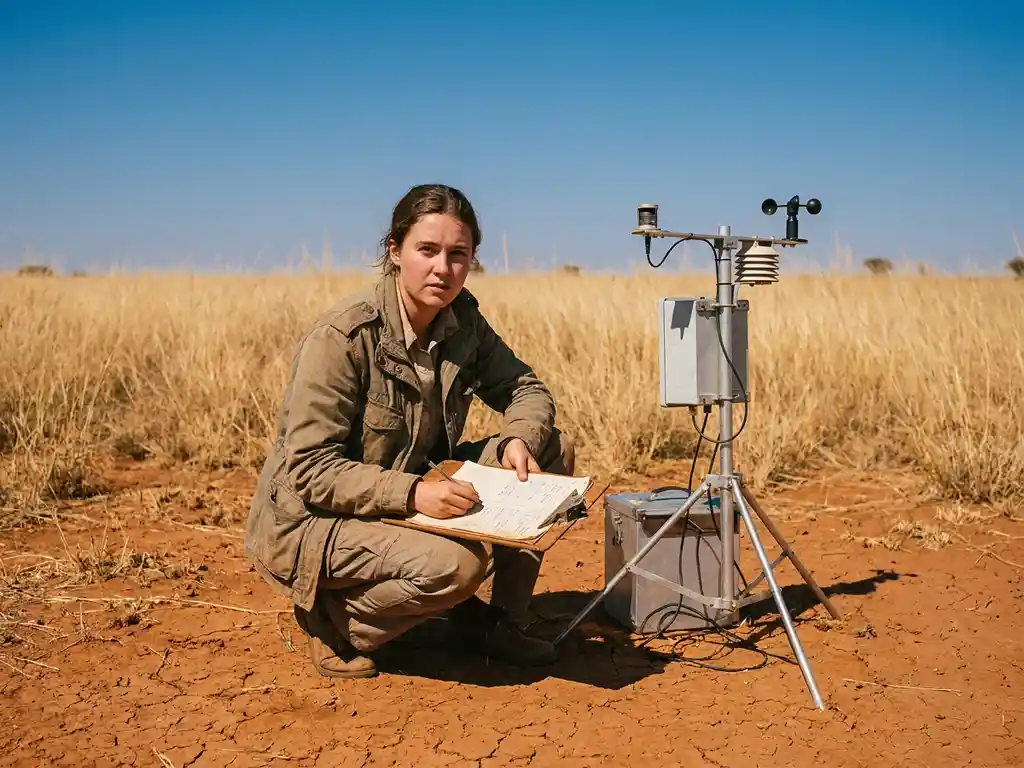
Yes, developing nations should lead their own climate research programs. Local ownership of climate science produces research that is more relevant, more actionable, and more trusted by the communities it is meant to serve. The questions below unpack why this matters, what it already looks like in practice, and how governments, NGOs, and international partners can support it without taking it over.
What barriers prevent developing nations from running climate research programs?
The most significant barriers are funding gaps, limited research infrastructure, and the historical concentration of scientific publishing and agenda-setting in high-income countries. Developing nations often have the local knowledge and direct exposure to climate impacts, but they lack the institutional capacity, equipment, and access to global research networks needed to translate that knowledge into funded, recognized science.
These barriers are interconnected. When funding flows primarily from donor governments or international foundations in the Global North, research priorities tend to reflect those funders’ interests rather than the most pressing needs of affected communities. Researchers in developing countries also face structural disadvantages in publishing, peer review, and citation, which limits their visibility and influence in global climate policy discussions.
Workforce constraints compound the problem. Many talented scientists trained in developing countries are absorbed into institutions abroad, a dynamic sometimes called brain drain. Without competitive salaries, modern facilities, and clear career pathways, retaining skilled researchers at home remains difficult. Addressing these barriers requires both investment in physical infrastructure and deliberate policy choices that keep scientific talent and leadership within developing nations.
Why does it matter who controls climate research agendas?
Who controls climate research agendas determines which problems get studied, which solutions get prioritized, and whose voices shape global climate policy. When research agendas are set externally, locally critical issues such as dryland agriculture, coastal flooding in small island states, or urban heat in rapidly growing cities can be systematically underrepresented in the scientific literature.
Climate change research in developing world contexts often requires hyperlocal data. A glacier study designed for alpine Europe may not translate to the specific dynamics of glaciers in the Hindu Kush or the Andes. Similarly, adaptation strategies developed without input from local farmers, water managers, or urban planners tend to fail at implementation, regardless of their scientific validity.
There is also a political dimension. Nations that produce their own climate science carry greater credibility and authority in international negotiations. Countries that depend entirely on external research to make their case at forums like the UNFCCC Conference of the Parties are in a structurally weaker position than those that arrive with domestically produced evidence. Climate research ownership is, in part, a question of sovereignty and self-determination in the face of a crisis that disproportionately affects the Global South.
How are developing nations already leading climate science initiatives?
Developing nations are already leading significant climate science initiatives across Africa, Asia, Latin America, and the Pacific. These efforts range from national meteorological modernization programs to regional climate modeling centers, community-based monitoring networks, and locally designed early warning systems for extreme weather events.
In Africa, institutions such as the African Climate Policy Centre and various national meteorological agencies have built substantial capacity in climate modeling and downscaled projections tailored to local conditions. In South Asia, research universities and national science councils are producing peer-reviewed work on monsoon variability, glacial melt, and agricultural resilience that directly informs national adaptation planning.
Across Latin America, a growing network of climate researchers is collaborating on Amazon deforestation monitoring, biodiversity-climate interactions, and urban climate resilience, often in partnership with regional bodies rather than relying solely on Northern institutions. These examples demonstrate that Global South climate research is not an aspiration but an active and expanding reality. The question is how to accelerate and sustain it.
What does a locally led climate research program actually look like?
A locally led climate research program is one where national or regional institutions set the research questions, control the budget, employ the principal investigators, and own the data and findings. Local leadership does not mean isolation from the global scientific community; it means that international collaboration is structured on equal terms, with local researchers as co-leads rather than data collectors for external teams.
Key characteristics of locally led programs
- Domestic funding and governance: Core funding comes from national governments, regional development banks, or locally administered grant mechanisms, reducing dependency on shifting donor priorities.
- Local institutional anchoring: Programs are housed in national universities, research institutes, or government science agencies with long-term mandates, not in project offices that dissolve when external funding ends.
- Community-connected research design: Research questions are developed in consultation with affected communities, local governments, and industries, ensuring relevance from the outset.
- Data sovereignty: Raw data, models, and publications are stored and accessible within the country, not solely on servers managed by foreign partner institutions.
What this looks like in practice
In practice, a locally led program might look like a national climate institute publishing annual assessments that feed directly into government budgeting for disaster risk reduction. It might be a university consortium running a multi-year study on coastal erosion that employs local graduate students and produces policy briefs for municipal authorities. The common thread is that local institutions are the drivers, not the recipients, of the research process.
How can international partnerships support without displacing local climate research?
International partnerships support rather than displace local climate research when they are designed around the priorities of the local partner, structured to build lasting capacity, and governed by agreements that protect local data rights and intellectual property. The critical distinction is between partnerships that transfer skills and resources and those that simply extract local data or co-opt local researchers into externally designed projects.
Effective international collaboration in developing countries’ climate science typically involves co-designing research questions from the start, ensuring that local researchers hold principal investigator roles, and committing to long-term engagement rather than one-off project cycles. Funding structures that allow local institutions to sub-grant internationally, rather than always receiving sub-grants from Northern partners, are a practical signal of genuine parity.
Mentorship, training, and joint publications are valuable when they flow in both directions. Northern institutions benefit from local ecological knowledge, field access, and contextual understanding that they cannot replicate remotely. Framing partnerships as mutual exchanges rather than capacity transfers changes the dynamic and tends to produce better science. International bodies and networks can play a convening role here, connecting institutions across the Global South so that South-South collaboration grows alongside North-South relationships.
What role can governments and NGOs play in funding local climate research?
Governments and NGOs can play a decisive role by directing funding through locally controlled mechanisms, advocating for multilateral climate finance to reach national research institutions, and designing grant programs that explicitly require local institutional leadership. Both actors have the power to shift the structural incentives that currently concentrate climate research funding in high-income countries.
National governments in developing countries can prioritize climate science in their science and technology budgets, create dedicated research funds tied to national adaptation plans, and use procurement and partnership policies to build domestic research capacity over time. Regional bodies can pool resources to fund shared climate modeling infrastructure that no single country could sustain alone.
NGOs operating in the climate and development space can move beyond commissioning research from external consultants and instead fund local research institutions to lead studies relevant to their program areas. They can also advocate with bilateral and multilateral donors to reform funding eligibility rules that inadvertently favor large Northern institutions over smaller but highly capable Southern ones. When NGOs publish and amplify locally produced climate science, they increase its visibility in policy circles where it might otherwise be overlooked.
How WAITRO supports locally led climate research
We believe that strengthening the institutions behind climate science is as important as the research itself. WAITRO works directly with research and technology organizations in developing countries to build the institutional capacity needed to run credible, independent, and impactful climate research programs.
Through our network and programs, we provide:
- Institutional capacity building that equips research organizations with the governance, management, and technical systems to lead complex research programs independently
- Cross-border partnership facilitation that connects developing country research institutions with global peers on terms that protect local leadership and data ownership
- Access to a global network of 135 Full Members and 45 Associate Members, including world-leading organizations, opening doors to collaboration that would otherwise take years to establish
- Support for innovation ecosystems that help research translate into policy and practice at the national and regional level
- Alignment with the UN SDGs, ensuring that locally led climate research contributes to globally recognized development goals
If your government agency, research institution, or NGO is working to strengthen developing nations’ climate research capacity, we invite you to explore WAITRO membership and partnership opportunities. Reach out to us to learn how we can help you build the institutions that make locally led climate science possible.
Related Articles
- What Is the Difference Between Innovation and Implementation?
- What Is a Research Exchange Program?
- What Is the Difference Between Public and Private Research Institutes?
- How Do Research Institutes in Asia Build International Partnerships?
- How Can Research Institutes in Africa Access International Funding?
