
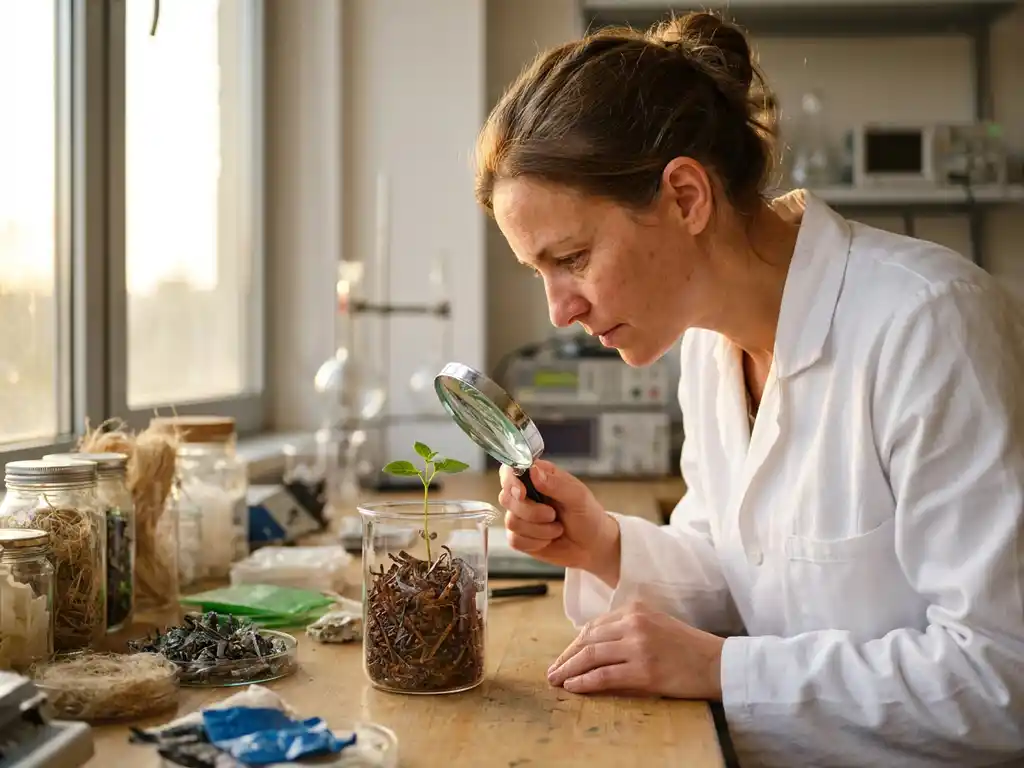
Research institutes serve as innovation hubs that develop sustainable manufacturing technologies, conduct applied research, and transfer solutions to industry partners. They bridge the gap between theoretical scientific knowledge and practical industrial applications, creating pathways for manufacturers to adopt cleaner production methods, reduce environmental impact, and improve resource efficiency through collaborative research programs and technology transfer initiatives.
Outdated manufacturing processes are costing companies their competitive edge
Many manufacturers continue to rely on energy-intensive processes and linear production models that waste materials and drive up operational costs. These outdated approaches not only harm profitability through higher energy bills and raw material expenses but also expose companies to regulatory risks and consumer backlash as sustainability becomes a market requirement. The solution lies in partnering with research institutes that specialize in developing circular manufacturing processes, energy-efficient technologies, and waste-reduction strategies tailored to specific industry needs.
Limited internal R&D capacity is blocking sustainable innovation
Most manufacturers lack the specialized expertise and costly research infrastructure needed to develop breakthrough sustainable technologies in-house. This gap leaves them dependent on existing suppliers and unable to differentiate through innovation. Research institutes offer access to cutting-edge laboratories, interdisciplinary teams, and pilot-scale testing facilities that would be prohibitively expensive for individual companies to maintain, enabling manufacturers to accelerate their transition to sustainable practices without massive capital investments.
What role do research institutes play in sustainable manufacturing?
Research institutes serve as innovation catalysts that develop clean technologies, optimize manufacturing processes, and create collaborative networks between academia and industry. They conduct applied research focused on real-world manufacturing challenges while providing testing facilities and expertise that individual companies cannot afford to maintain internally.
These organizations function as neutral ground where competing manufacturers can collaborate on pre-competitive research without sharing proprietary information. They tackle complex sustainability challenges that require interdisciplinary approaches, combining materials science, process engineering, environmental science, and digital technologies to create comprehensive solutions.
Research institutes also serve as talent pipelines, training the next generation of engineers and scientists in sustainable manufacturing practices. Through internships, joint projects, and continuing education programs, they ensure that industry has access to skilled professionals who understand both traditional manufacturing and emerging green technologies.
How do research institutes develop green manufacturing technologies?
Research institutes develop green manufacturing technologies through systematic research programs that combine fundamental science with practical engineering applications. They use pilot-scale facilities to test new processes, validate performance metrics, and optimize technologies before industry adoption.
The development process typically begins with identifying specific sustainability challenges in manufacturing sectors. Research teams then explore multiple solution pathways, from materials substitution and process redesign to digital optimization and circular economy approaches. They work closely with industry partners to ensure that new technologies meet real-world performance requirements while delivering environmental benefits.
Many institutes operate specialized laboratories for testing bio-based materials, developing energy-efficient processes, and creating closed-loop manufacturing systems. They also leverage advanced modeling and simulation tools to predict technology performance and optimize designs before physical testing, reducing development time and costs.
What’s the difference between university research and industrial research institutes?
Industrial research institutes focus on applied research with near-term commercial applications, while universities typically conduct more fundamental research with longer time horizons. Industrial institutes prioritize technology readiness and market viability, working closely with industry partners to solve specific manufacturing challenges.
University research often explores theoretical questions and breakthrough discoveries that may take decades to reach practical application. Industrial research institutes bridge this gap by taking promising university research and developing it into commercially viable technologies. They have the specialized equipment and industry connections needed to scale laboratory discoveries into pilot-scale demonstrations.
Industrial institutes also maintain closer relationships with manufacturing companies, understanding their operational constraints, regulatory requirements, and market pressures. This industry knowledge helps them develop solutions that companies can actually implement rather than purely academic concepts.
How do research institutes transfer technology to manufacturers?
Research institutes transfer technology to manufacturers through licensing agreements, collaborative development projects, spin-off companies, and direct technical consulting. They provide comprehensive support, including training, pilot testing, and ongoing technical assistance, to ensure successful implementation.
The technology transfer process often begins with demonstration projects where manufacturers can see new technologies in action before committing to full-scale adoption. Research institutes may offer shared-risk partnerships in which they provide technical expertise while manufacturers contribute facilities and market knowledge.
Many institutes operate technology transfer offices that help match promising research with appropriate industry partners. They also facilitate consortium projects in which multiple manufacturers collaborate on developing and adopting new technologies, sharing costs and risks while accelerating innovation.
Which research institutes are leading sustainable manufacturing innovation?
Leading research institutes in sustainable manufacturing include the Fraunhofer Institutes in Germany, TNO in the Netherlands, VTT in Finland, and various national laboratories worldwide. These organizations have established track records in developing and commercializing clean manufacturing technologies across multiple industries.
Fraunhofer operates numerous institutes focused on different aspects of sustainable manufacturing, from materials science and production technology to environmental engineering. TNO specializes in circular economy solutions and industrial sustainability, while VTT focuses on bio-based manufacturing and clean energy integration.
Regional research organizations such as Leitat in Spain and JITRI in China also play crucial roles in their respective markets, developing technologies suited to local manufacturing needs and regulatory environments. These institutes often collaborate internationally to share knowledge and accelerate the global adoption of sustainable manufacturing practices.
How WAITRO Supports Sustainable Manufacturing Innovation
We connect research institutes, manufacturers, and technology organizations worldwide to accelerate sustainable manufacturing innovation. Through our global network of 135 Full Members and 45 Associate Members, we facilitate collaboration on breakthrough technologies and provide access to diverse expertise across multiple regions.
Our support includes:
- Comprehensive services that connect manufacturers with leading research institutes specializing in green technologies
- Collaborative programs that enable joint research projects on sustainable manufacturing challenges
- Funding opportunities and partnership facilitation for technology development initiatives
- Knowledge-sharing platforms that disseminate best practices in sustainable manufacturing innovation
Join us at the WAITRO Summit 2026 in Istanbul, Türkiye (October 26–28, 2026), where the theme “Leading the Path of Implementation: Strengthening Co-Creation for Our Common Future” will bring together global innovators working on sustainable manufacturing solutions. This summit provides an unparalleled opportunity to connect with leading research institutes, discover breakthrough technologies, and forge partnerships that can transform your manufacturing operations. Become a WAITRO member today to access our global network and accelerate your journey toward sustainable manufacturing excellence.
