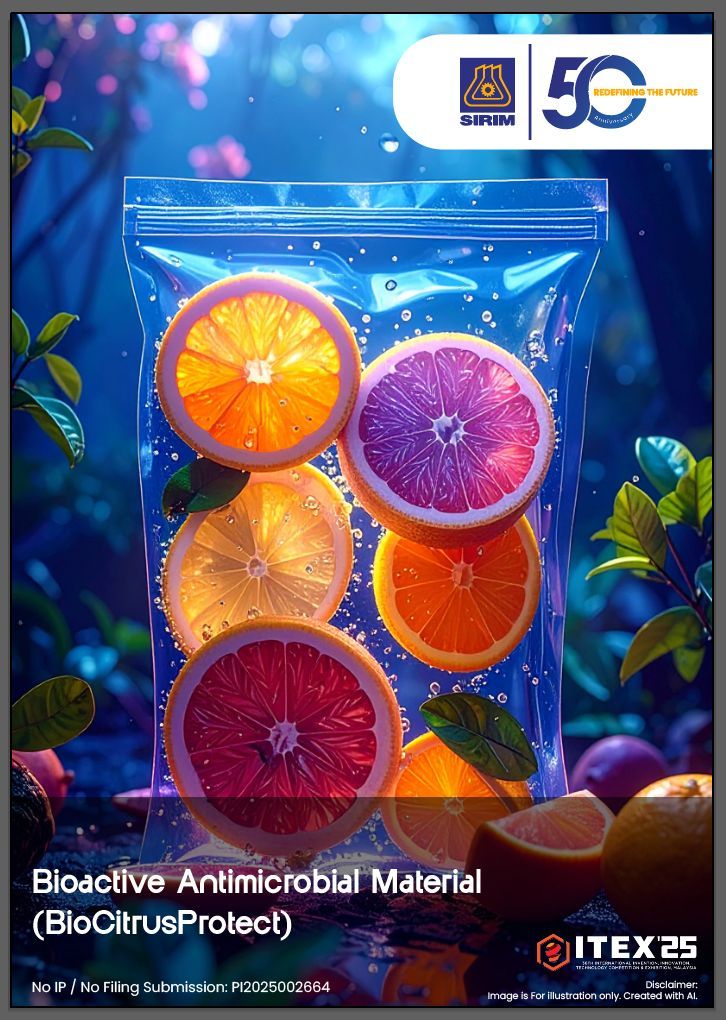
A biodegradable antimicrobial food packaging film using bacterial cellulose and natural compounds derived from naringin to extend food freshness, reduce spoilage, and minimize food waste.
Date:
-
Location:
Malaysia
Partners:
-
Research Area:
Climate Resilience & the Water–Food–Energy Nexus
Sustainable Development Goals:
02 - Zero Hunger, 03 - Good Health and Well-Being, 09 - Industry, Innovation and Infrastructure, 12 - Responsible Consumption and Production
Sustainable Antimicrobial Food Packaging
SIRIM BERHAD has developed a biodegradable antimicrobial food packaging film that combines environmentally responsible materials with natural antimicrobial protection. The innovation addresses two growing global challenges: food waste and plastic pollution. By helping maintain food freshness and inhibit microbial growth, the packaging is designed to extend product shelf life, improve food safety, and reduce the environmental impact associated with conventional food packaging.
The film incorporates natural antimicrobial compounds derived from naringin, a bioactive compound found in citrus-based resources, together with bacterial cellulose, a naturally produced material known for its strength and excellent film-forming properties. The combination provides structural performance and functional protection while offering a more sustainable alternative to conventional plastic packaging.
Food Preservation and Environmental Benefits
The antimicrobial properties of the packaging are designed to slow microbial growth and food spoilage, helping extend freshness and reduce food waste. This is particularly relevant given that global food waste reaches approximately 1.05 billion tonnes annually, creating significant environmental and economic impacts. By integrating renewable materials with natural antimicrobial protection, the innovation supports safer food preservation while reducing reliance on conventional plastic packaging.
The solution can create value across the food supply chain, including for food producers, retailers, and consumers. In addition to supporting food security and reducing food waste, the biodegradable packaging contributes to circular economy objectives and the transition toward more environmentally responsible food systems.
Development and Commercialization Opportunities
The innovation is currently at the prototype-in-development stage. Early results demonstrate the potential of natural antimicrobial compounds and sustainable materials for developing biodegradable packaging with food-preservation benefits. Further development will focus on optimizing film production, validating performance, ensuring regulatory compliance, and preparing the technology for commercialization.
The project is seeking collaboration with food manufacturers, packaging companies, research institutions, and sustainability partners for pilot testing, product validation, and commercial scale-up. Funding, industry trials, regulatory guidance, and market access would support the transition from prototype development to broader adoption in sustainable food packaging applications.