
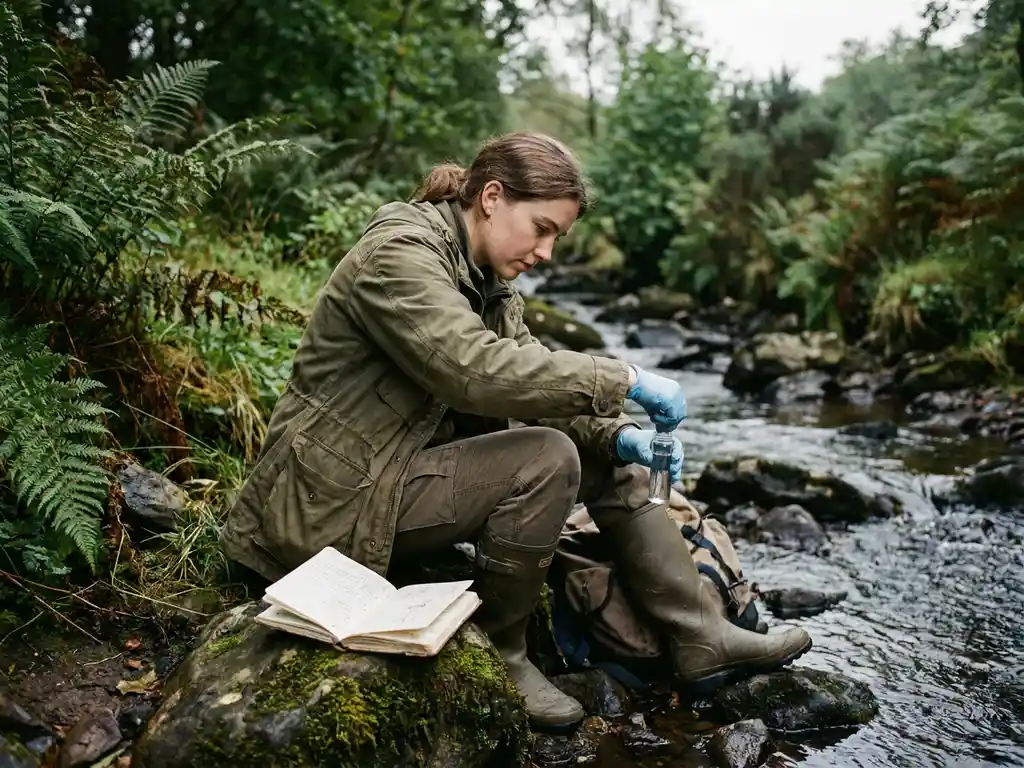
Early-career scientists can break into climate research today by combining targeted skill development with strategic networking, international collaboration, and the proactive pursuit of funding and mentorship opportunities. The field is actively expanding across both public and private sectors, creating genuine entry points for researchers at every stage of their early careers. The questions below unpack exactly how to navigate each of those pathways.
What skills do early-career scientists need for climate research?
Early-career scientists entering climate research need a combination of quantitative analytical skills, domain-specific scientific knowledge, and the ability to communicate findings across disciplines. Proficiency in data analysis, climate modeling tools, and statistical methods forms the technical foundation, while interdisciplinary thinking allows researchers to connect climate science with policy, economics, and social systems.
Beyond the technical baseline, the climate research field increasingly rewards researchers who can work across boundaries. Collaboration with engineers, social scientists, and policymakers is now standard practice in most major research programs. Developing strong science communication skills, including the ability to translate complex findings for non-specialist audiences, is no longer optional for those seeking meaningful impact.
Key skills that strengthen a climate research profile include:
- Data science and programming (Python, R, and geospatial tools are widely used)
- Climate modeling and simulation frameworks relevant to your specific research area
- Scientific writing for peer-reviewed publication and grant applications
- Cross-disciplinary collaboration and project coordination
- Policy literacy to connect research outputs with real-world application
Researchers who invest in both technical depth and collaborative breadth are consistently better positioned for competitive roles and funding opportunities in climate science careers.
Together, We Drive Innovation
Support global research, foster collaboration, and create a sustainable future.
What are the best entry points into climate research for new scientists?
The best entry points for new scientists breaking into climate research are academic research assistantships, internships at research and technology organizations, postdoctoral fellowships, and participation in international research networks. Each pathway offers a different balance of structured learning, hands-on research experience, and professional network development.
Graduate programs with strong climate science departments remain the most established route, but they are not the only one. Research and technology organizations (RTOs) affiliated with national governments or international bodies often run structured internship and fellowship programs specifically designed for early-career climate scientists. These placements combine real research contributions with mentorship and institutional exposure.
Joining open research consortia and international working groups is another underutilized entry point. Many global climate initiatives actively recruit early-career researchers to contribute to data collection, literature reviews, and field studies. This kind of participation builds both a publication record and a professional reputation simultaneously.
How does international collaboration help early-career climate researchers?
International collaboration helps early-career climate researchers by expanding access to datasets, infrastructure, and expertise that no single institution can provide alone. It also accelerates career development by building cross-cultural research skills, increasing publication visibility, and opening doors to funding streams that are only available to internationally connected teams.
Climate change is inherently a global problem, and the research addressing it reflects that reality. The most impactful climate studies draw on observations, models, and field data from multiple regions. For an early-career researcher, being embedded in an international collaboration means working with larger datasets, more sophisticated tools, and a broader peer network than would be available through a single national institution.
There is also a practical career benefit. Researchers who have demonstrated the ability to work across institutional and national boundaries are more competitive for senior positions, major grants, and leadership roles within global research programs. International experience signals both scientific credibility and professional adaptability.
What funding opportunities exist for early-career climate scientists?
Early-career climate scientists can access funding through national research councils, international bodies such as the UN Environment Programme, bilateral science agreements between countries, private foundations focused on sustainability, and competitive fellowship programs hosted by research universities and RTOs. The range of available funding has grown considerably as climate science has become a global policy priority.
Some of the most accessible funding routes for early-career researchers include:
- National science foundations and research councils, which often have dedicated early-career grant categories
- European research programs such as Horizon Europe, which fund international collaborative projects
- UN-affiliated funding mechanisms tied to the Sustainable Development Goals, particularly SDG 13 on climate action
- Private foundations with sustainability and climate mandates, many of which fund research fellowships
- Industry-linked research grants through partnerships between RTOs and private sector organizations
Applying for funding as part of a larger collaborative team, rather than as an individual, often increases success rates for early-career applicants. Many funding bodies specifically require or reward multi-institutional and cross-border project designs.
How can early-career researchers find mentors in climate science?
Early-career researchers can find mentors in climate science through academic supervisors, professional associations, international research networks, and formal mentorship programs run by research organizations. Proactively reaching out to established researchers whose work aligns with your interests, backed by a clear and specific message, is consistently more effective than waiting for mentorship to emerge organically.
Conferences and workshops remain among the most productive environments for initiating mentoring relationships. Presenting your own work, even at early stages, creates natural opportunities for senior researchers to engage with your ideas. Following up after these interactions with a specific question or collaboration proposal converts brief encounters into lasting professional relationships.
Online research communities and open science platforms have also expanded mentorship access significantly. Researchers in regions with limited local networks can now connect with mentors across continents through collaborative projects, co-authorship opportunities, and structured virtual mentorship schemes offered by international scientific bodies.
Which climate research areas offer the most opportunities right now?
In 2026, the climate research areas offering the most opportunities for early-career scientists include climate adaptation and resilience planning, carbon capture and storage technologies, climate finance and risk modeling, ocean and cryosphere science, and the intersection of climate change with food and water security. These areas are attracting substantial investment from both public institutions and private sector actors.
Climate adaptation research is particularly active because governments at every level are now moving from mitigation planning to implementation. Researchers who can model local and regional climate impacts, assess community vulnerability, and evaluate adaptation strategies are in high demand across government agencies, NGOs, and research institutes.
Emerging technology-driven areas are also generating new roles. The development of climate monitoring systems using remote sensing, machine learning-assisted climate modeling, and the integration of climate data into financial risk assessment have all created demand for researchers who combine traditional climate science training with computational and data science skills.
How WAITRO supports early-career scientists in climate research
We connect early-career climate researchers with the international networks, institutional partnerships, and capacity development resources they need to build impactful careers. Through WAITRO’s global platform, researchers gain access to a community of 135 Full Members and 45 Associate Members spanning research and technology organizations, research universities, and industry partners across multiple regions.
Our work in support of early-career scientists in climate research includes:
- Cross-border partnership facilitation that links researchers with leading RTOs and innovation ecosystems worldwide
- Institutional capacity building programs designed to strengthen the research environments where early-career scientists work and grow
- Knowledge sharing platforms that connect members around shared challenges in climate science and sustainable development
- Alignment with the UN SDGs, ensuring that research collaboration contributes to measurable global goals including climate action
Whether you are a government representative seeking to strengthen your country’s climate research capacity, an NGO leader looking for evidence-based partners, or a research institution exploring new collaborative pathways, we offer a concrete route to broader impact. Explore WAITRO membership to find out how joining our network can accelerate your climate research goals.
