
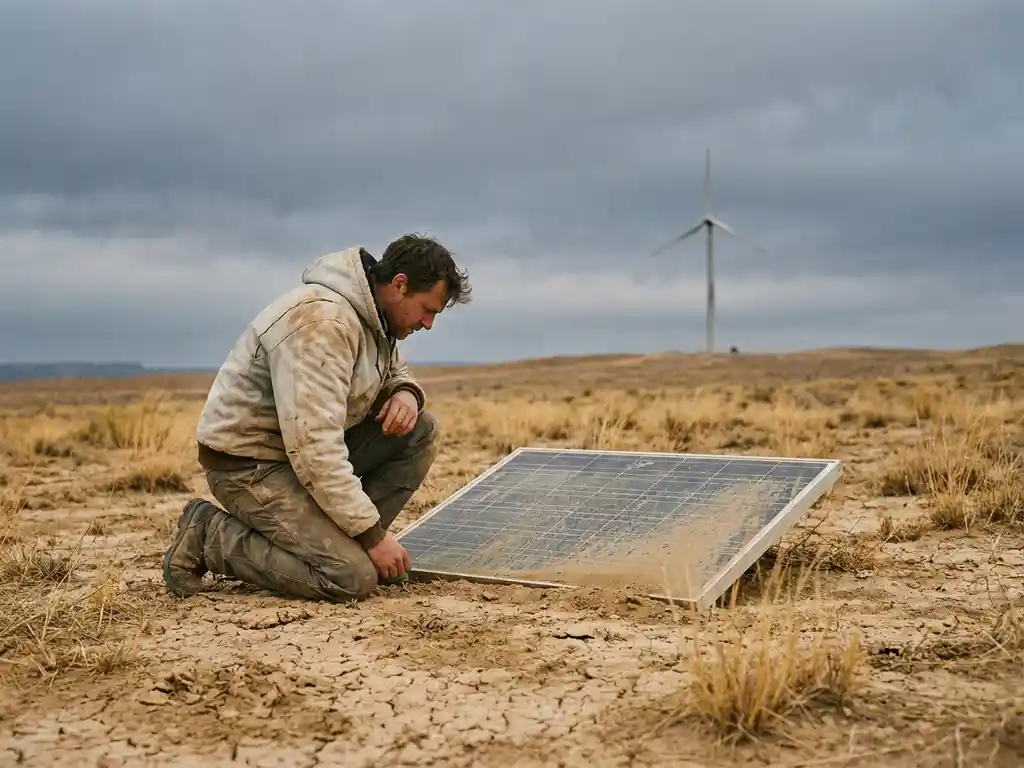
The biggest barriers to scaling climate innovation are funding gaps, fragmented policy environments, and the absence of coordinated international collaboration. Promising technologies routinely stall between the research phase and commercial deployment because the systems needed to support them at scale simply are not in place. These barriers affect every sector, from clean energy to sustainable agriculture, and they require structural solutions rather than incremental fixes. The questions below unpack each barrier in detail and point toward the approaches most likely to break through them.
Why do promising climate solutions fail to scale?
Promising climate solutions fail to scale primarily because of a structural gap between early-stage innovation and commercial deployment. A technology can be technically proven, scientifically sound, and environmentally impactful, and still stall when it encounters the real-world demands of manufacturing at volume, navigating regulatory approval, securing sustained investment, and finding buyers willing to absorb early-adopter risk.
This gap is often described as the “valley of death” in innovation cycles, and it is particularly wide in climate technology. The reasons are layered:
- Long development timelines mean that returns on climate investments often materialize over decades, which conflicts with short investor horizons.
- High capital intensity is common in sectors like energy infrastructure, industrial decarbonization, and carbon capture, where scaling requires enormous upfront costs.
- Market readiness gaps arise when the supply chains, skilled workforces, and customer markets needed to absorb a new technology do not yet exist at the required scale.
- Risk aversion among incumbents slows adoption, particularly in sectors where existing infrastructure represents decades of sunk investment.
Understanding why solutions stall is the first step toward designing systems that prevent it. The barriers explored in the following sections each contribute to this failure pattern in distinct ways.
What funding gaps are holding back climate innovation?
Climate tech funding gaps are most acute in the transition from pilot projects to full-scale commercial deployment. Early-stage research often attracts public grants, and mature technologies can access private capital, but the middle stage, where a solution needs tens or hundreds of millions to prove out at scale, remains chronically underfunded. This is the most consequential gap in the current climate finance landscape.
Several specific funding shortfalls compound the problem:
- The scale-up gap: Venture capital is well-suited to software but poorly structured for hardware-heavy climate technologies that require large physical infrastructure and longer payback periods.
- Geographic inequality: The majority of private climate finance flows to a small number of high-income markets, leaving emerging economies with limited access to capital for deploying climate solutions locally.
- Blended finance underutilization: Mechanisms that combine public and private capital to de-risk investments in developing markets exist but remain underused relative to the scale of need.
- Short-term grant cycles: Public research funding is often structured in short cycles that do not align with the multi-year timelines required to bring climate technologies to market.
Closing these gaps requires deliberate coordination between development banks, national governments, philanthropic funders, and private investors. No single actor can solve the climate tech funding challenge alone.
How do policy and regulatory environments affect climate scaling?
Policy and regulatory environments are among the most powerful determinants of whether climate technologies scale or stagnate. Supportive policy frameworks reduce investment risk, create market demand, and accelerate the development of enabling infrastructure. Inconsistent, fragmented, or hostile regulatory environments do the opposite, effectively pricing climate innovation out of the market even when the technology is ready.
The most significant policy-related barriers to scaling climate technology include:
- Regulatory uncertainty: When policy incentives can change with a new government or budget cycle, long-term investors pull back. Stability and predictability in climate policy are essential for mobilizing private capital.
- Permitting delays: In many jurisdictions, permitting processes for clean energy infrastructure, grid upgrades, and industrial facilities are slow and fragmented, adding years and cost to deployment timelines.
- Subsidy misalignment: Continued subsidies for fossil fuels in many economies create an uneven competitive landscape that makes it structurally harder for clean alternatives to compete on price.
- Lack of carbon pricing: Without a meaningful price on carbon, the external costs of emissions are not reflected in market decisions, reducing the financial incentive to adopt cleaner alternatives.
Countries that have made the most progress in deploying clean energy, such as those with long-term renewable energy targets backed by consistent policy support, demonstrate clearly that the regulatory environment is not just a background condition. It is an active driver of whether climate innovation reaches the market.
What role does international collaboration play in overcoming these barriers?
International collaboration is essential to overcoming the barriers to scaling climate innovation because no single country has all the technology, capital, policy tools, and market access needed to solve the problem alone. Cross-border partnerships accelerate knowledge transfer, spread financial risk, open new markets for proven solutions, and allow countries with different strengths to complement one another in building out climate technology ecosystems.
The case for international collaboration in climate innovation rests on several concrete advantages:
- Technology transfer: Solutions developed in one context can be adapted and deployed in others far more quickly when research organizations and governments have established relationships and shared frameworks.
- Shared infrastructure investment: Regional cooperation on grid interconnection, clean hydrogen supply chains, and carbon markets can reduce the per-country cost of building the infrastructure that climate technologies require.
- Coordinated standards: Harmonized technical standards and certification frameworks reduce market fragmentation and make it easier for climate solutions to cross borders.
- Pooled research capacity: Joint research programs allow institutions in different countries to tackle problems that are too large or complex for any single organization to address independently.
Global networks that connect research organizations, governments, and industry partners are particularly valuable here, because they provide the institutional infrastructure through which this collaboration can actually happen at scale.
Which sectors face the hardest barriers to climate innovation scaling?
The sectors facing the hardest barriers to scaling climate innovation are heavy industry, long-distance transport, and land use, including agriculture and forestry. These are often called “hard-to-abate” sectors because they combine high emissions intensity with structural characteristics that make decarbonization technically complex, capital-intensive, and slow to implement.
Heavy industry and manufacturing
Steel, cement, and chemicals production are responsible for a significant share of global industrial emissions, and they are among the most difficult to decarbonize. The processes involved often require extremely high temperatures that are currently supplied by fossil fuels, and the infrastructure has long asset lifetimes. Switching to green hydrogen, electrification, or carbon capture requires not just new technology but entirely new supply chains and facility redesigns.
Long-distance transport and aviation
Battery technology has made rapid progress in light-duty vehicles, but long-haul shipping, aviation, and heavy freight remain deeply dependent on liquid fuels. Sustainable aviation fuels and green ammonia for shipping are promising but remain far more expensive than conventional alternatives, and the production infrastructure needed to supply them at scale does not yet exist at the required level.
Agriculture and land use
Agricultural emissions come from a wide range of diffuse sources, including livestock, soil management, and deforestation, which are inherently difficult to monitor, regulate, and reduce at scale. The economics of farming in many regions make it hard for producers to absorb the upfront costs of more sustainable practices, and the policy frameworks to support the transition remain underdeveloped in most countries.
How can research organizations help accelerate climate innovation deployment?
Research organizations can accelerate climate innovation deployment by bridging the gap between scientific discovery and real-world application. They translate laboratory breakthroughs into scalable prototypes, provide the technical expertise that industry partners need to de-risk adoption, and act as trusted intermediaries between governments, businesses, and the scientific community. Their role is not just to generate knowledge but to move it into practice.
Specific contributions that research and technology organizations make to climate innovation scaling include:
- Developing and validating technologies through applied research that brings solutions closer to commercial readiness
- Providing testing infrastructure and pilot facilities that allow companies to prove out technologies before committing to full-scale investment
- Building the evidence base that policymakers need to design effective climate regulations and incentive programs
- Training the next generation of scientists, engineers, and technologists with the skills needed in a low-carbon economy
- Facilitating cross-sector and cross-border partnerships that combine complementary capabilities and resources
Research organizations embedded in strong international networks are especially well-positioned to drive deployment, because they can access global knowledge, connect local innovators with international partners, and help solutions developed in one region find application in others.
How WAITRO helps accelerate climate innovation
We work directly at the intersection of research, policy, and international collaboration, which puts us in a strong position to help members and partners overcome the barriers to scaling climate innovation. Our global network of research and technology organizations spans multiple regions and sectors, creating the conditions for exactly the kind of cross-border cooperation that climate scaling demands.
Through our programs and services, we support climate innovation deployment in concrete ways:
- Institutional capacity building: We strengthen research and technology organizations so they have the infrastructure, governance, and technical capabilities to take climate solutions from concept to deployment at scale.
- Cross-border partnership facilitation: We connect members with world-leading research institutions and industry partners, opening pathways for technology transfer, joint research, and co-investment.
- Innovation ecosystem support: We help members engage with the policy environments, funding mechanisms, and market networks that climate technologies need to move beyond the pilot stage.
- SDG-aligned programming: Our initiatives are designed to advance the UN Sustainable Development Goals, ensuring that climate innovation efforts are coordinated with the broader global sustainability agenda.
If your organization is working to advance climate solutions and wants to connect with a global network of research and technology leaders, explore WAITRO membership and find out how we can help you scale your impact.
Related Articles
- What Is Citizen Science and How Do Institutes Use It?
- What Are the SDG-Related Research Funding Opportunities?
- How Do Research Institutes Build Trust with International Partners?
- What Does Research Network Membership Actually Include?
- What Is the Difference Between Public and Private Research Institutes?
