
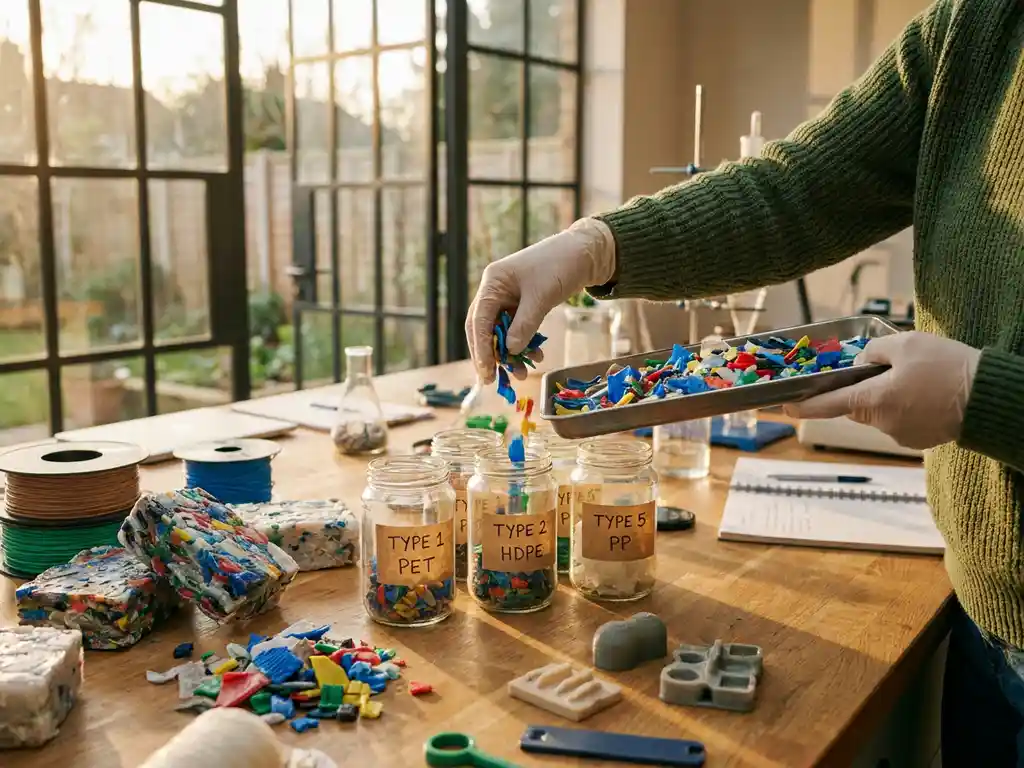
Circular economy research projects are scientific initiatives that develop technologies, methods, and systems to eliminate waste and keep resources in continuous use. These projects focus on creating closed-loop systems in which materials are reused, recycled, or regenerated rather than disposed of, supporting sustainable development goals while addressing environmental challenges.
Fragmented research efforts are limiting the impact of the circular economy
Many organizations conduct circular economy research in isolation, missing opportunities to scale solutions and share critical insights. This fragmentation leads to duplicated efforts, slower innovation cycles, and limited real-world implementation of promising technologies. Research teams working alone often lack the diverse expertise needed to address complex sustainability challenges effectively. The solution lies in collaborative research networks that connect institutions globally, enabling knowledge sharing and coordinated approaches to tackle challenges in waste reduction and resource efficiency.
Limited industry partnerships are slowing research commercialization
Academic research on circular economy solutions often remains confined to laboratories, without clear pathways to market implementation. This gap between research and industry application means potentially transformative technologies never reach the scale needed to create meaningful environmental impact. Organizations need structured partnerships that bridge the research-to-market divide, connecting scientific innovation with industry expertise and investment. Building these connections requires platforms that facilitate collaboration between research institutions and commercial partners.
What is circular economy research, and why is it important?
Circular economy research is the systematic study of methods, technologies, and systems that eliminate waste by designing out disposal and keeping materials in productive use. It encompasses everything from developing biodegradable materials to creating industrial symbiosis networks in which one industry’s waste becomes another’s input.
This research field has become critical because traditional linear economic models are unsustainable. With global resource consumption expected to double by 2050, circular approaches offer the only viable path to decouple economic growth from environmental degradation. Research in this area directly supports multiple UN Sustainable Development Goals, particularly those focused on responsible consumption, clean water, and climate action.
The importance extends beyond environmental benefits. Circular economy research drives innovation in materials science, process engineering, and digital technologies. It creates new business models and economic opportunities while reducing dependence on virgin resources and minimizing environmental impact.
What are the main types of circular economy research projects?
Circular economy research projects fall into four main categories: materials and product design, waste-to-resource technologies, industrial symbiosis systems, and digital circular platforms. Each type addresses different aspects of creating closed-loop economic systems.
Materials and product design research focuses on developing products that last longer, can be easily repaired, and are designed for disassembly and recycling. This includes research into biodegradable plastics, modular electronics, and bio-based materials that can replace traditional petroleum-derived products.
Waste-to-resource technologies transform what was previously considered waste into valuable inputs for other processes. Examples include converting food waste into biogas, turning textile waste into new fibers, and processing electronic waste to recover precious metals.
Industrial symbiosis research creates networks in which multiple industries share resources, energy, and waste streams. These projects map material flows and develop systems in which one company’s byproducts become raw materials for another, minimizing overall waste generation.
How do circular economy research projects address waste reduction?
Circular economy research projects address waste reduction through prevention, transformation, and system redesign strategies. These approaches target waste at its source rather than managing it after it is created, fundamentally changing how materials flow through economic systems.
Prevention strategies focus on designing products and processes that generate minimal waste. Research in this area includes developing durable materials, creating modular designs that extend product lifecycles, and optimizing manufacturing processes to reduce material waste. Scientists work on everything from self-healing materials that repair themselves to packaging that dissolves harmlessly in water.
Transformation research converts existing waste streams into valuable resources. This includes developing advanced recycling technologies that can process previously non-recyclable materials, creating biological processes that break down organic waste into useful compounds, and designing chemical processes that can separate complex waste mixtures into pure components.
System redesign projects restructure entire value chains to eliminate waste generation. These initiatives map material flows across industries and regions, identifying opportunities to create circular loops in which waste from one process becomes input for another.
What are successful examples of circular economy research in different industries?
Successful circular economy research spans multiple industries, from fashion and electronics to construction and food production. These projects demonstrate practical applications of circular principles while generating measurable environmental and economic benefits.
In the fashion industry, research has produced innovative fiber-recycling technologies that convert old textiles into new clothing materials. Chemical recycling processes can now break down cotton-polyester blends that were previously impossible to separate, creating high-quality fibers for new garments. Other projects focus on developing biodegradable dyes and creating rental and repair business models.
Electronics research has developed urban-mining techniques that extract valuable metals from discarded devices more efficiently than traditional mining. Scientists have created processes to recover rare earth elements from smartphones and developed modular smartphone designs that allow users to upgrade components without replacing entire devices.
Construction industry research has produced concrete alternatives made from recycled materials, including aggregates from demolished buildings and binders from industrial waste. Other projects focus on designing buildings for disassembly, ensuring materials can be recovered and reused when structures reach end of life.
Food industry research addresses the significant challenge of food waste through various approaches. Projects include developing smart packaging that extends shelf life, creating processes to convert food waste into animal feed or bioplastics, and designing supply chain systems that redirect surplus food to areas of need.
How do research organizations collaborate on circular economy projects globally?
Research organizations collaborate on circular economy projects through international networks, joint funding programs, and shared research platforms. These collaborations enable knowledge transfer, resource sharing, and coordinated approaches to global sustainability challenges.
International research networks connect institutions across continents to work on common challenges. These partnerships often focus on specific themes like plastic waste reduction or sustainable materials development. Organizations share research data, coordinate experiments, and develop common standards and methodologies.
Joint funding programs support collaborative projects that require diverse expertise and resources. Many governments and international organizations specifically fund research partnerships that bring together institutions from multiple countries, recognizing that circular economy challenges require global solutions.
Shared research platforms and databases enable organizations to access common datasets, share research findings, and avoid duplicating efforts. These platforms often include tools for modeling material flows, assessing environmental impacts, and identifying collaboration opportunities.
How WAITRO Helps with Circular Economy Research
As the world’s largest network of research and technology organizations, we connect institutions globally to accelerate circular economy innovation and implementation. Our platform enables researchers to find partners, share knowledge, and scale their impact on sustainability challenges.
- We facilitate partnerships between research institutions and industry partners to bridge the gap between laboratory discoveries and market implementation.
- Our programs provide capacity development opportunities specifically focused on sustainable technology development and circular economy research.
- We connect members with funding opportunities and collaborative projects that address the UN Sustainable Development Goals through circular economy approaches.
- Our global network enables knowledge sharing and best-practice exchange among leading research organizations working on sustainability challenges.
The upcoming WAITRO Summit 2026 in Istanbul, October 26–28, offers an exceptional opportunity to engage with global innovators working on circular economy solutions. With the theme “Leading the Path of Implementation: Strengthening Co-Creation for Our Common Future,” this summit brings together researchers, industry leaders, and policymakers to advance sustainable innovation. Join us to connect with potential collaborators, discover funding opportunities, and be part of a movement shaping the future of circular economy research. Become a member today to access our full network and accelerate the impact of your circular economy research.
