
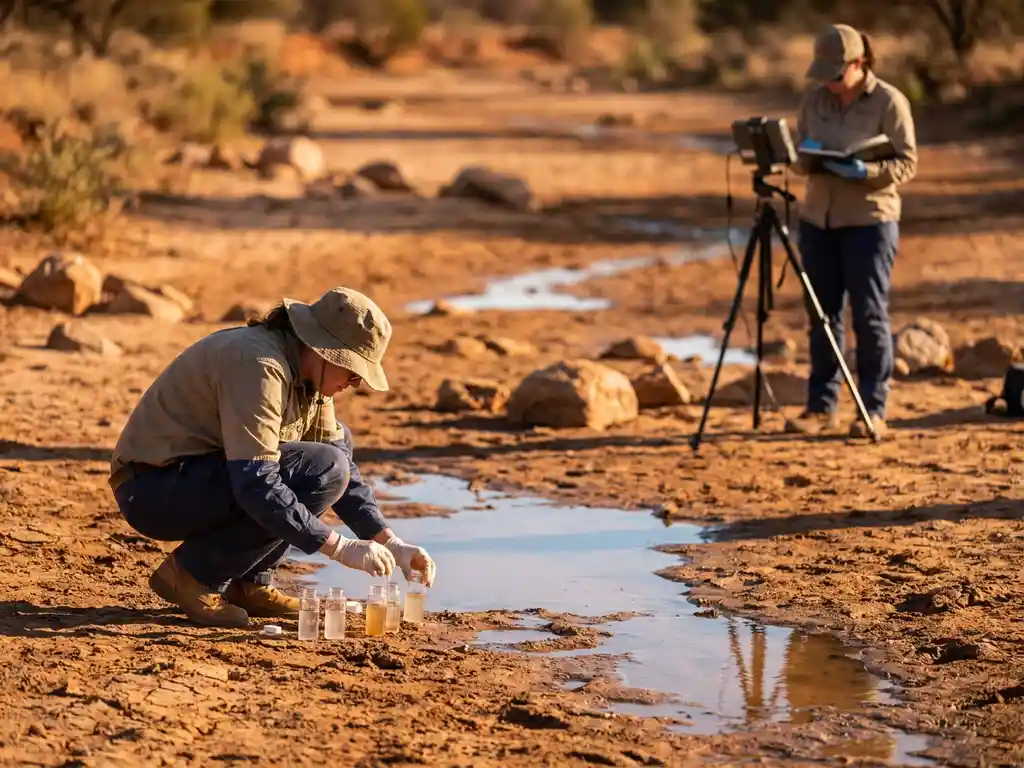
Research institutes address water scarcity through comprehensive scientific approaches that combine advanced technology development, data-driven analysis, and collaborative research programs. They focus on creating sustainable water management solutions, developing conservation technologies, and informing policy decisions through rigorous scientific evidence and global partnerships.
Outdated water infrastructure is costing communities their future security
Many regions still rely on water systems designed decades ago, leading to massive losses through leakage, inefficient distribution, and an inability to adapt to changing climate patterns. This infrastructure gap means communities face recurring shortages even when water sources exist nearby. Research institutes are developing smart monitoring systems and adaptive infrastructure designs that can detect problems early and adjust to environmental changes, helping communities build resilient water networks for long-term security.
Fragmented research efforts are slowing breakthrough solutions
Water scarcity research often happens in isolated pockets, with valuable findings trapped within individual institutions or geographic regions. This fragmentation means promising technologies take years longer to reach the communities that need them most, while researchers duplicate efforts instead of building on each other’s work. Collaborative research networks and international partnerships are breaking down these barriers, accelerating the path from laboratory discovery to real-world implementation.
What is water scarcity and why do research institutes study it?
Water scarcity occurs when water demand exceeds available supply or when poor quality restricts use. Research institutes study it because it affects 2 billion people globally and threatens food security, economic development, and ecosystem stability.
Research institutes approach water scarcity as a complex challenge requiring interdisciplinary solutions. They examine physical water availability, quality issues, distribution systems, and socioeconomic factors that influence access. This comprehensive perspective helps them develop solutions that address root causes rather than just symptoms.
The urgency of water scarcity research has intensified due to climate change, population growth, and increasing industrial demand. Research institutes provide the scientific foundation needed to understand these interconnected challenges and develop evidence-based strategies for sustainable water management.
How do research institutes approach water shortage solutions?
Research institutes use systematic, multi-phase approaches that begin with comprehensive assessment, followed by technology development, pilot testing, and scaling strategies. They combine laboratory research with field studies to ensure solutions work in real-world conditions.
The research process typically starts with data collection and analysis to understand specific regional challenges. Institutes use advanced modeling techniques to predict water availability under different scenarios and identify the most promising intervention points. This data-driven approach ensures resources are focused on solutions with the highest potential impact.
Institutes also prioritize participatory research methods that involve local communities in solution development. This approach ensures technologies and strategies align with actual user needs and cultural contexts, improving adoption rates and the long-term sustainability of implemented solutions.
What water conservation technologies are research institutes developing?
Research institutes are developing smart irrigation systems, advanced desalination technologies, atmospheric water generation, and precision water recycling systems. These technologies focus on reducing waste, increasing efficiency, and creating new water sources.
Smart irrigation represents a major focus area, with institutes creating sensor-based systems that monitor soil moisture, weather conditions, and plant needs in real time. These systems can reduce agricultural water use by 20-40% while maintaining or improving crop yields through precise water delivery.
Desalination research has advanced significantly, with institutes developing energy-efficient membrane technologies and solar-powered systems that make seawater treatment viable for smaller communities. Atmospheric water generation technologies extract moisture from the air, providing decentralized water sources even in arid regions.
Water recycling innovations focus on treating wastewater to potable standards using advanced filtration, UV treatment, and biological processes. These closed-loop systems can dramatically reduce freshwater demand in urban and industrial settings.
How do research institutes collaborate globally on water challenges?
Research institutes collaborate through international networks, joint research programs, data-sharing platforms, and coordinated field studies. These partnerships combine expertise from different regions and accelerate solution development through shared resources and knowledge.
Global collaboration often centers on major research initiatives that bring together institutes from multiple countries to tackle specific aspects of water scarcity. These programs pool funding, share expensive equipment, and coordinate research efforts to avoid duplication while maximizing impact.
Data sharing represents a crucial element of collaboration, with institutes contributing to global databases on water resources, climate patterns, and technology performance. This shared knowledge base helps researchers worldwide build on existing findings and adapt successful solutions to new contexts.
Cross-border partnerships also facilitate technology transfer, with institutes in water-rich regions sharing conservation technologies with those in water-scarce areas, while institutes in arid regions contribute specialized knowledge about operating under extreme conditions.
What role do research institutes play in water policy development?
Research institutes provide scientific evidence, impact assessments, and technical recommendations that inform water policy decisions. They translate complex research findings into actionable guidance for policymakers and evaluate policy effectiveness through ongoing monitoring.
Institutes serve as neutral sources of expertise, helping policymakers understand the scientific implications of different regulatory approaches. They conduct economic analyses of water management strategies, assess environmental impacts, and model potential outcomes under various policy scenarios.
Policy development often requires institutes to bridge the gap between scientific research and practical implementation. They work with government agencies to design regulations that are both scientifically sound and practically feasible, considering local conditions and resource constraints.
Long-term monitoring and evaluation represent another key policy role, with institutes tracking the effectiveness of implemented policies and recommending adjustments based on observed outcomes and changing conditions.
How WAITRO Helps with Water Scarcity Research
We connect water researchers worldwide through our global network of 135 Full Members and 45 Associate Members, facilitating collaboration on sustainable water management solutions. Our comprehensive services and specialized programs help research institutes share knowledge, access funding opportunities, and scale water technologies globally.
- Connect with leading water research organizations through our partnership networks
- Access funding opportunities specifically designed for water scarcity research projects
- Participate in collaborative research initiatives that amplify your research impact
- Share successful water technologies with institutes in water-stressed regions
- Contribute to policy development through evidence-based research networks
Join us at the WAITRO Summit 2026 in Istanbul, Türkiye, from October 26-28, 2026, themed “Leading the Path of Implementation: Strengthening Co-Creation for Our Common Future.” This gathering brings together global water researchers, innovators, and policymakers to co-create solutions for sustainable water management. Connect with experts working on breakthrough technologies, participate in collaborative research discussions, and be part of a movement shaping the future of water security. Become a WAITRO member to access our full network and accelerate your water scarcity research impact.
